
AI and mental health: New research links use of ChatGPT to worsened psychiatric symptoms
A review of Danish medical records indicates that interacting with conversational artificial intelligence can reinforce delusions and worsen psychiatric symptoms. Researchers warn that these agreeable digital tools pose a clear risk to vulnerable patients.
Read moreDetails
How personality and culture relate to our perceptions of artificial intelligence
A new study reveals that cultural background, technical skills, and personality traits are closely tied to how individuals perceive the impact of artificial intelligence on their overall well-being.
Read moreDetails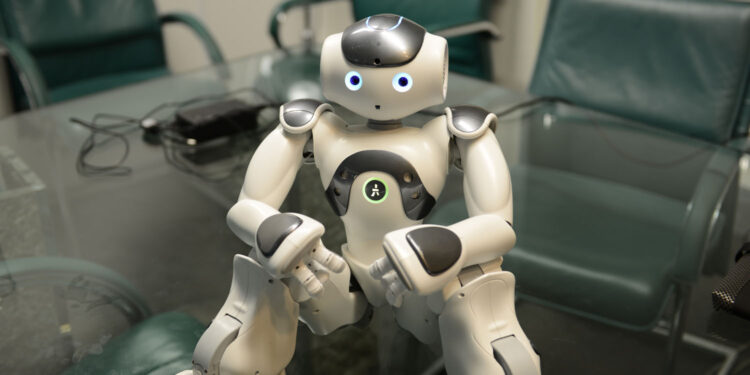
The presence of robot eyes affects perception of mind
When a robot has eyes, humans are far more likely to believe it can think and feel. Recent research provides evidence that this single facial feature automatically tricks our brains into seeing a conscious artificial mind.
Read moreDetails
AI art fails to trigger the same empathy as human works
A new study reveals a hidden cost to creative automation. When viewers think an artwork was created by artificial intelligence, they feel less awe, which in turn stifles their empathy for the people depicted in the piece.
Read moreDetails
AI chatbots generate weight loss coaching messages perceived as helpful as human-written advice
Researchers found that ChatGPT can craft empathetic weight-loss advice that is difficult to distinguish from human coaching. Participants rated the AI’s revised messages as highly helpful.
Read moreDetails
Scientists use machine learning to control specific brain circuits
A Japanese research team has developed YORU, an AI tool that detects animal social behaviors as distinct visual objects. This open-source software allows biologists to trigger real-time neural responses in millisecond timeframes.
Read moreDetails
Bias against AI art is so deep it changes how viewers perceive color and brightness
New research suggests that labeling artwork as AI-created diminishes how viewers perceive its beauty and meaning. This bias appears to influence even basic visual processing.
Read moreDetails
AI boosts worker creativity only if they use specific thinking strategies
A new field experiment in a real workplace shows that generative AI can improve employee creativity, but only for workers who actively monitor and manage their own thinking processes.
Read moreDetails
Psychology study sheds light on the phenomenon of waifus and husbandos
Human attraction to fictional characters may follow the same evolutionary rules as real-life dating. A study of anime fans found that "waifus" and "husbandos" are selected based on physical and emotional traits that mirror real-world mate selection strategies.
Read moreDetails
Psychology shows why using AI for Valentine’s Day could be disastrous
Thinking of using ChatGPT to write your Valentine’s Day card? A new study suggests you might want to reconsider. Researchers found that outsourcing heartfelt messages to AI creates a “psychological cost.”
Read moreDetails
Scientists reveal the alien logic of AI: hyper-rational but stumped by simple concepts
A new study shows that AI approaches strategic games with a hyper-rationality humans lack. However, these models surprisingly fail to identify simple dominant strategies, highlighting a fundamental difference in cognition.
Read moreDetailsThe scientist who predicted AI psychosis has issued another dire warning
Outsourcing your thinking to AI might be eroding your ability to reason. A new commentary warns that "cognitive debt" poses a critical threat to science, suggesting that bypassing mental struggle could stunt future human capabilities.
Read moreDetails
Deceptive AI interactions can feel more deep and genuine than actual human conversations
People may form deeper emotional bonds with artificial intelligence than with other humans, but only if the AI’s identity is hidden. Research shows that labeling a partner as a machine significantly dampens the sense of connection.
Read moreDetails
How AI’s distorted body ideals could contribute to body dysmorphia
How does artificial intelligence visualize an "athletic body"? A recent analysis reveals that leading AI platforms consistently generate images that adhere to specific aesthetic standards.
Read moreDetails
Machine learning identifies brain patterns that predict antidepressant success
A new algorithm analyzes electrical activity in the brain to forecast whether standard depression drugs will work, potentially ending the trial-and-error approach to mental health treatment.
Read moreDetails