
Romantic attraction and evolution: New study pinpoints key traits in mate selection
What makes someone a desirable partner? New research explores the deep evolutionary and psychological factors that influence our mate choices, revealing insights about what men and women prioritize in relationships.
Read moreDetails
Loneliness haunts us even in our dreams, new psychology research suggests
New research explores how the absence of social connections impacts our mental well-being, focusing on an unexpected area of life affected by loneliness.
Read moreDetails
Scientists unveil a fascinating new perspective on human consciousness
Scientists propose that human consciousness evolved primarily for social survival, enabling better communication and interaction within communities, rather than just individual benefit, challenging traditional views on the evolution of subjective awareness.
Read moreDetails
Why do women cheat? New study reveals complex motivations behind female infidelity
A new study on the evolutionary origins of female infidelity suggests that women cheat for genetic benefits from attractive affair partners while valuing primary partners for parenting. Other motives include relationship dissatisfaction, variety, and revenge.
Read moreDetails
Dating dynamics: Men more likely to admit poor hygiene, women confess moral lapses
When required to reveal negative information about themselves during a date, men tend to disclose pathogenically disgusting behaviors, while women are more likely to admit to morally disgusting behaviors.
Read moreDetails
New study reveals a surprising fact about aging and touch sensitivity
A study found that touch sensitivity declines with age in hairless skin like fingertips, but remains stable in hairy skin such as cheeks and forearms, likely due to evolutionary factors.
Read moreDetails
People who believe conspiracy theories tend to report greater childhood adversity
Stressful childhoods and Dark Triad traits are linked to conspiracy beliefs, suggesting these mindsets might be adaptive responses shaped by early life adversity, according to new research.
Read moreDetails
Love’s downside: Research identifies major disadvantages of romantic partnerships
New research has identified 11 major disadvantages of intimate relationships, including less freedom, emotional cost, and fights, with perceptions varying by demographics such as gender, age, and relationship status.
Read moreDetails
New study explores the psychological dynamics of helping strangers
A new study found that competence and prosociality independently increase compassion and willingness to help others, suggesting these traits are critical but separate considerations in altruistic behavior.
Read moreDetails
Women show increased aggression toward those with larger breasts, study finds
Women are more likely to engage in aggressive behaviors toward peers with larger breast sizes, a recent study finds, highlighting how physical traits influence intrasexual competition.
Read moreDetails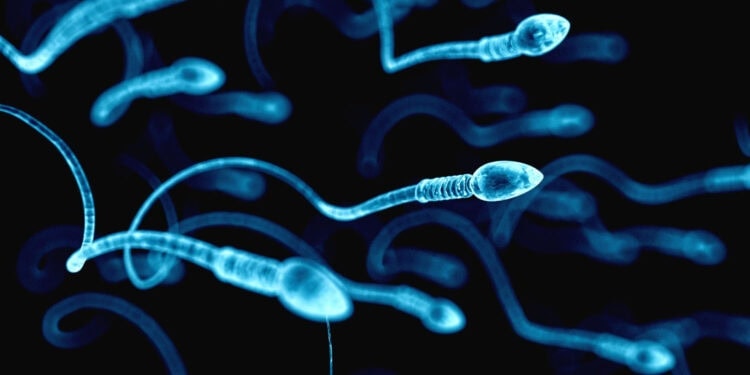
Chronic stress can alter genetic material in sperm, leading to changes in offspring behavior
A study reveals that chronic stress alters sperm's long noncoding RNAs, affecting offspring development and behavior, potentially leading to anxiety and depression-like symptoms, highlighting the role of paternal stress in epigenetic inheritance.
Read moreDetails
Afraid of holes? Evolution may hold the answer to trypophobia
A recent psychology paper suggests that trypophobia, the fear of clusters of small holes, may have evolutionary origins linked to avoiding dangerous animals and infectious diseases.
Read moreDetails
Do you smell what I smell? New study reveals surprising variability in odor preferences
A study found that cultural and ecological factors significantly influence odor pleasantness, with familiarity being the strongest predictor of pleasantness across diverse cultural groups.
Read moreDetails
Scientists discover a surprising benefit of having smaller breasts
Women with smaller breasts produce breast milk with higher lactose concentration, suggesting a hormonal link. This surprising finding highlights that breast size influences milk composition, though not its quantity.
Read moreDetails
Is evolutionary psychology underappreciated?
A recent analysis reevaluates findings on evolutionary psychology, revealing it is growing comparably to the Standard Social Science Model (SSSM). Refined metrics suggest both paradigms are expanding in tandem, challenging previous claims of evolutionary psychology's decline.
Read moreDetails