
People with high openness to experience tend to have fewer children
A recent study reveals that people who are highly open to new experiences tend to have fewer children. Scientists attribute this to delayed parenthood, shorter romantic relationships, and a lower overall drive to start a family.
Read moreDetails
The science behind why we prefer the smell of our own farts
You aren't imagining it—your own brand smells better. Here is the evolutionary psychology behind the phenomenon.
Read moreDetails
The psychology behind society’s fixation on incels
Despite their small numbers, incels loom incredibly large in public consciousness. A new study explains why: their stories hit our deepest evolutionary panic buttons regarding sex, status, and societal threat.
Read moreDetails
Girls rarely experience the “friend zone,” psychology study finds
A study finds that adolescent boys increasingly mistake friendliness for sexual interest as they mature. But teenage girls rarely have their romantic advances dismissed as mere friendliness.
Read moreDetails
Evolutionary psychology is unfalsifiable? New scientific paper aims to kill this “zombie idea”
Critics have long dismissed evolutionary psychology as “just-so stories.” A new conceptual review challenges this view, arguing the field generates rigorous, falsifiable predictions—some of which have been decisively overturned.
Read moreDetails
This mental trait predicts individual differences in kissing preferences
Why do some find kissing more arousing than others? New data suggests that those who frequently imagine intimate scenarios are more likely to rely on kissing as a catalyst.
Read moreDetails
Younger women find men with beards less attractive than older women do
New research indicates that a woman's age and reproductive status influence her preferences for male secondary sexual characteristics, such as muscularity and facial hair.
Read moreDetails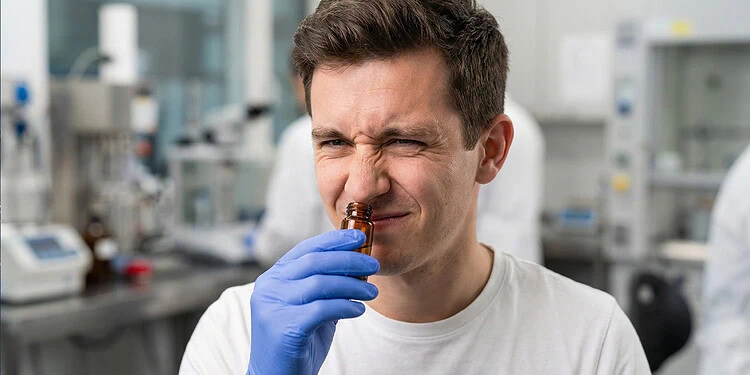
Scientists asked men to smell hundreds of different vulvar odors to test the “leaky-cue hypothesis”
Can men smell when a woman is fertile? According to new research, the answer is likely no. A detailed analysis found that conception risk does not influence the chemical profile or perceived attractiveness of intimate scents.
Read moreDetails
Relatives with lower paternity uncertainty are perceived as kinder
According to a large study published in Evolutionary Psychology, people consistently perceive family members as kinder when there is greater certainty of biological relatedness.
Read moreDetails
Psychology study sheds light on the phenomenon of waifus and husbandos
Human attraction to fictional characters may follow the same evolutionary rules as real-life dating. A study of anime fans found that "waifus" and "husbandos" are selected based on physical and emotional traits that mirror real-world mate selection strategies.
Read moreDetails
New research connects the size of the beauty market to male parenting effort
New research reveals a surprising trend: nations where fathers perform more childcare tend to have larger cosmetics industries. The findings suggest women may invest more in their appearance to compete for highly involved partners.
Read moreDetails
Evolutionary motives of fear and coercion shape political views on wealth redistribution
Support for redistributing wealth may stem from deep evolutionary instincts to avoid conflict. New studies reveal that the fear of being violently dispossessed and a desire to enforce equality are key predictors of progressive policy preferences.
Read moreDetails
Evolutionary psychology’s “macho” face ratio theory has a major flaw
A new study challenges the idea that facial width-to-height ratios predict male aggression. Researchers found this popular metric fails to distinguish between sexes when controlling for body size, pointing instead to simple facial width as the real evolutionary signal.
Read moreDetails
A new experiment reveals an unexpected shift in how pregnant women handle intimidation
Physical vulnerability usually leads to caution, but pregnancy might change that equation. New evidence published in the British Journal of Psychology suggests perinatal women become less submissive and more dominant when facing social threats to their resources.
Read moreDetails
Women’s libido drops during a specific phase of the menstrual cycle
New research suggests women experience a distinct dip in sexual desire during the implantation window. Scientists believe this decrease may be an evolutionary adaptation to protect the body from infection when the immune system is naturally suppressed.
Read moreDetails