
Neuroscience research suggests a shared mechanism underlies both sleep disturbance and mental disorders
New research published in Human Brain Mapping provides evidence of a shared neural mechanism that underlies sleep disturbance and mental disorders in preadolescents. The findings indicate that sleep disturbance and mental health problems are both related to the connectivity between...
Read moreDetails
Study identifies basic neuronal physiological properties associated with symptoms of schizophrenia
The clinical symptoms of individuals with schizophrenia can be predicted by the activity of neurons derived from the patients' own stem cells, according to new research published in the Proceedings of the National Academy of Sciences of the United States...
Read moreDetails
Neurofeedback might have clinical potential for patients with non-anxious major depressive disorder
Neurofeedback training might help to improve the effectiveness of certain psychological interventions for patients with depression, according to new research. But the findings indicate that fMRI neurofeedback might not be effective for patients with the newly-classified anxious distress subtype of...
Read moreDetails
Neurocognitive research examines why people with facial anomalies are regarded as having flawed characters
People tend to make harsher character judgments about individuals with facial anomalies, which is reflected in neural responses, according to research published in the Annals of the New York Academy of Sciences. The findings suggest a brain region called the...
Read moreDetails
Patients with depression show increases in neuroplasticity and fewer clinical symptoms after a physical activity intervention
A study published in Frontiers in Psychology offers insight into the antidepressant effects of physical exercise. The researchers found that patients with major depressive disorder who participated in a physical activity intervention showed increased neuroplasticity that coincided with declines in clinical symptoms.
Read moreDetails
Study raises ethical concerns over misleading website claims from neurofeedback providers in the United States
A new study published in the Journal of Cognitive Enhancement investigated the websites of 371 neurofeedback providers in the United States. The overwhelming majority of these providers made claims in relation to at least one clinical condition (e.g., anxiety, ADHD), and a...
Read moreDetails
Study links the ceremonial use of ayahuasca to robust reductions in neuroticism
A naturalistic study published in the journal Scientific Reports provides evidence that the ceremonial use of ayahuasca can lead to significant reductions in neuroticism, a personality trait associated with depression and anxiety.
Read moreDetails
Neuroimaging study reveals link between self-defeating humor, creativity, and gray matter in the frontal cortex
People with a self-defeating humor style demonstrate increased gray matter volume in the left orbital frontal cortex — a brain region involved in emotion perception. This effect was strongest among individuals high in divergent thinking, suggesting a moderating role of...
Read moreDetails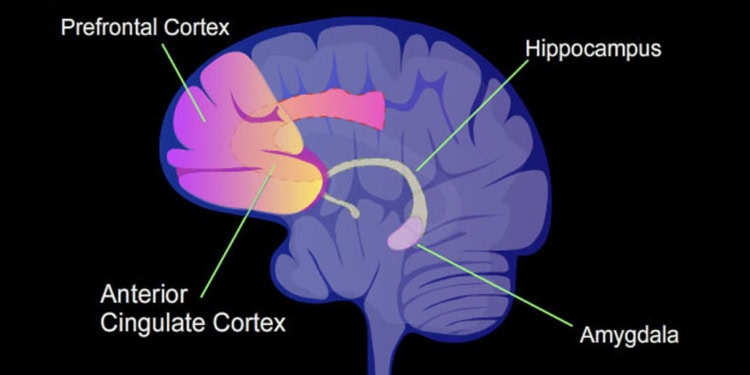
New study sheds light on the neurobiological mechanisms underlying non-suicidal self-injury
New research highlights the complexity of neurobiological abnormalities associated with non-suicidal self-injury -- behaviors like cutting oneself without intending to die. The findings, published in Development and Psychopathology, indicate that severe self-injury behavior among adolescent girls is related to alterations...
Read moreDetailsNew neuroscience study finds neighborhood disadvantage is linked to altered brain maturation in adolescence
“Our results essentially showed the children who grew up in disadvantaged neighborhoods had brains that looked older than was typical for their age during early adolescence… What’s more, these associations held true even when we accounted for household socioeconomic status...
Read moreDetails
Neuroscience research: Caring and confident dads have structurally different brains
Although the COVID-19 pandemic profoundly impacted all our work and living arrangements, one thing particularly stood out for dads. During the nationwide lockdowns, fathers ditched the office and came home in their millions. The UK Fatherhood Institute, a thinktank, realised...
Read moreDetails
Neuroscience research finds brain structure differences in men and women are not strongly linked to behavioral differences
Brain structure differences in men and women are only weakly linked to behavioral differences, according to new research that analyzed two large independent brain imaging datasets. The findings have been published in the journal Psychological Science. The presence of sex...
Read moreDetails
New neuroscience research sheds light on the relationship between anger and brain structure
A neuroimaging study published in Clinical Psychological Science provides new insights into the link between anger and the functional architecture of brain networks: "Our findings suggest a novel interpretation of higher trait anger as possibly reflecting a greater propensity to...
Read moreDetails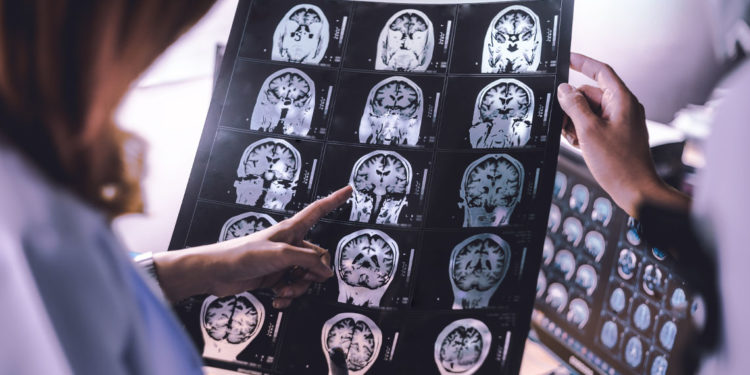
Neuroimaging research suggests that even mild cases of COVID-19 leave a lasting mark on the brain
The team found marked differences in gray matter – which is made up of the cell bodies of neurons that process information in the brain – between those who had been infected with COVID-19 and those who had not. Specifically,...
Read moreDetails
New neuroscience research suggests the cerebral cortex acts as the brain’s hourglass
No one can stay awake forever. While we’re awake, our need for sleep gradually increases. If we deprive ourselves of sleep, our brain functions – such as attention or judgement – are impaired, and sleep becomes irresistible. No matter whether...
Read moreDetails