![[Adobe Stock]](https://sp-ao.shortpixel.ai/client/to_webp,q_glossy,ret_img,w_750,h_375/https://www.psypost.org/wp-content/uploads/2022/02/Cannabidiol-CBD-molecule-750x375.jpg)
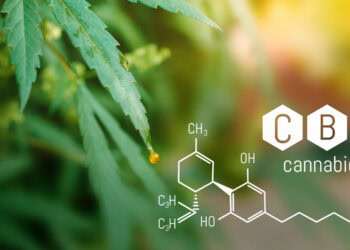
Cannabidiol (CBD) has grown in popularity in recent years due to its widespread reputation for reducing anxiety — but is that true or are we experiencing a mass placebo effect? A study published in Psychopharmacology shows that people are vulnerable to expectancy effects when it comes to CBD.
Over the last decade or so, popularity of CBD products has skyrocketed due to the reputation of cannabidiol use having the ability to reduce stress and anxiety. Despite this, the research has been mixed, with some studies showing a reduction in anxiety and others showing that a placebo was just as effective. Drug effects in humans are two part and include both the pharmacological effect and placebo effect. This study seeks to see what degree each of these play in regard to the perceived effects of CBD.
Researcher Toni C. Spinella and colleagues utilized a sample of 43 healthy, Canadian adults. Participants needed to have had previous cannabis use to manage their expectations but could only have used cannabis two times in the month previous to the study.
The sample participated in 3 sessions: one orientation and two experimental. The two experimental sessions had the participants use hemp seed oil on themselves; in one session they were told it contained CBD and in the other session they were told it did not. In reality, however, neither dose of hemp seed oil contained CBD. Participants completed measures of stress, anxiety, mood, and drug effects, in addition to an ECG to assess heart rate.
Results showed that people were susceptible to the expectancy effect of CBD. In the expectancy condition, sedation increased significantly from the baseline level to after the use of the oil, while in the CBD-free condition, sedation was lower after use of the oil. Heart rate changed throughout the process in the CBD expectancy condition but was consistent during the CBD-free condition. These results suggest that the suggestion of CBD consumption is enough to somewhat reduce stress.
“Interestingly, the extent to which participants believed that CBD reduced anxiety interacted with expectancy condition to predict their subjective anxiety levels following oil administration,” the researchers noted. “That is, subjects who endorsed the strongest beliefs that CBD reduces anxiety tended to experience the lowest levels of anxiety when they expected CBD oil and the highest levels of anxiety when they expected CBD-free oil. On the other hand, when subjects endorsed low or moderate beliefs, there was very little difference in anxiety outcomes according to expectancy condition. Such findings emphasize the importance of individual expectancies and their role in moderating the placebo effect.”
This study took steps into understanding the expectancy effect with regard to CBD’s role in reducing stress and anxiety. Despite this, it has limitations. One such limitation is that the sample was largely white, healthy adults and may not generalize to all groups. Additionally, there was not enough power to examine sex differences in these results.
“Though previous reports suggest that CBD may be a promising medicine for psychiatric disorders like anxiety, our findings emphasize the need for more research evaluating the relative contributions of pharmacological and non-pharmacological factors for such conditions, which could be done through a full balanced placebo research design,” the researchers said.
The study, “Evaluating cannabidiol (CBD) expectancy effects on acute stress and anxiety in health adults: a randomized crossover study“, was authored by Toni C. Spinella, Sherry H. Stewart, Julia Naugler, Igor Yakovenko, and Sean P. Barrett.