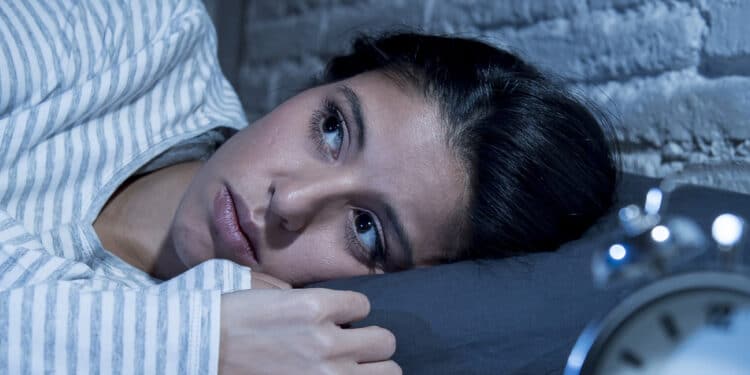

A study published in the journal Psychoneuroendocrinology revealed that people not only experience lower mood and health the day after having a nightmare, but they also show a prolonged physiological response to stress.
There is substantial evidence that nightmares can negatively impact well-being, by lowering sleep quality, increasing anxiety, and lowering mood. Gabriela Hess and her team propose that since nightmares coincide with mental distress, they likely also coincide with changes in the body’s physiological reactions to stress.
Hess and her colleagues were specifically interested in exploring the stress-response systems of the sympathetic-adrenal-medullary system (SAM) and the hypothalamic-pituitary-adrenal (HPA) axis. The SAM produces the hormones epinephrine and norepinephrine in response to stress while the HPA axis controls cortisol levels and other stress hormones. The authors also considered the possibility that nightmares might evoke prolonged effects by way of the cortisol awakening response (CAR) — the rise in cortisol experienced in the hour after waking from sleep.
Hess and her colleagues recruited a sample of 30 university students between the ages of 19 and 33, all of whom reported having nightmares at least once a week in the past few months. To capture the cortisol awakening response, participants collected saliva samples right after waking up in the morning and again 30 minutes, 45 minutes, and an hour after awakening. To capture their daily cortisol profiles they also collected saliva samples at three additional time points throughout the day.
Participants also filled out a dream diary immediately after waking up, where they reported whether they had a neutral dream, a nightmare, or no dream the previous night. They then rated the positive and negative emotions elicited by any dreams. Subjects also filled out an assessment of mood, fatigue, stress level, and health immediately after awakening and at three additional time points throughout the day.
An analysis of the results revealed that participants experienced more negative affect and less positive affect on days following a nightmare, compared to days following a neutral dream. They also reported worse mood and health. The students further reported a lower quality of sleep and greater rumination on nights involving a nightmare.
Notably, the researchers also uncovered heightened cortisol levels following a nightmare compared to a neutral dream, as demonstrated by an elevated cortisol awakening response. The researchers say this offers evidence that nightmares can not only affect subjective well-being but can also trigger a prolonged stress response that shows up as an increased CAR. They say this elevated response could promote worse quality of sleep and elevated rumination, just as was seen in the participants’ self-reports.
Importantly, the authors note that it is unclear whether the nightmare on its own is triggering this response. “Rumination, reduced sleep duration and efficacy and other variables could serve as mediating factors,” Hess and her team discuss. “Thus, the nightmare itself might not have direct effects but instead a third variable could be involved such as heightened stress that triggers the nightmare and the increased HPA-axis activity in the aftermath.”
They say their findings suggest that some of the variance in the cortisol awakening response seen in CAR studies likely stems from variables related to sleep, such as the presence of nightmares.
Hess and her team acknowledge that their study exclusively involved individuals who reported experiencing nightmares regularly. People who experience less frequent nightmares may not experience the same mood changes or increased cortisol awakening response after nightmares. They also suggest that future research should explore whether the current findings extend to those experiencing frequent nightmares associated with posttraumatic stress disorder.
The study, “Effects of nightmares on the cortisol awakening response: an ambulatory assessment pilot study”, was authored by Gabriela Hess, Michael Schredlb, Andrea Gierens, and Gregor Domes.