Subscribe
The latest psychology and neuroscience discoveries.
My Account
  • Mental Health
  • Social Psychology
  • Cognitive Science
  • Neuroscience
  • About
No Result
View All Result
PsyPost
PsyPost
No Result
View All Result
Home Exclusive Mental Health

Exploring the antidepressant effects of testosterone

by Elsevier
April 2, 2012
in Mental Health
Share on TwitterShare on Facebook

Testosterone moleculeTestosterone, the primary male sex hormone, appears to have antidepressant properties, but the exact mechanisms underlying its effects have remained unclear. Nicole Carrier and Mohamed Kabbaj, scientists at Florida State University, are actively working to elucidate these mechanisms.

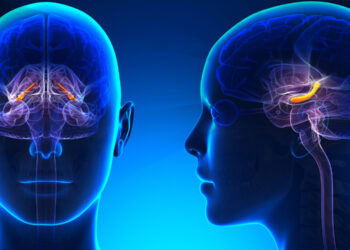
They’ve discovered that a specific pathway in the hippocampus, a brain region involved in memory formation and regulation of stress responses, plays a major role in mediating testosterone’s effects, according to their new report in Biological Psychiatry.

Compared to men, women are twice as likely to suffer from an affective disorder like depression. Men with hypogonadism, a condition where the body produces no or low testosterone, also suffer increased levels of depression and anxiety. Testosterone replacement therapy has been shown to effectively improve mood.

Although it may seem that much is already known, it is of vital importance to fully characterize how and where these effects are occurring so that scientists can better target the development of future antidepressant therapies.

To advance this goal, the scientists performed multiple experiments in neutered adult male rats. The rats developed depressive-like behaviors that were reversed with testosterone replacement.

They also “identified a molecular pathway called MAPK/ERK2 (mitogen activated protein kinase/ extracellular regulated kinase 2) in the hippocampus that plays a major role in mediating the protective effects of testosterone,” said Kabbaj.

This suggests that the proper functioning of ERK2 is necessary before the antidepressant effects of testosterone can occur. It also suggests that this pathway may be a promising target for antidepressant therapies.

Kabbaj added, “Interestingly, the beneficial effects of testosterone were not associated with changes in neurogenesis (generation of new neurons) in the hippocampus as it is the case with other classical antidepressants like imipramine (Tofranil) and fluoxetine (Prozac).”

Google News Preferences Add PsyPost to your preferred sources

In results published elsewhere by the same group, testosterone has shown beneficial effects only in male rats, not in female rats.

Previous Post

Study supports using virtual environment to teach mind/body techniques

Next Post

Sexually abused boys at risk for more unsafe sex

RELATED

A healthy lifestyle predicts heightened sexual satisfaction nine years later
Mental Health

Moving in boosts happiness for older couples, but marriage adds no extra spark

February 19, 2026
Alcohol use disorder may exacerbate Alzheimer’s disease through shared genetic pathways
Alzheimer's Disease

Scientists discover a liver-to-brain signal that mimics exercise benefits

February 19, 2026
Brain imaging study finds large sex-differences in regions tied to mental health
Addiction

Neural signatures of impulsivity and neuroticism are largely distinct in youth

February 19, 2026
Psychologists developed a 20-minute tool to help people reframe their depression as a source of strength
ADHD Research News

Video games may offer small attention benefits for children with ADHD

February 18, 2026
Lonely individuals show reduced cardiovascular adaptability under social stress
Mental Health

Study finds a disconnect between brain activity and feelings in lonely people

February 18, 2026
Psychologists developed a 20-minute tool to help people reframe their depression as a source of strength
Psychedelic Drugs

Ibogaine appears to trigger an accelerated “auto-psychotherapy” process during PTSD treatment

February 18, 2026
Psychologists developed a 20-minute tool to help people reframe their depression as a source of strength
Depression

Psychologists developed a 20-minute tool to help people reframe their depression as a source of strength

February 18, 2026
Early adversity linked to altered hippocampal growth in children
Depression

Larger left hippocampus predicts better response to antidepressant escitalopram

February 17, 2026

STAY CONNECTED

LATEST

Viral AI agent OpenClaw highlights the psychological complexity of human-computer interaction

Moving in boosts happiness for older couples, but marriage adds no extra spark

Scientists discover a liver-to-brain signal that mimics exercise benefits

Big five personality traits predict fertility expectations across reproductive age

Neural signatures of impulsivity and neuroticism are largely distinct in youth

New psychology research reveals how repetitive thinking primes involuntary memories

The neuroscience of limerence and how to break the cycle of romantic obsession

What was Albert Einstein’s IQ?

PsyPost is a psychology and neuroscience news website dedicated to reporting the latest research on human behavior, cognition, and society. (READ MORE...)

  • Mental Health
  • Neuroimaging
  • Personality Psychology
  • Social Psychology
  • Artificial Intelligence
  • Cognitive Science
  • Psychopharmacology
  • Contact us
  • Disclaimer
  • Privacy policy
  • Terms and conditions
  • Do not sell my personal information

(c) PsyPost Media Inc

Welcome Back!

Login to your account below

Forgotten Password?

Retrieve your password

Please enter your username or email address to reset your password.

Log In

Add New Playlist

Subscribe
  • My Account
  • Cognitive Science Research
  • Mental Health Research
  • Social Psychology Research
  • Drug Research
  • Relationship Research
  • About PsyPost
  • Contact
  • Privacy Policy

(c) PsyPost Media Inc