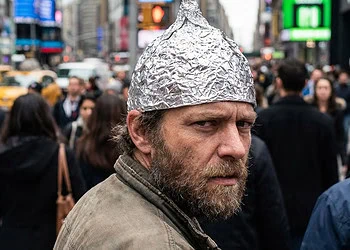
A cognitive bias known as the Dunning-Kruger effect appears to be highly prevalent among people who believe the Earth is flat (flat-earthers), according to new research published in Public Understanding of Science. This means that flat-earthers tend to have lower levels of scientific literacy while also being more overconfident in their own scientific knowledge. In other words, they think they know a lot about science even though their actual knowledge is limited.
“Both my co-authors and I are very interested in topics related to scientific culture,” said study author José Luis Arroyo Barrigüete, a professor at Comillas Pontifical University. “This is a line of research we have been working on for several years. In this regard, one of the most surprising beliefs we have encountered is that of flat-earth belief. The issue is that, contrary to what one might think, there are more people than would be reasonable with doubts about the shape of the earth.”
“In fact, there are YouTubers who have cemented their activity by posting videos about flat earth theories. This fascinated us, and we decided to investigate it. It is often thought that a flat-earther is someone with a low level of scientific culture. This is true, but in our research, we observed that there is a second factor that is also necessary to believe in a flat earth: high overconfidence in one’s scientific knowledge.”
“In other words, on average (and with all the exceptions that can surely be found), a flat-earther is someone who will have a low level of scientific culture but who nonetheless considers him/herself as someone with a high level of scientific knowledge.”
To conduct their study, the researchers collected data through an online survey distributed in two waves. The first wave included undergraduate students at Comillas Pontifical University in Spain, while the second wave used a snowball procedure to include Spanish individuals from various backgrounds. The final sample consisted of 1,252 valid records, mainly comprising highly educated individuals with a high socioeconomic level.
The dependent variable, “belief in a flat earth,” was measured on a scale of 0 to 10, with 0 indicating strong disagreement and 10 indicating strong agreement with the statement: “There is evidence that the earth is flat.” Science literacy was measured using the OSI 2.0 scale, which assessed basic scientific facts (e.g. “Electrons are smaller than atoms”) as well as the understanding scientific methods, quantitative reasoning, and cognitive reflection.
Overconfidence was measured using two items: general overconfidence and overconfidence in scientific knowledge. To assess general overconfidence, participants were asked to rate their agreement with statements such as “My ideas are usually better than other people’s ideas” or “When I am really confident in a belief, there is very little chance that belief is wrong.” To assess overconfidence in science, participants were asked to consider scientific topics that interest them and indicate whether they believed they knew more or less than scientists in relation to those topics.
The researchers found that among the participants, 1.3% indicated that they were fully convinced that the earth was flat, while 82.5% were fully convinced that the earth is not flat. These findings were surprising to some, as there was skepticism about finding individuals who believed in a flat earth, especially among highly educated individuals. But the percentage of flat earth believers in the sample was consistent with the results of a YouGov poll conducted in North America among millennials.
“Most of the respondents were university students,” Arroyo-Barrigüete told PsyPost. “However, this is not relevant, as studies conducted in other countries and with other samples have found similar percentages of flat- earthers. This means that although it is a small percentage among the general population, there are people who either are not completely sure that the earth is round (an oblate spheroid more specifically) or are outright convinced that the earth is flat.”
“Our colleagues at the university were surprised by the percentage of people who were not fully convinced that the earth was not flat,” Arroyo-Barrigüete said. “Although only 1.3% were fully convinced that the earth was flat, a much larger percentage expressed some doubt. In response to the question ‘There is evidence that the earth is flat. Indicate your opinion, 0 meaning strongly disagree, and 10 strongly agree,’ 17.5% of the sample gave a score above 0. Interestingly, a very similar percentage to that obtained in another study in 2018 among North American millennials.”
The study also revealed that individuals who believed in a flat earth showed lower levels of science literacy compared to those who did not. This was evident across various dimensions of science literacy, including basic facts, understanding scientific methods, quantitative reasoning, and cognitive reflection. The differences in science literacy between flat earth believers and non-believers were statistically significant.
Furthermore, the researchers found that flat earth believers exhibited higher levels of overconfidence in their scientific knowledge. Among flat earth believers, a significant portion (24.7%) claimed to know the same or more than scientists, while this percentage was much lower (2.2%) among those who believed the earth isn’t flat.
“One of our main concerns is that some respondents may be simply being ironic or expressing doubts regarding the earth’s shape for other reasons (to be ‘cool’, to be different, etc.),” Arroyo-Barrigüete noted. “Given that the statistical analysis shows a pattern, it seems that this is not the case.”
“If all those who expressed doubts about the shape of the earth had done so simply for being ironic or other reasons, we would not have found the pattern of low scientific culture and high overconfidence, which was exactly what we expected. However, some respondents surely fall into this category, and in future works, we would like to refine the study design to rule out those who declare themselves as flat-earthers for spurious reasons.”
The study, “Dunning–Kruger effect and flatearthers: An exploratory analysis“, was authored by Jose Luis Arroyo-Barrigüete, Carlos Bellón Núñez-Mera, Jesús Labrador Fernández, and Victor Luis De Nicolas.