Subscribe
The latest psychology and neuroscience discoveries.
My Account
  • Mental Health
  • Social Psychology
  • Cognitive Science
  • Neuroscience
  • About
No Result
View All Result
PsyPost
PsyPost
No Result
View All Result
Home Exclusive Cognitive Science

Here is what goes wrong in the brain when someone can’t spell

by Johns Hopkins University
February 2, 2016
in Cognitive Science
Photo credit: Johns Hopkins University

Photo credit: Johns Hopkins University

Share on TwitterShare on Facebook

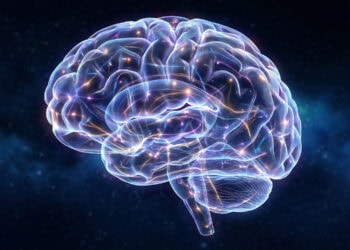
By studying stroke victims who have lost the ability to spell, researchers have pinpointed the parts of the brain that control how we write words.

In the latest issue of the journal Brain, Johns Hopkins University neuroscientists link basic spelling difficulties for the first time with damage to seemingly unrelated regions of the brain, shedding new light on the mechanics of language and memory.

“When something goes wrong with spelling, it’s not one thing that always happens — different things can happen and they come from different breakdowns in the brain’s machinery,” said lead author Brenda Rapp, a professor in the Department of Cognitive Sciences. “Depending on what part breaks, you’ll have different symptoms.”

Rapp’s team studied 15 years’ worth of cases in which 33 people were left with spelling impairments after suffering strokes. Some of the people had long-term memory difficulties, others working-memory issues.

With long-term memory difficulties, people can’t remember how to spell words they once knew and tend to make educated guesses. They could probably correctly guess a predictably spelled word like “camp,” but with a more unpredictable spelling like “sauce,” they might try “soss.” In severe cases, people trying to spell “lion” might offer things like “lonp,” “lint” and even “tiger.” With working memory issues, people know how to spell words but they have trouble choosing the correct letters or assembling the letters in the correct order — “lion” might be “liot,” “lin,” “lino,” or “liont.”

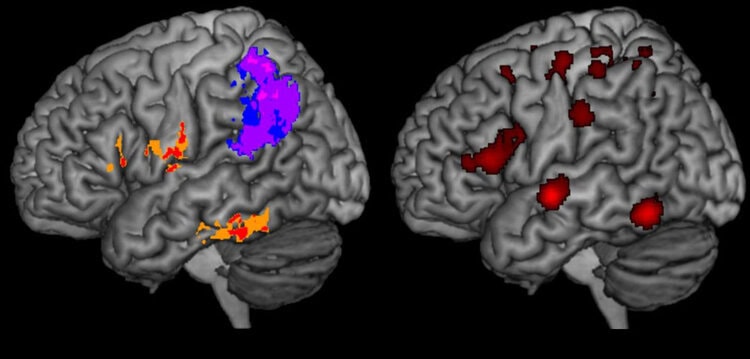
The team used computer mapping to chart the brain lesions of each individual and found that in the long-term memory cases, damage appeared on two areas of the left hemisphere, one towards the front of the brain and the other at the lower part of the brain towards the back. In working memory cases, the lesions were primarily also in the left hemisphere but in a very different area in the upper part of the brain towards the back.

“I was surprised to see how distant and distinct the brain regions are that support these two subcomponents of the writing process, especially two subcomponents that are so closely inter-related during spelling that some have argued that they shouldn’t be thought of as separate functions,” Rapp said. “You might have thought that they would be closer together and harder to tease apart.”

Though science knows quite a bit about how the brain handles reading, these findings offer some of the first clear evidence of how it spells, an understanding that could lead to improved behavioral treatments after brain damage and more effective ways to teach spelling.
Google News Preferences Add PsyPost to your preferred sources
Previous Post

Psychologists discover the most common relationship dealbreakers

Next Post

Seeing exemplary peer work can undermine performance

RELATED

Actively open-minded thinking protects against political extremism better than liberal ideology
Cognitive Science

Outdoor athletes show superior color detection in their peripheral vision

March 17, 2026
Actively open-minded thinking protects against political extremism better than liberal ideology
Cognitive Science

Actively open-minded thinking protects against political extremism better than liberal ideology

March 17, 2026
The disturbing impact of exposure to 8 minutes of TikTok videos revealed in new study
Cognitive Science

Excessive TikTok use is linked to social anxiety and daily cognitive errors

March 16, 2026
Global study overturns conventional wisdom on language development in children
Cognitive Science

Higher skin carotenoid levels in toddlers predict better motor and language development

March 16, 2026
Psychologists implant false beliefs to understand how human memory fails
Memory

Psychologists implant false beliefs to understand how human memory fails

March 14, 2026
Researchers identify two psychological traits that predict conspiracy theory belief
Cognitive Science

The hidden brain benefit of getting in shape that scientists just discovered

March 11, 2026
Scientists use “dream engineering” to boost creative problem-solving during REM sleep
Cognitive Science

Genetic factors drive the link between cognitive ability and socioeconomic status

March 10, 2026
Scientists use “dream engineering” to boost creative problem-solving during REM sleep
Cognitive Science

Everyday mental quirks like déjà vu might be natural byproducts of a resting mind

March 10, 2026

STAY CONNECTED

RSS Psychology of Selling

  • Why mobile game fail ads make you want to download the app
  • The science of sound reduplication and cuteness in product branding
  • How consumers react to wait time predictions from humans versus AI chatbots
  • The psychology of persuasion: When to use a friendly face versus a competent expert
  • How CEO narcissism shapes company strategy

LATEST

Using AI to verify human advice could damage your professional relationships

Brain scans reveal a bipolar-like link to childhood trauma in some depressed patients

Outdoor athletes show superior color detection in their peripheral vision

Narcissistic traits and celebrity worship are linked to excessive Instagram scrolling via emotional struggles and fear of missing out

Neuroticism is linked to altered communication between the brain’s emotional networks

A massive review reveals cannabis falls short in treating psychiatric disorders

Artificial intelligence struggles to consistently evaluate scientific facts

New brain scanning method safely tracks how Alzheimer’s drugs work in living patients

PsyPost is a psychology and neuroscience news website dedicated to reporting the latest research on human behavior, cognition, and society. (READ MORE...)

  • Mental Health
  • Neuroimaging
  • Personality Psychology
  • Social Psychology
  • Artificial Intelligence
  • Cognitive Science
  • Psychopharmacology
  • Contact us
  • Disclaimer
  • Privacy policy
  • Terms and conditions
  • Do not sell my personal information

(c) PsyPost Media Inc

Welcome Back!

Login to your account below

Forgotten Password?

Retrieve your password

Please enter your username or email address to reset your password.

Log In

Add New Playlist

Subscribe
  • My Account
  • Cognitive Science Research
  • Mental Health Research
  • Social Psychology Research
  • Drug Research
  • Relationship Research
  • About PsyPost
  • Contact
  • Privacy Policy

(c) PsyPost Media Inc