In a groundbreaking discovery, researchers have revealed that men and women experience pain differently at the cellular level. This difference is rooted in the nerve cells, known as nociceptors, which are responsible for transmitting pain signals to the brain. The study, conducted by scientists at the University of Arizona Health Sciences and published in the journal BRAIN, marks the first time functional differences between male and female nociceptors have been identified.
The research was driven by a longstanding mystery in medicine: why do men and women often experience pain differently? Women are more frequently affected by certain chronic pain conditions, such as migraines and fibromyalgia, which have significantly higher prevalence rates in women than in men. Despite these observable differences, the biological mechanisms behind them have remained unclear.
The assumption has long been that pain is processed the same way in men and women. However, recent findings have suggested that this might not be the case, prompting researchers to explore the possibility of sex-based differences in pain perception at the cellular level.
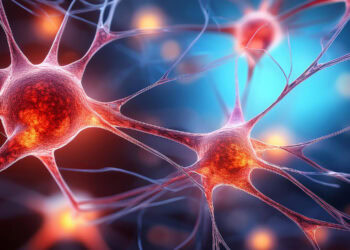
The research team, led by Frank Porreca, focused on nociceptors, the nerve cells located near the spinal cord in the dorsal root ganglion. When these cells are activated by an injury or damage, they send pain signals through the spinal cord to the brain. The researchers wanted to determine if there were any differences in how these cells function in males and females.
“Nociceptors are the sensory nerves that convey signals to the central nervous system that there is danger of damage to the body. These cells are normally activated by high intensity stimuli (e.g., touching a hot stove) so that the information can produce a behavioral response (i.e., remove your hand from the stove),” explained Porreca, the Cosden Professor of Pain and Addiction Studies at the University of Arizona Health Sciences Center.
“However, under some circumstances (e.g., mild inflammation from a sunburn for example), even stimuli of low intensity that do not have the potential to damage the body can activate these neurons to produce a pain signal. This is called nociceptor sensitization and can be produced by many substances in the body.”
To examine this, they used tissue samples from male and female mice, nonhuman primates, and humans. These samples were exposed to two specific substances: prolactin and orexin B. Prolactin is a hormone primarily known for its role in lactation and breast tissue development, while orexin B is a neurotransmitter that helps regulate wakefulness. Interestingly, both prolactin and orexin B have other functions that are still being uncovered, including their potential roles in pain sensitization.
The researchers tested how these substances affected the activation thresholds of nociceptors. The activation threshold is the level of stimulus required to trigger a pain signal. In simpler terms, they wanted to see if these substances made it easier or harder for the nociceptors to send pain signals, and whether this effect differed between males and females.
The researchers discovered that prolactin and orexin B affect nociceptors differently in males and females. Specifically, prolactin was found to sensitize nociceptors in females, meaning that it made their nociceptors more likely to send pain signals even in response to lower-intensity stimuli. This effect was not observed in males. On the other hand, orexin B sensitized nociceptors in males but had no effect in females.
“We found that different substances could produce nociceptor sensitization in the neurons that came from male or female animals and then confirmed this in neurons taken from human donors,” Porreca told PsyPost. “This means that nociceptors can be functionally male or female and that we can differentially block the mechanisms promoting sex-specific sensitization to produce pain therapies specific for patient sex.”
These findings suggest that there are fundamental differences in how male and female nociceptors respond to certain stimuli. This is the first time that such a sex-specific difference in nociceptor function has been observed. The implications of this discovery are profound, as it challenges the long-held belief that the mechanisms driving pain are the same in both sexes.
“The main advance is the concept that there are male and female nociceptors,” Porreca said. “This is something that has never been appreciated and not taught. Considering this concept will result in different medicines and different clinical trials.”
To further confirm their findings, the researchers blocked the signaling pathways of prolactin and orexin B. When they blocked prolactin signaling, they found that nociceptor activation was reduced in females but not in males. Similarly, blocking orexin B signaling was effective in reducing nociceptor activation in males but had no effect in females. This demonstrated that the observed differences were indeed specific to these substances and their interactions with male and female nociceptors.
“Pain can be produced differently in men or women so individualized therapy is possible,” Porreca explained. “Please note that I am not saying that men or women feel more pain or that the pain perception is different in men or women. Only that we have an opportunity for ‘personalized medicine’ based on patient sex.”
While these findings are a significant step forward, the study does have its limitations. One of the primary limitations is the relatively small sample size, particularly when it comes to human tissue samples. The availability of such samples is limited, which constrains the scope of the study.
“Humans are so diverse,” Porreca noted. “We studied cells from human donors but increased numbers of cells from many different ages of humans, ethnic backgrounds, races, etc will be a consideration going forward.”
Additionally, while the study identified differences in nociceptor function between males and females, the underlying reasons for these differences remain unclear. Are these differences due to variations in receptor expression levels, or are there other factors at play? These are questions that will need to be explored in future research.
The study primarily focused on the effects of prolactin and orexin B. But it is likely that other substances also contribute to the observed sex differences in pain perception. Future research will need to explore other potential mechanisms and pathways that could be involved.
Looking ahead, the researchers plan to continue investigating other sexually dimorphic mechanisms of pain. They are particularly interested in exploring the potential for developing sex-specific pain treatments based on these findings. For instance, targeting prolactin signaling could be a promising approach for treating pain conditions that are more prevalent in women, while targeting orexin B signaling might be more effective for pain conditions that affect men.
“We hope to increased understanding to contribute to discovery of new pain therapies specifically for men or specifically for women,” Porreca said.
The study, “Nociceptors are Functionally Male or Female: From Mouse to Monkey to Man,” was authored by Harrison Stratton, Grace Lee, Mahdi Dolatyari, Andre Ghetti, Tamara Cotta, Stefanie Mitchell, Xu Yue, Mohab Ibrahim, Nicolas Dumaire, Lyuba Salih, Aubin Moutal, Liberty François-Moutal, Laurent Martin, Edita Navratilova, and Frank Porreca.