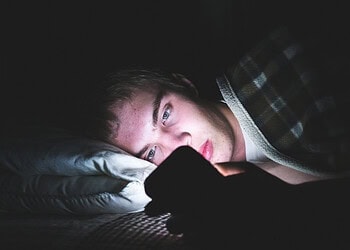
An analysis of UK Biobank data found that individuals who spend more time in daylight exhibit a lower risk of major depressive disorder, post-traumatic stress disorder (PTSD), psychosis, and self-harm behavior. Independent of this, greater light exposure during nighttime was associated with increased risks of major depressive disorder, generalized anxiety disorder, PTSD, psychosis, bipolar disorder, and self-harm behavior. The study was published in Nature Mental Health.
Circadian rhythms are natural, internal processes that regulate the sleep-wake cycle and recur approximately every 24 hours. Influenced by external cues like light and darkness, these rhythms are vital for maintaining various physiological functions, including hormone release, body temperature regulation, and metabolism. Disturbances in circadian rhythms can significantly impact overall health and well-being.
Research suggests a strong connection between circadian rhythms and psychiatric disorders. Many psychiatric conditions, such as depression, bipolar disorder, and certain sleep disorders, are associated with disruptions in circadian rhythms. For example, individuals with depression often exhibit irregularities in their sleep-wake cycles, and disruptions to the circadian system can exacerbate mood disorders.
In humans, the central “clock” regulating circadian rhythms is located in the suprachiasmatic nuclei of the hypothalamus region of the brain. Rhythms produced by this area of the brain are regulated by daily light exposure patterns. Researchers believe that the modern way of life, which includes lower exposure to natural daylight and increased exposure to artificial light during the night, might create a disruption of the circadian rhythms and contribute to adverse mental health outcomes.
Study author Angus C. Burns and his colleagues aimed to investigate whether exposure to natural light during the day and artificial light at night is associated with psychiatric disorders involving disturbances in circadian rhythms. They hypothesized that greater daylight exposure would correlate with a lower risk of psychiatric disorders and improved mood, while greater nighttime light exposure would correlate with a higher risk of psychiatric disorders and poorer mood.
The team analyzed data from 86,631 individuals in the UK Biobank database, a large-scale biomedical database and research resource containing genetic and health data from over 500,000 UK residents. This data is extensively used in research to understand the complex interactions between genetics, lifestyle, and various diseases.
The light exposure data for this study were gathered in 2013, when over 100,000 UK Biobank participants took part in a 7-day physical activity and light exposure study. During this time, participants wore an accelerometer with a light sensor on their dominant wrist for seven days, which recorded data on their movements and light levels. Psychiatric data were collected in 2016, when participants were asked to complete an online mental health questionnaire.
The results indicated that higher exposure to light at night was associated with increased odds of major depressive disorder, generalized anxiety disorder, PTSD, and psychosis. For the entire sample, there was no link to bipolar disorder; however, participants with the highest levels of nighttime light exposure had an increased risk of this disorder.
On the other hand, higher daytime light exposure was associated with lower odds of major depressive disorder, self-harm, and psychosis. Increased nighttime light exposure was also associated with a higher risk that an individual will have multiple psychiatric disorders at once.
“Our findings demonstrate a consistent association of light-exposure patterns that are healthy for circadian rhythms with better psychiatric outcomes. These results suggest that light-exposure interventions may act in a transdiagnostic manner to improve mental health by strengthening circadian rhythms. Brighter days and darker nights may be a simple, freely available, non-pharmacological intervention to enhance mental health that is easily implementable in a community setting,” the study authors concluded.
The study sheds light on the links between light exposure patterns and mental health. However, it also has limitations that need to be taken into account. Notably, the study design does not allow any cause-and-effect conclusions to be derived from the results. It is possible that light exposure patterns affect mental health, but it is also possible that mental health conditions affect behavior in a way that produces the observed differences in light exposure patterns.
The paper, “Day and night light exposure are associated with psychiatric disorders: an objective light study in >85,000 people”, was authored by Angus C. Burns, Daniel P. Windred, Martin K. Rutter, Patrick Olivier, Céline Vetter, Richa Saxena, Jacqueline M. Lane, Andrew J. K. Phillips, and Sean W. Cain.