The COVID-19 pandemic brought about a unique set of challenges, impacting not only our physical health but also our mental well-being. A recent study conducted by researchers at the University of York has highlighted a particularly intriguing consequence: the feeling of social and temporal disorientation. According to the study, published in the British Journal of Psychology, many people found themselves confused about the sequence of events and struggled to remember what day it was during the pandemic.
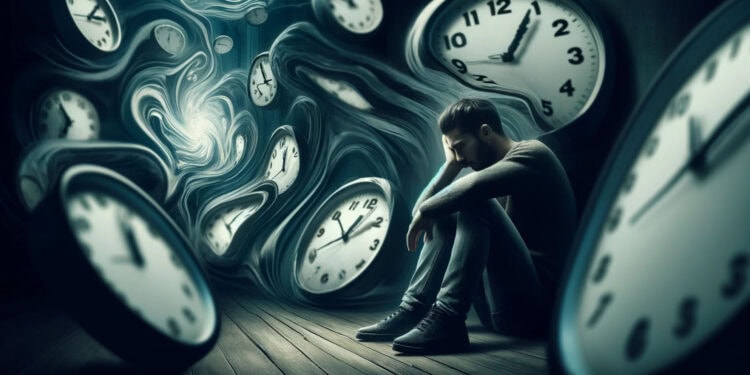
As the pandemic spread globally, it disrupted daily routines and social interactions on an unprecedented scale. Researchers sought to understand the psychological impact of these disruptions, specifically focusing on feelings of disorientation. The concept of disorientation includes both social disorientation (feeling out of place in social situations) and temporal disorientation (confusion about the passage of time).
Given the significant changes in lifestyle and social interactions during the pandemic, understanding these phenomena could provide insights into how to better support mental health during crises.
To investigate the psychological effects of the pandemic, the researchers developed a detailed questionnaire. They surveyed over 3,300 participants in France during a period of strict lockdowns and curfews. The questionnaire included nearly 60 questions designed to measure social and temporal disorientation. Participants were asked about their social interactions, feelings of loneliness, and their sense of time before and during the pandemic.
The survey collected demographic information, including age, gender, and occupation. It also included questions from the Global Psychotrauma Screening to assess the broader psychological impact of the pandemic. The researchers aimed to explore the relationship between social disorientation and temporal disorientation, hypothesizing that social isolation could lead to disruptions in the experience of time.
The study revealed that both social and temporal disorientation were common during the pandemic. Many participants described feeling unsure of how to behave in social situations and experiencing a blurring of time. They struggled to keep track of days and felt more anxious about the future.
One of the key findings was the link between social isolation and temporal disorientation. Participants who felt more socially isolated were also more likely to experience confusion about time. This suggests that feeling disconnected from others can warp our perception of time, making it harder to remember past events and plan for the future.
Pablo Fernandez Velasco, the lead author of the study, explained: “We found that social disorientation was a strong predictor of temporal disorientation and it looks likely that there was a causal relationship between the two. Feeling lonely and isolated from others seems to warp our perception of time, with a sense of feeling lost and confused spanning the past, present and future.”
The study also identified specific demographic groups that were more affected by disorientation. Young people under 25 reported the highest levels of social and temporal disorientation. This age group struggled the most with the psychological impacts of the pandemic, possibly due to the disruption of their social lives and educational routines.
While the study provides valuable insights, it also has limitations. The survey was conducted during a specific period of the pandemic in France, and the findings may not be generalizable to other regions or times. Additionally, the study relied on self-reported data, which can be subject to biases.
Future research could address these limitations by conducting longitudinal studies that track changes in disorientation over time and across different regions. It would also be beneficial to explore interventions that could mitigate the effects of social isolation on temporal perception. For example, promoting virtual social interactions or community support programs could help reduce feelings of loneliness and improve people’s sense of time.
Moreover, the concept of “temporal rupture,” introduced by the researchers, warrants further investigation. This term describes the feeling of a rift separating the time before and after the pandemic, which many participants experienced. Understanding this phenomenon could provide deeper insights into how major crises affect our perception of time and our mental health.
“The larger the experienced rift between pre-pandemic and pandemic times, the more disorientated people felt,” Velasco said. “The personal accounts collected in our study help advance the understanding of the potential impacts of feelings of loneliness and isolation via the extraordinary experiences of the pandemic.”
The study, “Social and temporal disorientation during the Covid-19 pandemic: An analysis of 3306 responses to a quantitative questionnaire,” was authored by Pablo Fernandez Velasco, Bastien Perroy, Umer Gurchani, and Roberto Casati.