Subscribe
The latest psychology and neuroscience discoveries.
My Account
  • Mental Health
  • Social Psychology
  • Cognitive Science
  • Neuroscience
  • About
No Result
View All Result
PsyPost
PsyPost
No Result
View All Result
Home Exclusive Psychopharmacology Psychedelic Drugs LSD

LSD allows more information to flood into the brain by altering activity in the thalamus

by Eric W. Dolan
February 2, 2019
in LSD, Psychopharmacology
A strip of LSD blotter paper depicting Albert Hofman, who discovered the chemical. (Photo credit: LordToran)

A strip of LSD blotter paper depicting Albert Hofman, who discovered the chemical. (Photo credit: LordToran)

Share on TwitterShare on Facebook

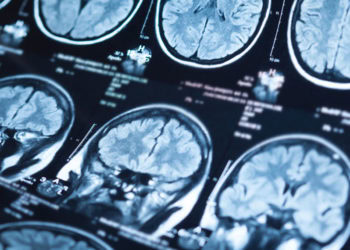
New neuroimaging research provides evidence that the psychedelic drug LSD alters the capacity of the thalamus to control the flow of sensory information to other areas of the brain.

The thalamus is a small section of the midbrain through which most sensory inputs from the body flow. The new findings, which appear in Proceedings of the National Academy of Sciences, indicate that LSD decreases information filtering in the thalamus — allowing more information than normal to flood into the brain.

“LSD and other psychedelics induce unique effects on perception and emotion. These effects could on the one hand be interesting to understand certain symptoms in psychiatric patients (for example schizophrenia), but they could also be clinically beneficial for the treatment of other illnesses (for example depression),” said study author Katrin Preller of the University of Zurich.

“Therefore, understanding how LSD acts in the brain provides information about how our brain works in general and may also have implications for the treatment of psychiatric disorders.”

Based on fMRI data from 25 people, ages 20-34, the researchers found that LSD altered the connectivity between brain regions involved in cortico-striato-thalamo-cortical (CSTC) loop. In particular, there was an increase in connectivity between the thalamus and several regions in the cortex.

“We tested a model that tries to explain how psychedelics work in the brain based on animal studies and that had been around for about 20 years. We showed that this model holds mostly true in humans: The thalamus, which is usually filtering information, sends more information to certain areas in the cortex,” Preller told PsyPost.

“This can explain why psychedelics induce the overwhelming feelings that participants report. It also points to the importance of connections between the thalamus and certain cortical areas in psychiatric symptoms.”

The researchers also found evidence that this was related to serotonergic activity. The serotonin 2A receptor antagonist ketanserin — a drug that blocks serotonin receptors in the brain — inhibited the mind-altering effects of LSD.

Google News Preferences Add PsyPost to your preferred sources

But the study — like all research — includes some limitations.

“Currently the method we used only allowed us to test connections between a limited number of brain areas. Testing different brain areas will provide a more complete picture in the future,” Preller said.

The study, “Effective connectivity changes in LSD-induced altered states of consciousness in humans“, was authored by Katrin H. Preller, Adeel Razi, Peter Zeidman, Philipp Stämpfli, Karl J. Friston, and Franz X. Vollenweider.
Previous Post

Study provides new insights into why cyberbullying victims are blamed for being abused online

Next Post

Brain changes related to religion and spirituality could confer resilience to depression

RELATED

Distinct neural pathways link fear of missing out and negative emotions to compulsive phone use
Cannabis

Co-occurring depression and cannabis use linked to less efficient brain networks

March 28, 2026
Neuroimaging study finds gray matter reductions in first-time fathers
Addiction

Brain scans reveal how poor sleep fuels negative emotions in alcohol addiction

March 28, 2026
Single dose of 5-MeO-DMT alters gene expression in brain and reduces anxiety-like behavior in stressed mice
MDMA

First direct comparison of MDMA and MDA reveals distinct psychedelic differences

March 27, 2026
The science of magic mushrooms: Fascinating findings from 7 new studies of psilocybin
Psilocybin

A new study measures the temporal distortions caused by psychedelics

March 26, 2026
Antidepressant effects of psychedelics may be overstated in some clinical trials
Psychedelic Drugs

Occasional use of classic psychedelics linked to enhanced cognitive flexibility in young adults

March 23, 2026
New psychology research sheds light on the mystery of deja vu
Psilocybin

Study links psilocybin receptor activation to sustained structural brain changes

March 22, 2026
People with cannabis disorder do not seem to pay increased attention to pictures of cannabis
Cannabis

People with cannabis disorder do not seem to pay increased attention to pictures of cannabis

March 22, 2026
Your music playlist might reveal subtle clues about your intelligence
Neuroimaging

Psilocybin unlocks a specific biological signature in the brain linked to profound mystical states

March 19, 2026

STAY CONNECTED

RSS Psychology of Selling

  • What communication skills do B2B salespeople actually need in a digital-first era?
  • A founder’s smile may be worth millions in startup funding, research suggests
  • What actually makes millennials buy products on sale?
  • The surprising coping strategy that may help salespeople avoid burnout
  • When saying sorry with a small discount actually makes things worse

LATEST

Countries holding stronger precarious manhood beliefs tend to be less happy, study finds

Metacognitive training reduces hostility between left-wing and right-wing voters

Pink noise worsens sleep quality when used to block out traffic and city noise

Co-occurring depression and cannabis use linked to less efficient brain networks

Knowing an AI is involved ruins human trust in social games

Brain scans reveal how poor sleep fuels negative emotions in alcohol addiction

Audio tapes reveal mass rule-breaking in Milgram’s obedience experiments

People with social anxiety experience more meaningful interactions in small groups

PsyPost is a psychology and neuroscience news website dedicated to reporting the latest research on human behavior, cognition, and society. (READ MORE...)

  • Mental Health
  • Neuroimaging
  • Personality Psychology
  • Social Psychology
  • Artificial Intelligence
  • Cognitive Science
  • Psychopharmacology
  • Contact us
  • Disclaimer
  • Privacy policy
  • Terms and conditions
  • Do not sell my personal information

(c) PsyPost Media Inc

Welcome Back!

Login to your account below

Forgotten Password?

Retrieve your password

Please enter your username or email address to reset your password.

Log In

Add New Playlist

Subscribe
  • My Account
  • Cognitive Science Research
  • Mental Health Research
  • Social Psychology Research
  • Drug Research
  • Relationship Research
  • About PsyPost
  • Contact
  • Privacy Policy

(c) PsyPost Media Inc