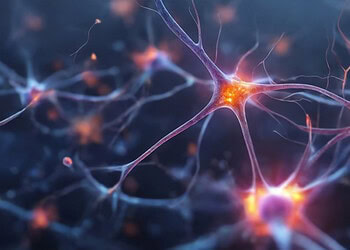
New research illuminates how the psychedelic drug LSD changes our perception of music. The study found that LSD altered the neural response to music in brain regions associated with auditory processing, memory, emotion, and self-directed thought.
“I have always been fascinated by emotion, memory, and altered states of consciousness. To this end, I completed my PhD in cognitive neuroscience at UC Davis with Petr Janata, using computational models of music cognition to study the neural basis of emotions and memories evoked by music,” said study author Frederick Barrett of Johns Hopkins University School of Medicine.
“With the very powerful tools of psychedelic drugs becoming available to researchers, and with the very intimate connection between music and psychedelic subjective experiences, a natural question is: how do psychedelics alter how the brain processes music? Drs. Preller and Vollenweider, from the University of Zürich, conducted a study of the effects of LSD on meaning making during music listening, and were kind enough to collaborate with me and allow me to apply the computational models of music cognition that I had worked with in graduate school to analyze their imaging data collected during music listening after administration of LSD.”
In their study, Preller and Vollenweider first surveyed 25 healthy participants about songs that had personal meaning for them. The participants then listened to personally meaningful songs and non-meaningful songs after receiving LSD or a placebo. During one session they also received a dose of LSD combined with ketanserin, a drug which blocks the ability of LSD to act at serotonin 2A receptors.
The researchers found that non-meaningful songs gained a sense of meaningfulness under the influence of LSD. “Our results increase our understanding of how personal relevance attribution is enabled in the brain,” Preller explained.
In the original experiment, the researchers had recorded the brain activity of the participants using fMRI. Using a method known as tonality-tracking analysis, Barrett and his colleagues conducted a secondary analysis of this data.
They found that LSD changed the neural response to music in a number of brain regions, including the superior temporal gyrus, inferior frontal gyrus, medial prefrontal cortex, and amygdala. The findings were published in the scientific journal Cerebral Cortex.
“Music can evoke a wide range of emotions, memories, and other feelings and states of mind. We can often identify with music, and music can change the way that we feel about and think about ourselves,” Barrett told PsyPost.
“In the same way, music also engages a broad range of brain regions involved in memory, emotion, attention, and self-directed thought. LSD increases the degree to which these brain areas process music, and it seems to use a brain mechanism that is shared across all psychedelic drugs (serotonin 2A receptor signaling).”
“These brain changes during music listening and LSD may (hypothetically) be the mechanism by which psychedelic drugs can be therapeutic,” Barrett said. “Also, these brain changes may uncover the underlying way that our brain makes meaning, with or without music and psychedelic drugs.”
Several studies have found evidence that psychedelic drugs can be of use in the treatment of psychiatric conditions. But there are still many unknowns.
“While psychedelic drugs can be safely administered in a controlled setting to properly screened individuals, they are still very powerful drugs that may not be safe for everyone and may not be safe in many circumstances. The degree to which these elements (music, LSD, and serotonin 2A receptor signaling) are necessary for any successful therapy has yet to be determined,” Barrett explained.
“The degree to which any of these elements interacts with challenging experiences (or ‘bad trips’) has yet to be determined. Also, the degree to which we can optimize music listening during psychedelic therapy sessions has yet to be determined, though these are all active areas of research.”
“Psychedelics are powerful drugs that hold promise to help us to heal, understand our brains and minds, and potentially uncover the elusive basis of consciousness itself,” Barrett added.
The study, “Serotonin 2A Receptor Signaling Underlies LSD-induced Alteration of the Neural Response to Dynamic Changes in Music“, was authored by Frederick S Barrett, Katrin H Preller, Marcus Herdener, Petr Janata, and Franz X Vollenweider.