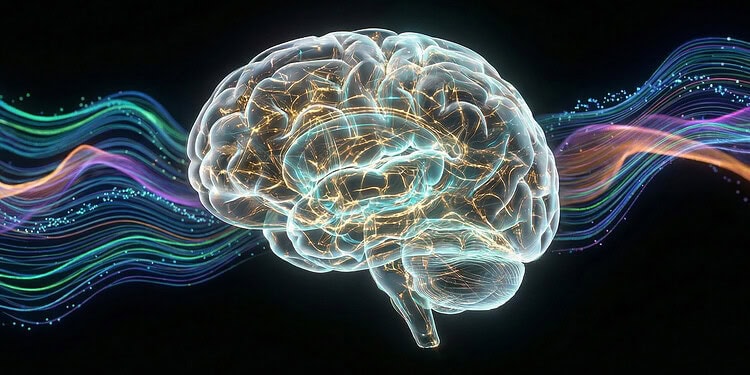
Researchers have developed a machine learning model capable of predicting whether a patient with depression will respond to standard antidepressant medication. By analyzing electrical activity in the brain, the system forecasts treatment success with high accuracy before the patient takes a single pill. These findings suggest that specific patterns of brain connectivity and oscillation could serve as reliable biological markers for personalized mental health care. The study was published in the Journal of Affective Disorders.
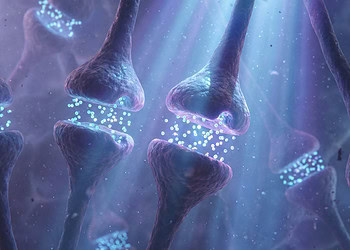
Major depressive disorder is a debilitating condition that affects mood, cognitive function, and physical health. It imposes a heavy burden on daily life and the economy. The standard medical approach involves prescribing antidepressants known as Selective Serotonin Reuptake Inhibitors, or SSRIs. These drugs aim to increase the levels of serotonin available to nerve cells. This chemical messenger helps regulate mood and neuroplasticity.
Medical professionals face a difficult challenge when prescribing these drugs. SSRIs provide relief for only about half of the patients who take them. Doctors currently lack a reliable method to determine which patients will benefit. They rely on a strategy of trial and error. A patient is prescribed a medication and must wait four to six weeks to see if symptoms improve. If the drug fails, the process begins again with a new prescription. This delay extends the patient’s suffering and increases the risk of side effects.
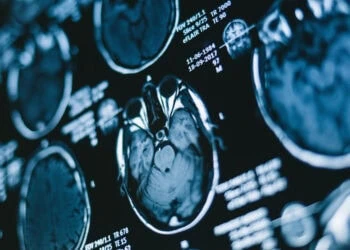
Gang Li and Boyi Huang, researchers from Zhejiang Normal University, led a team to address this inefficiency. They sought to identify objective biological indicators that could predict drug efficacy. Their goal was to move away from empirical adjustments toward a more precise, neurobiologically informed approach. The researchers focused on Electroencephalography, or EEG, as their primary tool. EEG involves placing sensors on the scalp to record the brain’s electrical activity. It is non-invasive and captures the rapid, millisecond-by-millisecond changes in neural firing.
The researchers recruited 27 patients diagnosed with depression for the initial phase of the study. They recorded resting-state EEG data from each participant before any treatment began. The patients then underwent a two-week course of SSRI therapy. The researchers used the Hamilton Depression Rating Scale to measure the severity of symptoms. They assessed the patients again after the two-week treatment period. Based on the reduction in their symptom scores, the patients were divided into two groups. Those whose scores dropped by at least 50 percent were classified as responders. Those with less improvement were classified as non-responders.
The team employed artificial intelligence to analyze the complex data gathered from the EEG recordings. They did not rely on a single measurement. Instead, they extracted three distinct types of features from the brain wave signals. This multidimensional approach allowed them to view brain activity from different perspectives.
The first feature examined was relative power. This measures the distribution of energy across different frequency bands of brain waves. It helps identify which rhythms are dominant in the brain’s electrical landscape. The second feature was fuzzy entropy. This concept quantifies the complexity or irregularity of the brain signals. It provides insight into the dynamic nature of neural activity. The third feature was the phase lag index. This metric assesses how well different regions of the brain communicate with one another. It filters out noise to reveal genuine functional connections between distinct neural networks.
The researchers fed these features into a machine learning framework. They used a technique called Support Vector Machine to classify the patients. To optimize the model, they incorporated a process known as recursive feature elimination. This algorithm works by iteratively removing the least useful data points. It keeps only the features that contribute most to accurate predictions. This step was vital for reducing noise and identifying the most relevant biological signals.
The study also investigated the optimal duration of EEG recording needed for accurate analysis. The researchers tested time windows ranging from 4 to 14 seconds. They found that a 12-second segment of brain wave data provided the best balance of information. This duration allowed the model to capture stable patterns of brain activity without being overwhelmed by excessive data.
The machine learning model achieved a classification accuracy of 96.83 percent on the initial group of 27 patients. This high rate of success indicates that the selected EEG features contained distinct patterns that separated responders from non-responders. The model proved capable of identifying the subtle neurophysiological differences that dictate drug response.
To verify that the computer program had not simply memorized the initial data, the researchers conducted a validation test. They recruited an independent group of five additional patients with depression. They applied the same EEG recording and treatment protocols. The pre-trained model analyzed their brain waves to predict their treatment outcomes. The system predicted the efficacy of the medication with 100 percent accuracy for four of the patients and 97.67 percent for the fifth. This successful validation suggests the model has strong generalizability.
The analysis revealed specific biological differences between the two groups. The most predictive feature was activity in the Beta2 frequency band. This is a fast-paced brain rhythm associated with alertness and cognitive processing. The researchers found that patients who responded well to SSRIs had higher Beta2 activity before treatment began. This specific rhythm appears to be a key indicator of a brain’s readiness to respond to serotonin-targeting drugs.
The study also highlighted the importance of brain connectivity. The analysis showed that responders had more robust functional connections between different brain areas. This was particularly evident in “long-range” connections that span across the brain. Roughly 81 percent of the distinguishing connectivity features involved these distant interactions.
The frontal cortex played a prominent role in these networks. This region of the brain is essential for emotional regulation and higher-order thinking. The findings showed that responders exhibited stronger engagement of frontal networks compared to non-responders. This suggests that a brain with better integration between the frontal cortex and other regions is more likely to benefit from SSRI treatment.
The researchers observed that non-responders tended to have higher connectivity in the slower Theta frequency band. In contrast, responders showed enhanced connectivity in higher frequency bands, including Alpha and Beta rhythms. This shift toward higher-frequency communication may reflect a more active or adaptive neural state.
These discoveries offer a potential explanation for why some patients fail to improve on standard medication. Their brains may lack the specific baseline activity and network integrity required for the drug to work. The Beta2 rhythm and long-range connectivity patterns act as signatures of this underlying physiological state.
There are limitations to this research that must be considered. The primary constraint is the small sample size. The study relied on a total of 32 patients. While the results are statistically robust within this group, larger studies are necessary. Researchers need to test the model on hundreds or thousands of patients to ensure it works for the general population.
The study population was drawn from a single hospital. This lacks geographic and demographic diversity. Future research should include participants from multiple centers and diverse backgrounds. This would help confirm that the findings are universal and not specific to one group of people.
The model currently focuses on SSRIs. It is not yet clear if these biomarkers can predict responses to other types of antidepressants. Future investigations could explore whether similar EEG features apply to different classes of medication. This would expand the clinical utility of the tool.
The machine learning approach used here is complex. Translating it into a user-friendly clinical tool will require further development. Doctors need a system that is easy to interpret and integrate into their daily workflow. The researchers aim to refine the algorithm and validate it in broader clinical trials.
Despite these caveats, the study represents a step forward in precision psychiatry. It demonstrates that objective, physiological data can guide mental health treatment. Moving away from trial and error could save patients months of ineffective treatment. It could also reduce the emotional and financial costs associated with untreated depression.
The study, “Neurophysiological mechanisms and predictive modeling of SSRI treatment response in depression disorder based on multidimensional EEG features,” was authored by Gang Li, Boyi Huang, Yuling Wang, Bin Zhou, Fo Hu, and Linbing Wang.