![[Adobe Stock]](https://sp-ao.shortpixel.ai/client/to_webp,q_glossy,ret_img,w_750,h_375/https://www.psypost.org/wp-content/uploads/2022/10/brain-scans-1-750x375.jpg)
A new study recently published in BMC Neuroscience indicates that female brains respond differently to pictures of newborn infants as compared to male brains on average. Women’s brains tend to show more activity in areas related to facial recognition, attention, and empathy. This research may contribute to an understanding of male and female parenting differences and how to help men be more responsive to their infants.
For infants to get their needs met, the caregivers around them must be able to understand their nonverbal signals. These emotional signals consist of facial expressions and noises indicating pleasure, pain, or sadness. Throughout history, in most cultures, women have taken greater responsibility for the care of infants.
Studies have shown that women exhibit a greater preference for infants and display different neural patterns when responding to infant cues than men. For example, when hearing an infant cry, MRI scans have found that female brains will stop their mind wandering and give attention to the sound, whereas male brain are more likely to continue daydreaming.
Although eons of qualitative data have led to the assumption that there are gender differences in responding to infant facial expressions, there is little empirical evidence to support this conclusion. Kaihua Zhang and colleagues intended to use fMRI scans to examine brain activity that may explain the observed gender differences.
The research team recruited a group of 51 childless men and women (26 women). While in the fMRI scanner, the participants were shown images of infant faces in various emotional states, including happy, neutral, and sad faces.
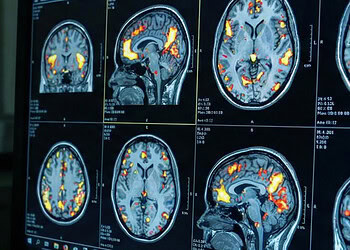
The study found that the brains of women and men reacted differently to the images of infants’ faces, with differences appearing in facial processing, attention, and empathetic networks. The study design used task-fMRI and resting-state fMRI, which helped to unravel how brain processing changes when an infant cue is introduced.
The research found that neural activation in women increased in several areas during the processing of infant emotional faces, such as visual areas, limbic areas, temporoparietal areas, temporal areas, and the cerebellum. This revealed that attending to and experiencing infants’ emotions requires complex neural activity.
Additionally, male and female brains had different functional connectivity (FC), meaning female brains showed more connectivity to various brain regions. In addition, the default mode network (DMN), the area of the brain that is active when you are not focused on the outside world, was more connected to other brain areas in women. This may explain the capacity for female brains to move from daydreaming to attending to infant needs.
In addition, as all of the participants were childless, this may provide evidence that female brains develop differently from male brains, giving them greater capacity to attend to infant needs if necessary.
The results of this study provide evidence that male and female brains reacted differently to infants’ faces, with women exhibiting “increased neural activation and connectivity in regions related to facial processing, attention, and empathetic networks.” These results may explain observed differences in how females adjust to attending to the needs of newborns.
The findings have implications for understanding the neural processing of reacting to infant cues in adults and the mechanisms underlying the mother-infant attachment. Overall, the study highlights the importance of infant emotional stimuli in obtaining caregivers’ attention and illuminates how brain functioning plays a role in adult/infant interaction.
The study, “Gender differences in brain response to infant emotional faces”, was authored by Kaihua Zhang, Xiaoyu Du, Xianling Liu, Wei Su, Zhenhua Sun, Mengxing Wang, and Xiaoxia Du.