Subscribe
The latest psychology and neuroscience discoveries.
My Account
  • Mental Health
  • Social Psychology
  • Cognitive Science
  • Neuroscience
  • About
No Result
View All Result
PsyPost
PsyPost
No Result
View All Result
Home Exclusive Social Psychology Political Psychology

Mock election experiment suggests absentee voters lack confidence that their votes are counted

by Beth Ellwood
September 28, 2020
in Political Psychology
Share on TwitterShare on Facebook

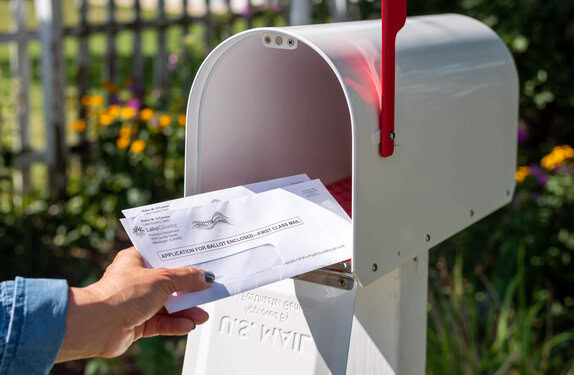
A recent study provides empirical evidence that the way a person casts their ballot in an election affects how confident they are that their vote will be counted. The findings were published in American Politics Research.

As study author Lisa A. Bryant discusses, public trust in electoral outcomes is crucial to the democratic process. With the use of vote-by-mail ballots increasing, it is important to consider how absentee voters perceive the voting process.

Previous research has demonstrated that absentee voters are among the least confident that their votes will be received, but it is not clear why.

“One possible explanation has to do with differences in the voting experience,” Bryant speculates. “Absentee voters do not have direct interaction with the electoral process the way that Election Day or early-in-person voters do. They do not interact with poll workers, voting equipment, or other voters at the polls and do not see their ballots opened or votes tabulated (see also Burden and Gaines, 2015).”

To systematically test how voting method impacts voter confidence, Bryant devised a mock election experiment.

A total of 348 participants who were mostly university students were asked to vote in a fictitious election. To mirror the typical election process, subjects were given professionally printed ballots with the names of fictitious candidates on them. The subjects were also given an information sheet about the candidates to help them make their selection. Next, the participants were split into two conditions.

Each in-person voter (229 participants) fed their ballot into a tabulator where they could see their ballot being accepted and counted. Each absentee voter (119 participants) placed their ballot into “a sealed, signed privacy envelope” and deposited it into a “locked ballot dropbox around the corner from the voting location.”

After casting their vote, each participant completed a survey that included a question measuring their confidence that their vote was counted correctly and a second question assessing their confidence that everyone’s votes were counted correctly.

Google News Preferences Add PsyPost to your preferred sources

An analysis of the data showed that those who voted with the absentee method reported statistically lower levels of confidence that their votes were counted. Specifically, in-person voters had an average confidence level of 4.2 on a five-point scale, and absentee voters had an average confidence score of 3.8. A series of demographic variables were also analyzed, including sex, political affiliation, and being a first-time voter. None of these other variables were associated with confidence in one’s vote being counted.

Moreover, those who voted absentee also had significantly lower levels of confidence in everyone’s votes being counted. Again, none of the demographic variables affected voter’s confidence that others’ votes were counted correctly.

As Bryant reflects, “This suggests that seeing a ballot counted or accepted by the ballot tabulator plays a role in voter confidence and helps explain persistent differences between absentee, or VBM voters, and those who vote in person. Even in controlled settings, where participants know that their ballot has been received, they still express lower confidence that their vote will be counted correctly.”

While election officials continue to strive to improve voter confidence, these findings suggest that, when it comes to absentee voting, this is no simple task. Bryant observes, “providing voters a greater variety of ways to cast their ballot via no-excuse absentee ballots or all mail elections may result in unintended consequences and actually produce lower rates of confidence.”

The researcher continues, “barring improvements in remote voter assistance or better ballot-tracking systems that can confirm a ballot was counted, we should continue to expect lower levels of confidence among absentee voters.”

The study, “Seeing Is Believing: An Experiment on Absentee Ballots and Voter Confidence”, was authored by Lisa A. Bryant.


Previous Post

New study suggests there are neurobiological constraints on women’s sexual fluidity

Next Post

Study on deployed soldiers indicates that personalities are surprisingly stable even in the face of dramatic adversity

RELATED

Scientists reveal the impact of conspiracy theories on personal relationships and dating success
Conspiracy Theories

The exact political location where conspiracy theories thrive

April 3, 2026
This psychological factor might help unite America or “destroy us from within”
Political Psychology

The psychological divide between Democrats and Republicans during democratic backsliding

April 2, 2026
Study links phubbing sensitivity to attachment patterns in romantic couples
Artificial Intelligence

How generative artificial intelligence is upending theories of political persuasion

April 1, 2026
Belief in the harmfulness of speech is linked to both progressive ideology and symptoms of depression
Political Psychology

Belief in the harmfulness of speech is linked to both progressive ideology and symptoms of depression

April 1, 2026
Shifting genetic tides: How early language skills forecast ADHD and literacy outcomes
Authoritarianism

How a twin study untangled the surprising roots of authoritarian political beliefs

March 31, 2026
High meat consumption may protect against cognitive decline in people with a specific Alzheimer’s gene
Political Psychology

Metacognitive training reduces hostility between left-wing and right-wing voters

March 28, 2026
New Harry Potter study links Gryffindor and Slytherin personalities to heightened entrepreneurship
Moral Psychology

New psychology research pinpoints a key factor separating liberal and conservative morality

March 25, 2026
Brain MRI scans showing different views and slices for neurological and psychological research, highlighting brain structure and function analysis.
Neuroimaging

Brain scans reveal Democrats and Republicans use different neural pathways to buy groceries

March 23, 2026

STAY CONNECTED

RSS Psychology of Selling

  • What today’s shoppers really want from salespeople, and what drives them away
  • The salesperson who competes against themselves may outperform the one trying to beat everyone else
  • When sales managers serve first, salespeople stay longer and sell more confidently
  • Emotional intelligence linked to better sales performance
  • When a goal-driven boss ignores relationships, manipulative employees may fight back

LATEST

Higher testosterone linked to increased suicide risk in depressed teenage boys

Brain scans reveal how a woman voluntarily enters a psychedelic-like trance without drugs

The hidden mental cost of emotional rigidity in young adults

Hostile sexism is linked to higher rates of social sabotage and gossip among young adults

Can a psychedelic journey change what you value most?

Family dynamics predict whether parents and children agree on choosing a romantic partner

Job seekers mask their emotions and act more analytical when evaluated by artificial intelligence

Your body exhibits subtle physiological changes when you engage in self-deception

PsyPost is a psychology and neuroscience news website dedicated to reporting the latest research on human behavior, cognition, and society. (READ MORE...)

  • Mental Health
  • Neuroimaging
  • Personality Psychology
  • Social Psychology
  • Artificial Intelligence
  • Cognitive Science
  • Psychopharmacology
  • Contact us
  • Disclaimer
  • Privacy policy
  • Terms and conditions
  • Do not sell my personal information

(c) PsyPost Media Inc

Welcome Back!

Login to your account below

Forgotten Password?

Retrieve your password

Please enter your username or email address to reset your password.

Log In

Add New Playlist

Subscribe
  • My Account
  • Cognitive Science Research
  • Mental Health Research
  • Social Psychology Research
  • Drug Research
  • Relationship Research
  • About PsyPost
  • Contact
  • Privacy Policy

(c) PsyPost Media Inc