Subscribe
The latest psychology and neuroscience discoveries.
My Account
  • Mental Health
  • Social Psychology
  • Cognitive Science
  • Neuroscience
  • About
No Result
View All Result
PsyPost
PsyPost
No Result
View All Result
Home Exclusive Mental Health

Molecular tweezers: Physicists push new Parkinson’s treatment toward clinical trials

by Michigan State University
April 21, 2014
in Mental Health
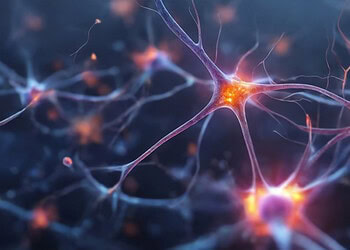
Photo credit: Wellcome Images (Creative Commons)

Photo credit: Wellcome Images (Creative Commons)

Share on TwitterShare on Facebook

The most effective way to tackle debilitating diseases is to punch them at the start and keep them from growing.

Research at Michigan State University, published in the Journal of Biological Chemistry, shows that a small “molecular tweezer” keeps proteins from clumping, or aggregating, the first step of neurological disorders such as Parkinson’s disease, Alzheimer’s disease and Huntington’s disease.

The results are pushing the promising molecule toward clinical trials and actually becoming a new drug, said Lisa Lapidus, MSU associate professor of physics and astronomy and co-author of the paper.

“By the time patients show symptoms and go to a doctor, aggregation already has a stronghold in their brains,” she said. “In the lab, however, we can see the first steps, at the very place where the drugs could be the most effective. This could be a strong model for fighting Parkinson’s and other diseases that involve neurotoxic aggregation.”

Lapidus’ lab uses lasers to study the speed of protein reconfiguration before aggregation, a technique Lapidus pioneered. Proteins are chains of amino acids that do most of the work in cells. Scientists understand protein structure, but they don’t know how they are built – a process known as folding.

Lapidus’ lab has shed light on the process by correlating the speed at which an unfolded protein changes shape, or reconfigures, with its tendency to clump or bind with other proteins. If reconfiguration is much faster or slower than the speed at which proteins bump into each other, aggregation is slow, but if reconfiguration is the same speed, aggregation is fast.

Srabasti Acharya, lead author and doctoral candidate in Lapidus’ lab, tested the molecule, CLR01, which was patented jointly by researchers at the University of Duisburg-Essen (Germany) and UCLA. CLR01 binds to the protein and prevents aggregation by speeding up reconfiguration. It’s like a claw that attaches to the amino acid lysine, which is part of the protein.

This work was preceded by Lapidus’ research involving the spice curcumin. While the spice molecules put the researchers on a solid path, the molecules weren’t viable drug candidates because they cannot cross the blood-brain barrier, or BBB, the filter that controls what chemicals reach the brain.

Google News Preferences Add PsyPost to your preferred sources

It’s the BBB, in fact, that disproves the notion that people should simply eat more spicy food to stave off Parkinson’s disease.

Spicy misconceptions notwithstanding, CLR01 mimics curcumin molecules’ ability to prevent aggregation. But unlike the spice, CLR01 can crossover the BBB and treat its targeted site. Not only do they go to the right place, but CLR01 molecules also work even better because they speed up reconfiguration even more than curcumin. Additionally Acharya showed that CLR01 slows the first step of aggregation, and the results from the study map out a clear road map for moving the drug to clinical trials.

Hearing about a nontraditional physics lab that was advancing medicine is what brought Acharya to work with Lapidus.

“I knew I wanted to study physics when I came to MSU, but when I heard Dr. Lapidus’ presentation during orientation, I knew this is what I wanted to do,” Acharya said. “We are using physics to better understand biology to help cure actual diseases.”

To help move the research to the next phase, Gal Bitan, co-author and professor at UCLA, is using crowdsourcing to raise funds for the clinical trials. Log on to the indiegogo.com website for more information.

Previous Post

Teachers’ scare tactics may lead to lower exam scores

Next Post

The collective action problem helps explain lack of revolts on America-bound slave ships

RELATED

Your brain might understand music theory better than you think, regardless of formal training
Early Life Adversity and Childhood Maltreatment

An unpredictable childhood predicts greater psychological distress during the Israel-Hamas war

April 8, 2026
Alcohol use disorder: Novel procedure identifies individual differences in coping strategies
Mental Health

Maternal exposure to short-chain PFAS causes persistent memory problems in adult rats

April 7, 2026
Obesity before pregnancy linked to autism-like behavior in male offspring, study finds
Addiction

Early life stress fundamentally alters alcohol processing in the brain

April 7, 2026
Trump links Tylenol and autism. What does current research actually say?
Autism

Autism associated with age of maternal grandparents in new study

April 7, 2026
New study claims antidepressant withdrawal is less common than thought. But there’s a big problem
Addiction

A common antidepressant shows promise in treating methamphetamine dependence

April 7, 2026
Depression

A smaller social network increases loneliness more drastically for those with depression

April 7, 2026
Male victimhood ideology driven by perceived status loss, not economic hardship, among Korean men
Mental Health

Hikikomori: Can psychological resilience prevent extreme social withdrawal?

April 6, 2026
Brain rot and the crisis of deep thought in the age of social media
Anxiety

Anxious young adults are more likely to develop digital addictions

April 6, 2026

STAY CONNECTED

RSS Psychology of Selling

  • Political conservatives are more drawn to baby-faced product designs, and purity values explain why
  • Free gifts with no strings attached can boost customer spending by over 30%, study finds
  • New research reveals the “Goldilocks” age for social media influencers
  • What today’s shoppers really want from salespeople, and what drives them away
  • The salesperson who competes against themselves may outperform the one trying to beat everyone else

LATEST

An unpredictable childhood predicts greater psychological distress during the Israel-Hamas war

Toddlers are happier giving treats to others than receiving them, study finds

Your brain might understand music theory better than you think, regardless of formal training

Can psychopaths change? New research suggests tailored treatments might work

Maternal exposure to short-chain PFAS causes persistent memory problems in adult rats

Early life stress fundamentally alters alcohol processing in the brain

Autism associated with age of maternal grandparents in new study

A common antidepressant shows promise in treating methamphetamine dependence

PsyPost is a psychology and neuroscience news website dedicated to reporting the latest research on human behavior, cognition, and society. (READ MORE...)

  • Mental Health
  • Neuroimaging
  • Personality Psychology
  • Social Psychology
  • Artificial Intelligence
  • Cognitive Science
  • Psychopharmacology
  • Contact us
  • Disclaimer
  • Privacy policy
  • Terms and conditions
  • Do not sell my personal information

(c) PsyPost Media Inc

Welcome Back!

Login to your account below

Forgotten Password?

Retrieve your password

Please enter your username or email address to reset your password.

Log In

Add New Playlist

Subscribe
  • My Account
  • Cognitive Science Research
  • Mental Health Research
  • Social Psychology Research
  • Drug Research
  • Relationship Research
  • About PsyPost
  • Contact
  • Privacy Policy

(c) PsyPost Media Inc