Becoming a parent is often described as a life-altering experience, profoundly reshaping one’s identity, priorities, and daily life. But recent research published in Scientific Reports suggests that the changes brought about by motherhood extend beyond the emotional and psychological realm, affecting the very structure of the brain. This study found that mothers tend to exhibit higher gray matter density across widely distributed regions of the brain compared to women who have never given birth.
Previous research has shown that pregnancy and the postpartum period can lead to significant changes in a mother’s brain, including a reduction in gray matter density in certain regions linked to social cognition. However, these studies often focused on short-term changes, typically within two years of childbirth. The long-term consequences of these brain changes—whether they persist, reverse, or even lead to new alterations—were less clear.
“The long-term effects of parenthood on the brain, particularly in mothers, are underexplored, especially considering how these changes might influence well-being. I wanted to bridge this gap and explore how these enduring brain changes might affect mothers’ lives years after childbirth,” said study author Valentina Rotondi, a professor at the University of Applied Sciences and Arts of Italian Switzerland (SUPSI) and associate researcher at the Nuffield College of the University of Oxford.
For their study, the researchers turned to the UK Biobank, a large-scale database containing medical and genetic information from over half a million UK residents. For this study, the researchers focused on a subset of 19,043 women and 17,612 men, aged between 45 and 82 years. The participants had undergone brain imaging using magnetic resonance imaging (MRI), which allowed the researchers to measure gray matter density—essentially the volume of brain tissue—in different regions of the brain.
The researchers compared mothers and non-mothers among the female participants, and fathers and non-fathers among the male participants. To ensure that the results weren’t skewed by age-related changes in the brain, the researchers carefully matched participants by age within each group. They also controlled for various factors that could influence brain structure, such as socioeconomic status, general health, and the number of people living in the household.
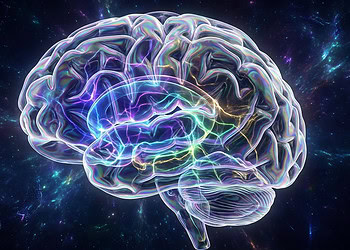
Valentina and her colleagues found significant differences in brain structure between mothers and non-mothers, with mothers showing higher gray matter density across several regions of the brain. These regions include areas in the frontal and occipital lobes, which are involved in cognitive functions like planning and decision-making, as well as visual processing. This suggests that motherhood might lead to long-lasting changes in brain structure, which could potentially offer protective benefits against the typical gray matter loss that occurs with aging.
One of the most striking findings was that these brain changes were widespread and not limited to a few specific areas. The increase in gray matter density observed in mothers was distributed across both cortical (the outer layer of the brain, involved in complex thought processes) and subcortical regions (deeper brain structures that play a role in emotion and memory). This broad pattern of change suggests that motherhood might trigger a wide-reaching restructuring of the brain that endures long after the childbearing years are over.
“The widespread increase in gray matter density in mothers was unexpected, particularly as it persisted decades after childbirth and contrasted with earlier studies showing postpartum reductions,” Rotondi told PsyPost.
The researchers also explored whether similar brain changes were present in fathers, but found no significant differences in gray matter density between fathers and non-fathers. This points to the possibility that the changes observed in mothers may be driven by the biological experience of pregnancy and childbirth, rather than by the act of parenting alone.
Additionally, the researchers investigated whether the number of children a mother had, or the time elapsed since her last pregnancy, influenced gray matter density. They discovered that the brain changes were associated with having been pregnant, regardless of the number of children or how long ago childbirth occurred. This indicates that the initial brain changes that occur during pregnancy and early motherhood may set the stage for these long-term structural adaptations.
Both mothers and fathers tended to report higher sense of meaning in life compared to individuals who did not have children. But this heightened sense of life’s meaning was not linked to the changes in brain structure observed in mothers.
While the study showed that motherhood is associated with increased gray matter density in several brain regions, these structural changes did not appear to mediate the relationship between motherhood and the sense of meaning in life. In other words, the increase in gray matter did not explain why mothers reported feeling that their lives were more meaningful.
“Motherhood is associated with long-lasting changes in brain structure that seem to offer protective benefits against aging, though these changes do not directly mediate overall well-being,” Rotondi said.
However, it is important to note that the study is cross-sectional, meaning it captures a snapshot of the participants at a single point in time rather than tracking changes over time. This limits the researchers’ ability to determine causality — whether motherhood directly causes the observed brain changes, or if other factors related to being a mother might be at play.
Regarding future research, Rotondi said that “we aim to further explore the U-shaped trajectory of gray matter changes across different life stages and its implications for maternal well-being. Additionally, we want to disentangle the effects of parenthood from caregiving more broadly. Is it the act of caregiving that alters our brains and behaviors, or is it specifically the biological experience of parenthood? Our findings suggest the latter, but further research is needed to confirm this.”
“Understanding how motherhood shapes brain aging could provide insights into developing interventions that support maternal mental health over the long term,” Rotondi added.
The study, “Enduring maternal brain changes and their role in mediating motherhood’s impact on well-being,” was authored by Valentina Rotondi, Michele Allegra, Ridhi Kashyap, Nicola Barban, Maria Sironi, and Carlo Reverberi.