New findings published in the journal Psychological Science suggest that the COVID-19 pandemic may have contributed to upsurges of political unrest in many countries. The two-wave study surveyed residents of the United States, Italy, Denmark, and Hungary and found that the perceived psychological burden of COVID-19 was associated with increased antisystemic attitudes and stronger intentions to participate in political violence.
The year 2020 was marked by a coronavirus pandemic that shook the entire globe and was nothing short of catastrophic. At the same time, countries around the world faced an unusual number of demonstrations — some related to the pandemic, and others not. Some scholars have suggested that the COVID-19 crisis is partly responsible for this increased civil unrest, although limited evidence has emerged to support this claim.
Study authors Henrikas Bartusevičius and his colleagues describe a psychological pathway linking the mental burden of COVID-19 to anti-government attitudes. The researchers explain that the pandemic posed a significant threat to citizens’ financial, physical, and mental well-being and that these conditions may have led to increased feelings of social marginalization. This marginalization may have then led to aggression and rebellion against existing societal structures.
To explore this theory, Bartusevičius and his team distributed a two-wave survey among citizens from four different countries: the United States, Italy, Denmark, and Hungary. Notably, these countries differed in the extent they were affected by COVID-19 and the extent they were politically polarized. In April 2020, 6,131 people completed the first survey, and in June/July 2020, 4,568 completed a second survey.
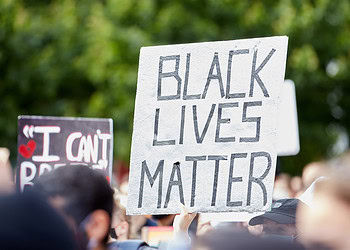
The questionnaires assessed intentions to partake in peaceful political activism and political violence and additionally asked participants whether they had participated in any protests or political violence. The U.S. sample was additionally asked whether they had participated in the Black Lives Matter (BLM) protests or counterprotests. The perceived COVID-19 Burden Scale was used as a measure of the perceived physical and mental health burden associated with the pandemic.
Across all four countries, the researchers found that perceived COVID-19 burden was associated with both intentions to engage in political violence and self-reports of having engaged in political violence. Among the U.S. sample, COVID-19 burden was also associated with the use of violence during the BLM protests and counterprotests (e.g., engaging in the destruction of property, engaging in physical confrontations with other citizens).
There was less evidence to suggest that COVID-19 burden was linked to peaceful activism. Only in Denmark and Hungary was COVID-19 burden related to nonviolent activism. In the U.S., COVID-19 burden was neither tied to participation in BLM protests nor protests against rioting and looting.
The researchers say it is possible that the psychological burden of the COVID-19 pandemic stirred antigovernment attitudes and increased anger among already marginalized groups, arousing collective action. At the same time, lockdowns likely increased the perception that the government maintains power over citizens, which may have led citizens to feel powerless to create political change. These frustrations may have culminated in violent rather than peaceful demonstrations.
“Our findings constitute a reminder that the COVID-19 pandemic is an all-out crisis, carrying effects far beyond the domain of health . . . It is key to also repair the relationship between citizens and the political system,” Bartusevičius and his colleagues write.
The study authors acknowledge that the four countries they studied were Western, educated, industrialized, wealthy, and democratic and that the results do not generalize to less developed countries. They say that the countries they studied all have strong economies and political structures and countries without these conditions may have experienced even greater unrest in response to the pandemic.
The study, “The Psychological Burden of the COVID-19 Pandemic Is Associated With Antisystemic Attitudes and Political Violence”, was authored by Henrikas Bartusevičius, Alexander Bor, Frederik Jørgensen, and Michael Bang Petersen.