A new study published in the journal Analyses of Social Issues and Public Policy provides evidence that how Americans think about their nation’s past or future is associated with their attitudes toward immigrants and political candidates. The research found that national nostalgia (a sentimental longing for how the country used to be) predicts greater support for Donald Trump and more prejudiced views. In contrast, national prostalgia (a sentimental longing for a better future) tends to reduce prejudice and predicts lower support for Trump.
“We were interested in studying national nostalgia and prostalgia because we knew from the literature that national nostalgia is linked to increases in support for conservative political candidates and intergroup hostility,” explained study authors Angel Armenta, Kevin McAweeney, and Demitri Aguilar in a joint statement to PsyPost. “However, while there is a growing body of literature on studies demonstrating the positive benefits of future-orientation (e.g., on health, educational success, etc.), little is known on how national prostalgia is related to political support or intergroup hostility.”
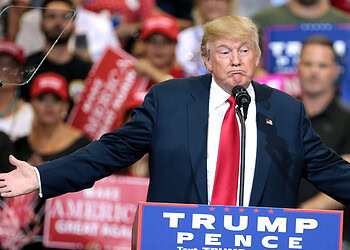
“Additionally, we recognized that during the lead up to past two U.S. presidential elections the republican presidential candidate was relying heavily on nationally nostalgic messages (i.e., “Make America Great Again”) to garner political support, while the democratic presidential candidate was relying heavily on nationally prostalgic messages (i.e., “Our best days still lie ahead”) to garner political support. Thus, we sought to expand prior national nostalgia research by integrating national prostalgia which theoretically should act in contrast to national nostalgia.”
To examine this, the researchers conducted two studies. The first examined whether national nostalgia and prostalgia predicted prejudicial attitudes. The second explored whether these emotional orientations were linked to support for either Donald Trump or Joe Biden during the 2020 presidential election.
In Study 1, the researchers recruited 177 adults from across the United States using an online platform. The sample was predominantly White and male, with an average age of 34. Participants completed a series of questionnaires assessing their levels of national nostalgia, national prostalgia, political ideology, optimism, and attitudes toward immigrants.
National nostalgia was measured using questions that asked how often participants missed or thought about the way American society was in the past. National prostalgia used similar wording, but focused on imagined future states of the nation.
Participants were also asked about their desire to protect their cultural ingroup and their tendency to derogate immigrant outgroups. These were measured using previously validated scales that asked about preserving “the American way of life” and about negative attitudes toward undocumented immigrants.
After analyzing the data, the researchers found that people high in national nostalgia were more likely to express a desire to protect the ingroup and hold negative views of immigrants. People high in national prostalgia, by contrast, tended to show less ingroup protection and less outgroup derogation. These patterns held even when controlling for participants’ political ideology and optimism.
Notably, the effects of national prostalgia on reducing prejudice only emerged when national nostalgia was also included in the analysis. This pattern suggests that prostalgia’s influence may only be seen when researchers account for nostalgia. In statistical terms, this is known as a suppression effect. It suggests that people may feel both types of sentiment, but they function differently depending on which is more dominant.
“The suppression effect in Study 1, where our effects of national prostalgia on intergroup dynamics were only present after adding national nostalgia as a predictor was surprising,” the researchers said. “This effect suggests that the benefits of national prostalgia may require the absence of national nostalgia.”
In Study 2, the team examined whether these emotional orientations predicted support for presidential candidates. This part of the study included 110 Latino participants who lived near the U.S.-Mexico border. All participants were required to be fluent in English. The researchers collected data just weeks before the 2020 election.
Participants were asked which candidate they intended to vote for and completed the same measures of national nostalgia and prostalgia used in the first study. The researchers also collected information about participants’ gender, age, political ideology, and whether they associated Donald Trump with U.S. immigration enforcement agencies. These extra factors were included because they could influence attitudes toward the candidates.
The results showed that national nostalgia predicted greater support for Donald Trump. In contrast, national prostalgia predicted a lower likelihood of supporting Trump. But neither national nostalgia nor prostalgia predicted support for Joe Biden. These findings were statistically significant even after controlling for political conservatism, gender, age, and views on immigration enforcement.
“One result that surprised us was that national prostalgia did not predict support for Joe Biden, especially since his campaign echoed prostalgic messages, such as ‘Our best days still lie ahead,'” the researchers told PsyPost. “These results may suggest that Joe Biden was perceived as a continuation of the status quo and not a change candidate.”
The authors suggest that national nostalgia functions as a backward-looking emotion that promotes a sense of cultural loss. This sentiment may lead individuals to blame immigrants or other outgroups for perceived social decline. In contrast, national prostalgia focuses on what the country could become. It encourages people to imagine a future where progress is possible, which may reduce hostility toward groups seen as different or new.
“Some key takeaways are that national nostalgia and prostalgia can play key roles in how groups interact and may impact political support for specific candidates,” the researchers explained. “Whereas national nostalgia may be linked to increases in support for conservative candidates and intergroup hostility, national prostalgia may be linked to decreases in support for conservative candidates and intergroup hostility.”
The study also helps distinguish prostalgia from other future-oriented concepts. While general optimism or consideration of future consequences have been studied before, national prostalgia captures a more emotional and collective way of thinking about the future. It blends hope with national identity and provides a unique framework for understanding political and social attitudes.
Although the study offers strong evidence for the differing roles of national nostalgia and prostalgia, there are still some limitations to consider. First, the findings are correlational, which means they cannot confirm causality. Experimental or longitudinal studies would be needed to determine whether increasing national prostalgia actually causes people to become less prejudiced or less supportive of past-oriented political candidates.
Future studies could seek to better define the boundaries between national nostalgia and prostalgia. While they are distinct concepts, some individuals may experience both. It is also possible that longing for a future that resembles the past blends elements of each.
“There are a few future goals for this line of work,” the researchers explained. “We would like to use experimental designs to establish a causal link between national prostalgia and intergroup relations. We would also like to explore how subjectivity in perceived ways of impacting the nation’s future could predict differences in intergroup relations. Additionally, we plan to continue to investigate differences between national nostalgia and prostalgia.”
The study, “National prostalgia is associated with decreases in ingroup protection, outgroup derogation, and support for Donald Trump’s presidency,” was authored by Angel D. Armenta, Demitri Aguilar, Kevin McAweeney, Hannah Volpert-Esmond, and Michael A. Zárate.