Recent research has unveiled a novel function of the cerebellum, challenging long-standing assumptions about its role in the brain. Traditionally recognized for its importance in movement and coordination, the cerebellum is now shown to also play a critical role in reward-based learning processes. The findings have been published in Nature Communications.
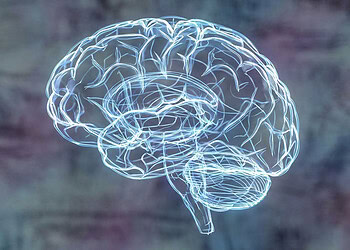
The cerebellum is located at the base of the skull, right above where the spinal cord meets the brain. Despite accounting for only about 10 percent of the brain’s total mass, the cerebellum is densely packed with neurons—nearly 80 percent of the brain’s total neurons are found here.
The cerebellum has primarily been known for its crucial role in coordinating voluntary movements, maintaining balance, and ensuring proper muscle control. Its function has long been associated with the physical execution of movement, helping to fine-tune motor activity and ensure movements are smooth and coordinated.
However, recent advancements in neuroscience have suggested that the cerebellum’s role might extend beyond mere motor control to include more complex cognitive functions. This broader potential role includes aspects of thinking, learning, and memory — functions historically attributed to other parts of the brain like the cerebral cortex.
Motivated by these emerging insights, neuroscientists at the University of Pittsburgh School of Medicine and Columbia University conducted a study to explore how the cerebellum contributes to learning new tasks based on rewards. Their investigation was driven by the hypothesis that the cerebellum might be involved in forming new visuomotor associations — connections between seeing something and responding with a specific movement—that are reinforced through rewards.
“A longstanding assumption about cerebellar function has been that it only controls how we move. However, we now know that there are parts of the cerebellum that are connected and appear to have evolved along with areas of the cerebrum that control how we think,” said co-lead investigator Andreea Bostan, a research assistant professor in Pitt’s Department of Neurobiology. “Because the cerebellum uses information about errors to gradually refine movement, another assumption has been that it likely contributes to cognitive functions in a similar way.”
In the study, monkeys were trained to associate specific visual cues with particular hand movements to receive a reward — a sip of juice. This setup tested their ability to form new visuomotor associations, or links between what they see and how they should move. The researchers focused on a specific area of the cerebellum known as the posterior lateral cerebellum, believed to be crucial for this type of learning.
The critical experiment involved temporarily disabling this area of the cerebellum using a drug that blocks normal neural activity. When this part of the cerebellum was active, monkeys could learn new associations between symbols and movements relatively quickly, typically within 50-70 tries. However, with the cerebellar region inactivated, learning was significantly impaired; it took much longer and was less effective, indicating that this brain region is essential for processing the rewards that drive learning.
Interestingly, this impairment was specific to learning new tasks. Monkeys still performed previously learned tasks well, suggesting that the cerebellum’s role in learning is specific to acquiring new information and skills rather than performing established ones.
Moreover, the study found that inactivation of other areas of the cerebellum did not affect learning, highlighting that not all parts of the cerebellum are involved in this process. This specificity suggests that different regions of the cerebellum have distinct functions and are not universally involved in all types of learning and movement.
So “when you inactivate this cerebellar region, you impair new learning,” Bostan said. “It’s much slower, happens over many more trials, and the performance does not get to the same level. This is a concrete example of the cerebellum using reward information to shape cognitive function in primates.”
These findings are groundbreaking because they redefine our understanding of the cerebellum, illustrating its role in cognitive functions like learning and memory, which goes beyond its traditional association with physical movement. This could have important implications for educational strategies and rehabilitation approaches for cerebellar dysfunction.
For individuals with cerebellar disorders, this research suggests that some of their challenges with learning new tasks may be linked not just to physical coordination difficulties but also to impaired reward processing within the cerebellum. Understanding these mechanisms opens new avenues for targeted therapies that could enhance learning and adaptation in affected individuals.
“Our research provides clear evidence that the cerebellum is not only important for learning how to perform skillful actions, but also for learning which actions are most valuable in certain situations,” Bostan said. “It helps explain some of the non-motor difficulties in people with cerebellar disorders.”
The study, “A cerebro-cerebellar network for learning visuomotor associations,” was authored by Naveen Sendhilnathan, Andreea C. Bostan, Peter L. Strick, and Michael E. Goldberg.