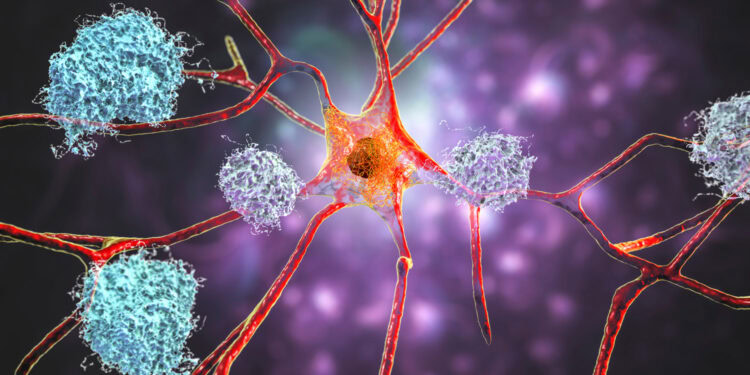

A new study published in the journal Science provides evidence that long-term exposure to fine particulate air pollution plays a role in triggering a form of dementia linked to the buildup of abnormal proteins in the brain. The researchers found that air pollution appears to promote the formation of harmful protein clusters associated with Lewy body dementia, potentially increasing the risk of developing the disease.
Fine particulate matter, known as PM2.5, consists of tiny airborne particles produced by vehicle emissions, industrial activity, wildfires, and other sources. Previous research has suggested that PM2.5 exposure is associated with a higher likelihood of developing Alzheimer’s disease and other forms of cognitive decline.
However, the specific link between PM2.5 and Lewy body dementia has been less clear. Lewy body dementia, which includes Parkinson’s disease with dementia and dementia with Lewy bodies, is marked by the accumulation of a protein called alpha-synuclein in brain cells. The researchers aimed to understand whether air pollution might directly contribute to the abnormal behavior of this protein, potentially helping to explain how environmental pollutants influence brain aging and disease.
“My interest in this topic is rooted in personal experience and my scientific background. I lived in Beijing for nine years during a period of significant air pollution. My doctoral work focused on protein aggregation, and my training was in nanoscience, which gave me a particular interest in the effects of small particulate matter. When I established my own lab in 2017, I combined these interests, making the connection between air pollution and dementia my very first project,” said study author Xiaobo Mao, an associate professor at Johns Hopkins University.
“Scientifically, while large-scale studies had already shown a correlation between air pollution and dementia in general, the specific molecular mechanisms were still a ‘black box.’ Furthermore, the link between air pollution and Lewy body dementia—the second most common form of neurodegenerative dementia—was a major scientific blind spot and essentially unknown. We saw a critical need to investigate whether this widespread environmental exposure could be a risk factor for Lewy body dementia.”
To explore this question, the research team used a combination of large-scale human data and animal experiments. The study began by examining the medical records of more than 56 million older adults in the United States who were enrolled in Medicare between 2000 and 2014. The researchers looked specifically at first-time hospital admissions for conditions related to Lewy body dementia and then used the patients’ ZIP code data to estimate long-term exposure to PM2.5 in their neighborhoods.
The analysis showed that people living in areas with higher PM2.5 levels had a greater risk of being hospitalized with Lewy body dementia. Specifically, each interquartile increase in PM2.5 exposure was linked to a 17 percent increase in the risk of Parkinson’s disease with dementia and a 12 percent increase in dementia with Lewy bodies. These associations were stronger than those reported in previous studies examining all forms of dementia together. The researchers adjusted for a wide range of potential confounding factors, including socioeconomic status, regional differences, and weather patterns.
“In a large-scale epidemiological study of 56.5 million older Americans, we found that long-term exposure to fine particulate matter was strongly associated with a higher risk of first-time hospital admissions for Lewy body dementia,” Mao told PsyPost.
To explore the biological basis for this connection, the team conducted a series of experiments in mice. Some mice were genetically normal, while others had been modified to lack the gene responsible for making alpha-synuclein. A third group carried a human gene mutation that causes early-onset Parkinson’s disease. The mice were exposed to PM2.5 by administering small amounts of polluted air directly into their nasal passages every other day for several months, mimicking real-world exposure scenarios.
Mice with normal alpha-synuclein showed clear signs of brain changes after PM2.5 exposure. These included shrinkage of brain regions involved in memory and decision-making, death of brain cells, and impairments in tasks that tested learning and memory. In contrast, mice that lacked alpha-synuclein did not show these changes, suggesting that the presence of this protein was necessary for the harmful effects of air pollution to appear.
Mice with the Parkinson’s-linked gene mutation were also especially vulnerable. After five months of pollution exposure, they developed widespread deposits of alpha-synuclein in their brains and began to show signs of cognitive decline. When the researchers studied the physical structure of these protein clusters, they found that the clumps were distinct from those seen in normal aging. Instead, the structures resembled the harmful forms of alpha-synuclein found in the brains of people with Lewy body dementia.
“A particularly striking finding came from our experiments with mice,” Mao explained. “We found that after 10 months of exposure to PM2.5, wild-type mice showed significant brain atrophy, neuronal death, and dementia-like effects. The truly surprising discovery was that in mice genetically engineered to lack the alpha-synuclein gene, these effects did not occur. This provided a direct, causal link between the pollutant, the specific protein, and the resulting brain damage. It definitively showed that alpha-synuclein is the essential mediator connecting the environmental insult to this type of neurodegeneration.”
To investigate whether the findings were limited to specific types of air pollution, the team tested PM2.5 samples collected from China, the United States, and Europe. Regardless of the source, exposure to these particles led to similar changes in the brains of mice, suggesting that the risk may not be restricted to a particular region.
The researchers went a step further by creating a synthetic version of the toxic protein strain formed after PM2.5 exposure. They mixed purified alpha-synuclein with air pollution particles in a laboratory setting and allowed the proteins to form clumps. The resulting strain, which they referred to as PM-PFF, was resistant to breakdown and highly toxic to brain cells. When injected into the brains of mice, it spread through the brain and caused behavioral symptoms similar to those seen in Lewy body dementia. In contrast, a more typical form of alpha-synuclein clumps caused less severe effects.
Further genetic analysis showed that the changes in gene activity in the brains of mice exposed to PM-PFF were remarkably similar to those found in people diagnosed with Lewy body dementia. The overlap was stronger than the similarities observed between mice and patients with Parkinson’s disease who had not developed dementia. This finding supports the idea that PM2.5 exposure creates a specific biological environment in the brain that mimics the pathology of Lewy body dementia more closely than it does other forms of neurodegeneration.
The researchers also observed signs of inflammation and immune system activation in the brains of affected mice. These immune responses matched patterns found in human patients with Lewy body dementia, suggesting that air pollution may not only trigger protein buildup but also contribute to broader disruptions in brain health.
“Our most novel finding is that PM2.5 exposure acts as a catalyst, causing the alpha-synuclein protein to misfold into a distinct and highly aggressive toxic ‘strain,'” Mao said. “This pollution-induced strain is more resistant to being broken down by cells, more toxic to neurons, and more effective at spreading pathology throughout the brain. This effect was consistent for samples collected from Asia, North America, and Europe.”
“Protecting our air is critical for protecting our brains. The most powerful implication of our work is in the realm of public health and prevention. Our findings provide strong biological evidence to support stricter air quality regulations. Reducing air pollution is not just about respiratory and cardiovascular health; it is a critical public health strategy for preserving cognitive function and reducing the societal burden of dementia.”
While these findings provide a compelling link between air pollution and Lewy body dementia, the authors acknowledge some limitations. In the human portion of the study, hospital admission data served as a proxy for disease onset, which means the analysis could not directly determine when symptoms began. Additionally, the researchers relied on ZIP code data to estimate pollution exposure, which does not account for individual behaviors, time spent indoors, or other factors that might influence personal exposure levels.
In the animal studies, the researchers used nasal administration of pollution particles rather than full-body inhalation. This method allowed for consistent and controlled delivery of PM2.5 but may differ from real-world exposure patterns. The duration of the study was also relatively short in the context of human aging, which can unfold over decades.
The findings suggest a need for more research to understand which components of PM2.5 are most harmful and whether reducing pollution exposure could lower the risk of Lewy body dementia. Future work may also explore how genetic risk factors interact with environmental exposures to influence disease outcomes.
“Our long-term goals follow two main paths,” Mao explained. “Deconstruct the Pollutant: We plan to pinpoint which specific chemical components within are responsible for creating the toxic -synuclein strain. This could lead to more targeted and effective environmental regulations. We want to understand precisely how these pollutants interact with the body to trigger disease.”
“Understand Personal Vulnerability: We will explore gene-environment interactions. By combining large-scale genetic data with pollution exposure data, we hope to understand why some individuals are more susceptible to the neurotoxic effects of air pollution. This will help us build a more complete picture of dementia risk and move closer to personalized prevention strategies.”
“Ultimately, our lab’s direction is centered on understanding why these protein aggregates form and how to solve the problems they create.”
The study, “Lewy body dementia promotion by air pollutants,” was authored by Xiaodi Zhang, Haiqing Liu, Xiao Wu, Longgang Jia, Kundlik Gadhave, Lena Wang, Kevin Zhang, Hanyu Li, Rong Chen, Ramhari Kumbhar, Ning Wang, Chantelle E. Terrillion, Bong Gu Kang, Bin Bai, Minhan Park, Ma. Cristine Faye Denna, Shu Zhang, Wenqiang Zheng, Denghui Ye, Xiaoli Rong, Liu Yang, Lili Niu, Han Seok Ko, Weiyi Peng, Lingtao Jin, Mingyao Ying, Liana S. Rosenthal, David W. Nauen, Alex Pantelyat, Mahima Kaur, Kezia Irene, Liuhua Shi, Rahel Feleke, Sonia García-Ruiz, Mina Ryten, Valina L. Dawson, Francesca Dominici, Rodney J. Weber, Xuan Zhang, Pengfei Liu, Ted M. Dawson, Shizhong Han, and Xiaobo Mao.