Scientists have discovered that psilocybin, a compound found in psychedelic “magic mushrooms,” significantly alters brain connectivity in rats. This research, which closely replicates findings in humans, offers new insights into how psilocybin could be used to treat psychiatric disorders such as alcohol use disorder. The findings have been published in Translational Psychiatry.
Previous research has shown that psilocybin holds promise as a treatment for various psychiatric disorders, including depression, anxiety related to terminal illness, and addiction. However, the precise mechanisms by which psilocybin exerts its therapeutic effects remain unclear.
Most prior research has focused on its effects in healthy individuals, without considering variations in brain response based on specific psychiatric disorders. This knowledge gap motivated researchers to investigate how psilocybin impacts the brain in the context of alcohol use disorder (AUD), a condition where earlier studies suggested a potential benefit from psychedelic treatments.
“It is still not known whether you can study psychedelic drug effects in rodents. Therefore, we set out to do a translational neuroimaging study which has the potential to demonstrate similar or even same brain signatures of psychedelics in humans and rodents. A second goal was to study the effects of psilocybin on altered brain connectivity in alcohol dependent rats,” said study author Rainer Spanagel, the scientific director of the Institute of Psychopharmacology at the University of Heidelberg.
To bridge this knowledge gap, the researchers embarked on a detailed study involving 25 female Wistar rats. These rats were chosen for their stable alcohol drinking behavior, developed over 15 years of selective breeding. The study involved two groups of rats: 15 were exposed to a model of Alcohol Use Disorder (AUD), and 10 served as controls. Over 12 months, the AUD group experienced cycles of alcohol availability and deprivation, simulating relapse-like drinking behavior.
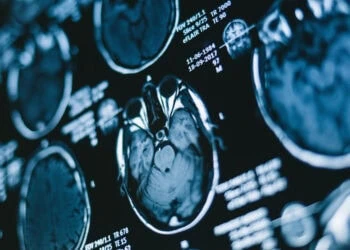
The core of the study involved advanced brain imaging techniques. Each rat underwent two magnetic resonance imaging (MRI) sessions under anesthesia – one after being administered psilocybin and one with a placebo. These sessions were aimed at analyzing changes in brain connectivity patterns. The researchers employed several complex analytical methods, including Global Brain Connectivity (GBC) and Network-Based Statistic (NBS), to assess the average connectivity strength of each brain voxel and to characterize connections between predefined brain regions. They also analyzed the default-mode network (DMN), a network of interacting brain regions known to be affected by psilocybin in humans.
The researchers observed a significant decrease in connectivity strength across a widespread cortical cluster in the rats’ brains following psilocybin administration. This decrease was primarily observed in regions like the insula, prefrontal cortex, and hippocampus. In contrast, increased connectivity was found in some regions, including the hypothalamus and dorsal raphe nucleus, but these changes did not survive strict statistical tests for broader relevance.
Further analysis showed a decrease in mean connectivity within the default mode network (DMN), a brain network implicated in self-referential thought processes and mind-wandering. These findings are particularly significant as they replicate, in an animal model, several effects of psilocybin observed in human studies, lending greater credibility to the use of animal models in psychedelic research.
“We provide translational evidence for psilocybin-induced DMN hypoconnectivity reported in humans,” Spanagel told PsyPost. “This is a very important finding for the entire field of psychedelic research as it is a demonstration that effects of psychedelics can be well studied in rodents as there is a clear construct validity and translational validity.”
The researchers also discovered that these changes in DMN connectivity varied depending on the intensity of the rats’ alcohol relapse behavior. Rats with a stronger tendency to relapse exhibited a less pronounced decrease in connectivity after psilocybin administration, suggesting that the severity of alcohol addiction might influence the brain’s response to psilocybin.
“We also show that psilocybin is blunting AUD-specific DMN hypoconnectivity, which strongly correlated to the alcohol relapse intensity and was mainly driven by medial prefrontal regions,” Spanagel said. “Thus, alcohol relapse severity is negatively correlated with neural responsivity to psilocybin treatment. Our data suggest that a clinical standard dose of psilocybin may not be sufficient to treat severe AUD cases; a finding that should be considered for future clinical trials.”
While these findings are promising, the researchers acknowledge several limitations to their study. The small control group size may have limited the ability to detect subtle differences between alcohol-dependent and control animals. Additionally, the use of anesthesia in the study differs from conditions in human studies and could potentially influence the results.
Looking forward, the researchers suggest that more studies are needed to fully understand the nuances of psilocybin’s effects, especially in the context of different severities of AUD. Importantly, future research could explore whether the findings in rats translate to humans, which would be a crucial step in developing effective, personalized treatments for psychiatric disorders using psilocybin.
The study, “Psilocybin-induced default mode network hypoconnectivity is blunted in alcohol-dependent rats“, was authored by Jonathan R. Reinwald, Christian N. Schmitz, Ivan Skorodumov, Martin Kuchar, Wolfgang Weber-Fahr, Rainer Spanagel, and Marcus W. Meinhardt.