A new paper published in Journalism and Media suggests Donald Trump’s frequent claims of victimhood were more than rhetorical flair. The analysis indicates these narratives functioned as strategic tools to justify retributive policies, including sweeping global trade tariffs. The findings offer insight into how emotional appeals can legitimize authoritarian governance.
The author of the new paper, Marianna Patrona of the Hellenic Army Academy, sought to better understand how authoritarian populist leaders like Donald Trump use victimhood as a strategic communication tool—particularly how this rhetoric evolves once such figures gain power. While prior research had explored the emotional and symbolic power of victimhood in political discourse, Patrona saw a need to examine how these claims functioned within broader patterns of political communication and policy legitimation.
To explore this evolving use of victimhood rhetoric, Patrona employed Critical Discourse Analysis, a qualitative method that examines how language shapes and is shaped by social power dynamics. Her dataset included a range of Trump’s public communications from 2020 through early 2025, encompassing campaign rallies, media appearances, social media posts, and official speeches during both his first and second terms in office.
Patrona’s approach focused on identifying patterns in Trump’s language, especially in how he constructed binaries of “victims” and “victimizers.” She paid close attention to the strategic use of emotionally charged terms, repeated metaphors, and speech acts such as promises and threats. Her analysis also examined how victimhood narratives intersected with broader populist themes, including nationalism, anti-elitism, and xenophobia.
A key feature of Patrona’s analysis was her identification of a new communicative pattern that emerged after Trump’s 2024 election victory. This pattern, which she terms “inflicted pain plus retribution,” was used to frame the United States as a long-suffering victim of international exploitation. Trump then used these narratives to announce retaliatory economic measures, such as imposing global trade tariffs.
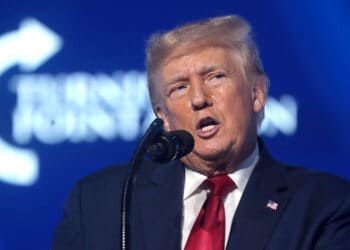
Patrona’s findings indicate that Trump’s rhetorical style hinges on presenting both himself and the American public as victims of unfair treatment. During his first term, this often took the form of labeling investigations against him as “witch hunts” or “election interference.” These expressions created a moral narrative in which Trump positioned himself as a martyr persecuted by a corrupt system, while simultaneously reinforcing his outsider identity.
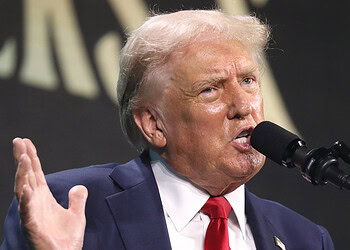
In the run-up to and following the 2024 election, Patrona observed a significant shift. Victimhood was no longer just about Trump’s personal grievances or domestic elites. It became nationalized and externalized. Foreign countries, especially those involved in trade with the United States, were framed as exploitative aggressors. Nations like Canada, Mexico, and members of the European Union were described using vivid, emotionally charged language—such as having “raped” or “plundered” American industry.
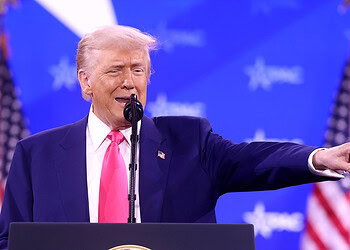
These accusations were then used to justify economic retaliation. In a highly publicized speech at the World Economic Forum in Davos and other venues, Trump framed trade imbalances as injuries inflicted on the United States. He followed these claims with promises to take action, often using declarative language that signaled immediate and irreversible consequences, such as “we’re going to do something about it” or “they’re going to pay.”
Patrona argues that these statements function as commissive speech acts—language that commits the speaker to a future course of action. In this case, they served to justify executive decisions like the imposition of variable tariffs on nearly all trading partners, actions that disrupted longstanding norms around global trade.
Trump’s speeches also frequently featured a narrative structure with clear emotional cues. He recounted personal threats, such as the assassination attempt at a 2024 campaign rally, as part of a larger story about national suffering and moral courage. This blending of personal and national victimhood allowed Trump to present himself as both a survivor and a savior—someone who not only endured injustice but would also avenge it on behalf of the country.
Patrona’s paper is qualitative in nature and based on a selective corpus of Trump’s public communications. This means the findings are interpretive rather than statistical and should not be taken as representative of all populist leaders or all contexts. The focus on Trump also limits generalizability, although the detailed case study provides a useful framework for analyzing similar rhetorical patterns in other leaders.
Another limitation is the paper’s reliance on publicly available content, which may exclude behind-the-scenes communications or strategy documents that could shed more light on the intentionality behind the rhetoric. Still, the public nature of the material makes it particularly relevant for understanding the relationship between political communication and audience engagement.
Future research could expand on Patrona’s findings by examining how audiences respond to these narratives. Do they accept the framing of foreign nations as aggressors? Are they persuaded by victimhood claims that precede retributive policies? Additionally, comparative studies could investigate whether similar rhetorical strategies are used by other populist leaders in different geopolitical contexts, especially those who have risen to power on platforms of economic nationalism or cultural grievance.
Patrona concludes “that authoritarian victimhood rhetoric is far from innocuous. It is much more than simple packaging, form devoid of content; rather, it both anticipates and puts to work anti-democratic, coercive, and illiberal governance and policies, once authoritarian populists are granted executive power post-electorally.”
The paper, “From Victim to Avenger: Trump’s Performance of Strategic Victimhood and the Waging of Global Trade War,” was published August 30, 2025.