Research published in Neuroimage: Reports explored brain changes that occur when older adults (average age 69) are enrolled in music lessons. The study’s results reveal that regardless of the type of music lesson (piano vs. music theory), participants saw increased gray matter in several brain regions. This research demonstrates the potential for music learning as a non-pharmacological treatment for age-related cognitive decline.
Cognitive decline is a significant public health concern, with age-related cognitive function decline affecting millions worldwide. While pharmacological interventions have been developed to treat cognitive decline, these interventions often have side effects and may not be effective for all individuals. Non-pharmacological interventions, such as cognitive training and physical exercise, have been shown to positively affect cognitive function in older adults.
Music interventions may have positive effects on cognitive function in older adults, but the underlying neural mechanisms are not well understood. Music interventions may affect brain regions involved in music processing, such as the cerebellum and auditory cortex, which may lead to improvements in cognitive function. Damien Marie and colleagues aimed to investigate the effects of music interventions on cerebellar grey matter and auditory working memory in healthy older adults.
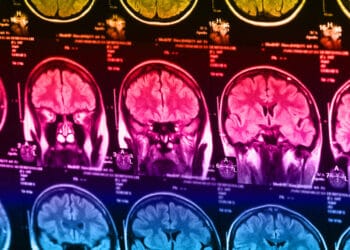
The study was conducted on 132 participants, with MRI scans and cognitive assessments conducted at baseline and after six months.
“We wanted people whose brains did not yet show any traces of plasticity linked to musical learning. Indeed, even a brief learning experience in the course of one’s life can leave imprints on the brain, which would have biased our results,” explained Marie, a research associate at the CIBM Center for Biomedical Imaging, the Faculty of Medicine and the Interfaculty Center for Affective Sciences (CISA) of UNIGE, as well as at the Geneva School of Health Sciences.
The participants were randomly assigned to either a music intervention group or a control group. The music intervention group received weekly piano lessons and was asked to practice at least 30 minutes 5 times weekly. The control group was enrolled in a music culture course, which met one hour per week and taught music theory and appreciation.
In addition to the MRI scans, participants completed cognitive assessments of tonal and verbal working memory. The study also collected participants’ demographics, musical backgrounds, and sleep patterns.
The study results showed that both groups had an increase in cerebellar gray matter volume over the six-month observation period. Those taking piano lessons significantly improved tonal working memory but not verbal working memory. The study also found that the number of music lessons attended, the amount of time spent on homework, and the amount of sleep at baseline were positively correlated with the improvement in tonal working memory.
“After six months, we found common effects for both interventions. Neuroimaging revealed an increase in grey matter in four brain regions involved in high-level cognitive functioning in all participants, including cerebellum areas involved in working memory. Their performance increased by 6% and this result was directly correlated to the plasticity of the cerebellum,” said Clara James, last author of the study, a privat-docent at the Faculty of Psychology and Educational Sciences of UNIGE, and full professor at the Geneva School of Health Sciences.
The research team acknowledged some limitations of the study, including the lack of a placebo music intervention group and the small sample size, making it difficult to generalize the results to a larger population.
The study provides evidence that music interventions can positively affect cerebellar gray matter volume and auditory working memory in healthy older adults. The findings suggest that the positive effects of music interventions on cognitive function may be influenced by factors such as the number of music lessons attended, the amount of time spent on homework, and the amount of sleep at baseline. The study also highlights the potential of music interventions as a non-pharmacological intervention for cognitive decline in older adults.
“Based on our results, we argue that education for seniors should become a major policy priority in the framework of healthy aging, to promote brain plasticity, cognitive reserve, mental health, independence, and well-being through stimulating, cross-modal, group interventions such as musical interventions,” the researchers concluded.
The study, “Music interventions in 132 healthy older adults enhance cerebellar grey matter and auditory working memory, despite general brain atrophy,” was authored by Damien Marie, C ́ecile A.H. Müller, Eckart Altenmüller, Dimitri Van De Ville, Kristin Jünemann, Daniel S. Scholz, Tillmann H.C. Krüger, Florian Worschech, Matthias Kliegel, Christopher Sinke, and Clara E. James.