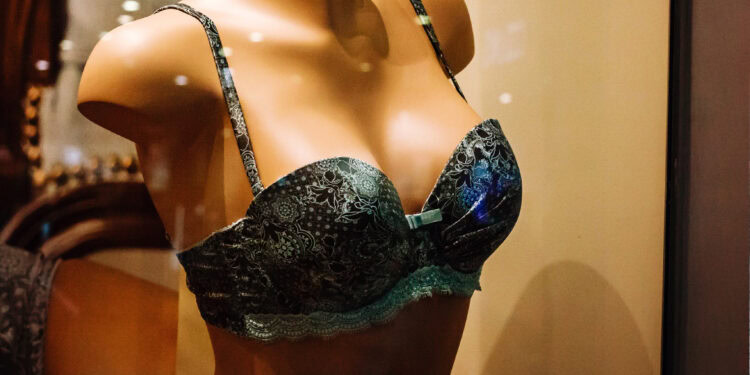

New research suggests that upper pole fullness, the volume and roundness of the upper portion of the breast, plays a key role in the perceived attractiveness of female breasts. The study was published in Plastic and Reconstructive Surgery – Global Open.
The topic of the female breast is of significant interest in the field of plastic surgery. However, there has been limited research on public perceptions of attractiveness related to breast anatomy and morphology. Previous studies have mostly focused on the preferences of professionals in the field, and little is known about what patients and the general public find cosmetically appealing.
To address this gap in knowledge, researchers conducted a comprehensive study to assess the anatomic and aesthetic breast characteristics valued by patients and the general public. “This study seeks to reverse engineer the aesthetically appealing female breast, beginning with overall perceptions of attractiveness and then working backwards to analyze an objective series of anatomic parameters to assess the influence each has on perceived attractiveness as well as the interplay between these variables,” the researchers wrote.
A sample of patients were selected from individuals who had sought aesthetic or reconstructive breast surgery consultations between 2009 and 2019. The researchers identified 25 patients who met the inclusion criteria and aimed to maximize diversity in terms of breast size and shape, skin tone, and nipple-areola complex characteristics. These women were 47.4 years old on average.
The researchers also recruited a sample of 1,021 participants (52.6% women) from the general population. Two-dimensional photographs of the 25 patients were compiled and presented to the survey participants, who were asked to rate the attractiveness of each pair of breasts on a five-point Likert scale. These participants were diverse in terms of age, gender, sexual orientation, racial, and ethnic backgrounds, representing the demographic and socioeconomic makeup of the United States.
The analysis of the survey responses revealed interesting findings. The average “breast attractiveness” score for all patients was 2.5 out of 5. Regarding objective anatomic parameters measured from 2D photographs and 3D scans, no significant correlations were found between specific metrics and subjective scores, except for the presence of a projected breast contour, meaning a rounder and fuller shape, which was associated with higher perceived attractiveness.
“In attempting to identify hallmark characteristics or traits that correlated with perception of attractiveness, only a projected breast contour was found to be associated with an increased subjective survey score,” the researchers wrote.
“However, no other singular feature significantly impacted opinions about breast aesthetics, a finding that is perhaps reflective of the wide variations in personal preferences and the way individuals determine what they find attractive. Alternatively, it may suggest that the overall global appearance may bear more significance on one’s assessment than the presence or absence of certain individual breast components.”
The study also identified a subgroup of five patients who had the highest average attractiveness scores. Within this subgroup, patients had a projected breast contour, upper pole fullness, and very little sagging (breast ptosis).
When the researchers examined the 3D scans of this group, they noticed that they had certain measurements that were different from the rest of the patients. Specifically, their internipple distance (the distance between the nipples) was narrower, their chest wall diameter was narrower (their breasts were positioned closer together), and the distance from the nipple to the fold under the breast was shorter.
But some limitations of the study should be considered. First, the size of the patient group was limited, and it may not fully represent the entire range of breast characteristics.
The researchers said that it was also important to note that their study did not aim to define a universal standard for breast aesthetics, as beauty standards vary widely among cultural backgrounds, ages, and genders. The purpose was to provide guidance for breast surgeons and healthcare providers in discussions with their patients. Ultimately, the researchers said that the final decisions regarding surgical plans should be made collaboratively between the surgeon and the patient.
The study, “Aesthetic Characteristics of the Ideal Female Breast“, was authored by Jonathan M. Bekisz, Carter J. Boyd, Ara A. Salibian, Mihye Choi, and Nolan S. Karp.