PsyPost
  • Mental Health
  • Social Psychology
  • Cognitive Science
  • Neuroscience
  • About
No Result
View All Result
Join
My Account
PsyPost
No Result
View All Result
Home Exclusive Cognitive Science

New study: Playing “Beat Saber” VR game enhances mental function in sedentary students

by Bianca Setionago
March 26, 2025
Reading Time: 2 mins read
Share on TwitterShare on Facebook

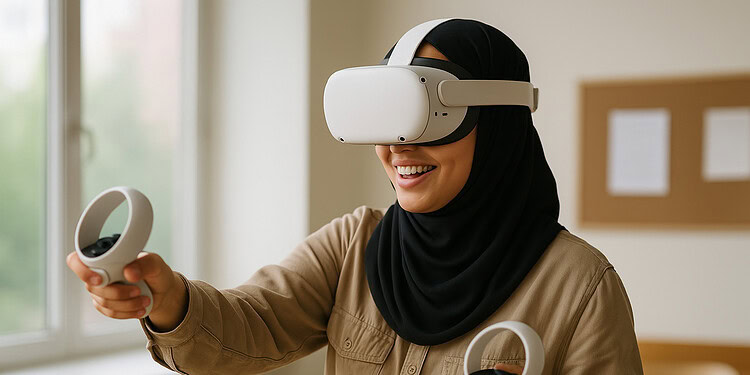
Playing virtual reality video games could sharpen cognitive skills, according to a new study published in Life. Researchers found that sedentary female university students who played an interactive virtual reality game showed improved cognitive performance compared to those who remained inactive.

For many university students, hours spent sitting in lecture halls and studying can lead to a sedentary lifestyle, which has been linked to various health concerns.

Previous research has shown that physical activity can improve cognitive performance, but many students struggle to find the time or motivation to exercise. This is particularly true for female students, who often face additional barriers to staying active, such as cultural expectations.

With the rise of technology, researchers have been investigating whether video games can offer an alternative way to stay active while also providing cognitive benefits. Active video games, also known as “exergames,” require players to move their bodies to interact with the game. Unlike traditional exercise, these games can be more engaging and enjoyable, potentially increasing adherence to physical activity.

Led by Mshari Alghadier from Prince Sattam bin Abdulaziz University in Saudi Arabia, the research team explored how playing an active video game using virtual reality could influence cognitive function in young women who do not engage in regular physical activity.

Researchers recruited 44 sedentary female university students, with an average age of 21 years, who were randomly divided into two groups. The virtual reality group (24 students) played Beat Saber, a rhythm-based VR game that involves hitting moving blocks with virtual sabers, for 20 minutes. The control group (20 students) remained seated quietly for the same period.

Before and after the session, all participants completed the Montreal Cognitive Assessment (MoCA), a standard cognitive test. Additionally, researchers used an ActivPAL accelerometer to measure physical activity levels.

The results were clear: participants who played the VR game showed significant improvements in cognitive performance. Their MoCA scores increased from an average of 22.3 to 23.4, with the greatest gains in areas related to naming, abstraction, and orientation.

Google News Preferences Add PsyPost to your preferred sources

In contrast, the control group showed no significant changes in their cognitive test scores.

Notably, the VR game also reached moderate-to-vigorous levels of physical activity, with an average intensity of 4.98 METs (a standard measure of energy expenditure). This suggests that VR-based games could serve as a viable form of exercise, helping inactive students stay both physically and mentally fit.

Alghadier and colleagues concluded, “A lack of adherence is a major barrier in encouraging an active lifestyle among this age group as they transition into adulthood and experience rapid lifestyle changes…. This study provides evidence that virtual reality games enable moderate to vigorous physical activity in female university students, thus facilitating physical activity participation and meeting the recommendations of national and international guidelines.”

While the results are promising, the study had some limitations. For instance, it was conducted over a short time frame, so it remains unclear whether long-term use of VR active video games would provide sustained cognitive benefits.

The study, “Active Video Games Using Virtual Reality Influence Cognitive Performance in Sedentary Female University Students: A Randomized Clinical Trial,” was authored by Mshari Alghadier, Taif Alharbi, Nada Almasoud, and Abdulaziz A. Alshalawi.

RELATED

Political anger fuels support for violence mainly when voters feel ignored by the system
Cognitive Science

Study finds no association between frequency of video game play and spatial abilities

June 5, 2026
Scientists found a split-second shortcut your brain takes when reading numbers
Cognitive Science

New research indicates sounds you can’t hear can spike your cortisol levels, offering a biological reason for sudden creepy feelings

June 4, 2026
Scientists found a split-second shortcut your brain takes when reading numbers
Cognitive Science

Scientists found a split-second shortcut your brain takes when reading numbers

June 4, 2026
Physical activity and mental health: Exercise’s therapeutic potential for depression highlighted in new meta-analysis
Cognitive Science

Physical fitness is linked to brain health in young adults, but the effects differ by sex

June 3, 2026
People with a preference for staying up late show higher tendencies for everyday sadism
Animals

Visual experience physically shapes the brain’s feedback loops

June 3, 2026
Scientists have found a geospatial link between soil fertility and national intelligence scores
Cognitive Science

Scientists have found a geospatial link between soil fertility and national intelligence scores

June 3, 2026
Scientists discover how coffee interacts with the gut microbiome to affect the human brain
Cognitive Science

Fetal brain scans can predict a toddler’s vocabulary size years before they learn to speak

June 2, 2026
Scientists discover how coffee interacts with the gut microbiome to affect the human brain
Caffeine

Scientists discover how coffee interacts with the gut microbiome to affect the human brain

June 2, 2026

Follow PsyPost

The latest research, however you prefer to read it.

Daily newsletter

One email a day. The newest research, nothing else.

Google News

Get PsyPost stories in your Google News feed.

Add PsyPost to Google News
RSS feed

Use your favorite reader. We also syndicate to Apple News.

Copy RSS URL
Social media
Support independent science journalism

Ad-free reading, full archives, and weekly deep dives for members.

Become a member

Trending

  • The location of your body fat is linked to how fast your brain ages
  • Psychopathy and Machiavellianism often look identical, but daily behavior suggests otherwise
  • Visual experience physically shapes the brain’s feedback loops
  • Scientists have found a geospatial link between soil fertility and national intelligence scores
  • Scientists discover how coffee interacts with the gut microbiome to affect the human brain

Science of Money

  • Can ChatGPT beat the S&P 500? Eight months of daily picks suggest no
  • When inheritances shrink inequality, and when they widen it: A six-country look at the tipping point
  • Why winning makes some gamblers bet bigger: the psychological traits behind the “house money” effect
  • Why people think bankers are greedier than students (and why they may be wrong)
  • Does a rising tide lift all boats? Only with the right institutions, study finds

PsyPost is a psychology and neuroscience news website dedicated to reporting the latest research on human behavior, cognition, and society. (READ MORE...)

  • Mental Health
  • Neuroimaging
  • Personality Psychology
  • Social Psychology
  • Artificial Intelligence
  • Cognitive Science
  • Psychopharmacology
  • Contact us
  • Disclaimer
  • Privacy policy
  • Terms and conditions
  • Do not sell my personal information

(c) PsyPost Media Inc

Welcome Back!

Login to your account below

Forgotten Password?

Retrieve your password

Please enter your username or email address to reset your password.

Log In

Add New Playlist

Subscribe
  • My Account
  • Cognitive Science Research
  • Mental Health Research
  • Social Psychology Research
  • Drug Research
  • Relationship Research
  • About PsyPost
  • Contact
  • Privacy Policy

(c) PsyPost Media Inc