A new study suggests that people with strongly held political beliefs, whether liberal or conservative, tend to process political content in strikingly similar ways at a neurological level. The findings, published in the Journal of Personality and Social Psychology: Attitudes and Social Cognition, indicate that emotional reactions may play a central role in driving ideological extremity.
The researchers set out to better understand what might fuel increasingly polarized and extreme political attitudes in the United States. While disagreement and debate are foundational to democratic systems, the political landscape has become more divided in recent years, with a growing number of Americans identifying with viewpoints further from the political center.
Prior research has pointed to several contributors to this trend, including psychological tendencies like intolerance of uncertainty or a preference for black-and-white thinking. But many scholars have also proposed that emotion—especially negative emotion such as fear or anger—plays a powerful role. Emotional reactions can shape how people interpret news, view political opponents, and form alliances. In this study, the researchers asked whether people on the far left and far right not only hold strong beliefs but also experience political information in similarly emotional ways.
They also aimed to test a concept sometimes referred to as the “horseshoe theory,” which suggests that political extremes may resemble each other more than they do moderates. If true, then individuals on opposite ideological ends could be more psychologically alike than different, at least in how they respond to political content.
“This research was inspired by the growing political polarization and ideological extremism observed around us. Recent political crises such as the COVID-19 pandemic and the war between Israel and Gaza have intensified extreme views across both ends of the political spectrum, which motivated us to look beyond left-right differences,” said study author Daantje de Bruin, a PhD student at Brown University and member of the FeldmanHall lab.
“Instead, we asked whether there might be common neurophysiological mechanisms underlying political extremism, regardless of ideological content. This idea aligns with the ‘horseshoe theory’ of politics, which suggests that the far left and far right, despite opposing beliefs, often resemble each other in psychological and behavioral ways.”
To explore these questions, the team recruited 44 participants from across the political spectrum, with a particular focus on those at the ideological extremes. Participants were identified based on how far they leaned from the political center on a 100-point scale, ranging from extremely liberal to extremely conservative.
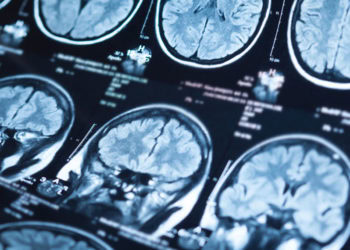
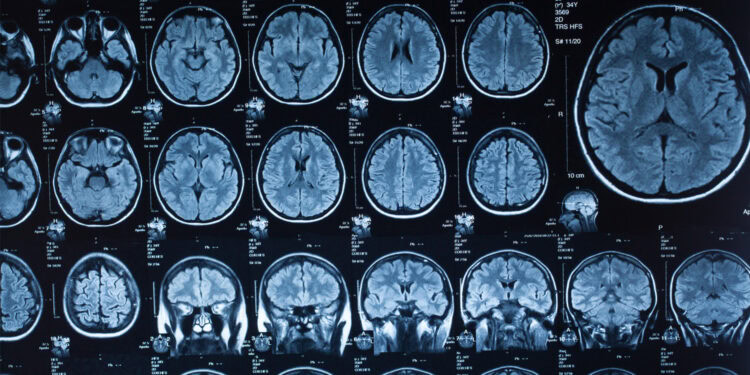
The participants watched a politically charged segment of the 2016 vice-presidential debate between Tim Kaine and Mike Pence while undergoing brain scans in a magnetic resonance imaging (MRI) machine. At the same time, the researchers recorded physiological responses—specifically, galvanic skin conductance, which measures emotional arousal through changes in sweat gland activity. Eye-tracking was also used to assess where participants focused their attention.
Analysis of the brain imaging data revealed a consistent pattern: participants with stronger political beliefs, regardless of whether they were liberal or conservative, showed increased activity in brain areas associated with emotion and threat detection. These included the amygdala, known for processing fear; the periaqueductal gray, which is involved in defensive behaviors; and the posterior superior temporal sulcus, a region linked to interpreting social cues and understanding others’ intentions.
“Our findings were in line with our hypothesis that holding extreme views (regardless of the content of those views) means that individuals share, at least on some dimensions, similar processing of the world around them,” de Bruin told PsyPost. “This helps explain how the language or actions of die-hard liberals or conservatives can appear eerily similar to the language and actions of those on the other side.”
This finding suggests that extreme political views may be tied to stronger emotional reactions to political material. In other words, the more ideologically extreme a person was, the more emotionally charged their brain response appeared to be when watching political content.
The researchers also analyzed how similarly participants’ brains responded to the debate. By comparing moment-to-moment brain activity across pairs of participants, they found that those who both held extreme views—even if one was very liberal and the other very conservative—showed more synchronized brain responses than moderates did. This synchronization was especially pronounced in areas of the brain involved in understanding others’ perspectives and emotions, such as the temporoparietal junction and adjacent regions.
Importantly, this effect was not merely the result of shared ideology. Participants with very different political beliefs still showed similar patterns of brain activity if both were high in extremity. This provides evidence that the way people process political content may be shaped more by the intensity of their beliefs than by the direction of those beliefs.
Another layer of the study looked at the role of language. The researchers used a machine learning tool to evaluate the level of extreme language in the debate video. They found that parts of the video containing more extreme or provocative language tended to strengthen the brain synchrony effect among extreme individuals. In other words, the most emotionally intense parts of the political content seemed to draw extreme viewers into an even more aligned neurological state.
Finally, the researchers examined physiological arousal. While they did not find that more extreme individuals had higher average arousal levels overall, they did find that shared physiological responses between pairs—specifically synchronized spikes in skin conductance—correlated with greater neural synchrony. This relationship held especially true for participants with the most extreme beliefs. In other words, when extreme individuals not only shared strong views but also experienced similar emotional reactions in their bodies, their brains tended to process political content in more closely aligned ways.
“We find that people with more extreme political views, on either end of the political spectrum, show stronger brain responses to the political content in areas involved in emotions, such as fear, threat detection, and understanding the perspective of others,” de Bruin explained. “We also find that more extreme individuals, regardless of their political ideology, show more similar neural responses to political content.”
“Despite stark differences in political beliefs, extreme individuals on opposite sides of the political spectrum thus process political content in similar ways, providing neurophysiological support for the horseshoe theory of politics. This suggests that ideological opposites may be more alike in how they process politics than they realize. Recognizing this shared experience could foster greater empathy and reduce dehumanization across the political divide.”
The study provides evidence that emotion plays a central role in shaping how people with extreme beliefs experience political content, but it also comes with some limitations. First, the political material used covered only a narrow set of topics, specifically immigration and policing. It is not clear whether similar results would emerge with different political subjects or more recent content.
Second, the research was conducted entirely within the United States and may not generalize to other countries or political systems. Cultures with different norms, levels of polarization, or media environments might show different patterns of emotional and neurological responses.
Despite these limitations, the study provides new insight into how emotion and social perception influence political extremity. The fact that people with opposing ideologies can show similar patterns of brain activity suggests that emotional experience may be a shared thread connecting those on both sides of the political divide. Recognizing this shared experience might help reduce hostility and open the door to more understanding, even in a time of rising polarization.
“Our findings support the theorized link between extremism and affective processing, highlighting the importance of understanding polarization and radicalization as not just a cognitive or ideological process, but also one that considers emotion,” de Bruin said. “In future work, we aim to further investigate how affective processing might be altered in more extreme individuals, and why their responses may differ from moderates. Ultimately, we aim to use these insights to inform approaches that reduce polarization and help people engage with political information more thoughtfully.”
The study, “Politically Extreme Individuals Exhibit Similar Neural Processing Despite Ideological Differences,” was authored by Daantje de Bruin and Oriel FeldmanHall.