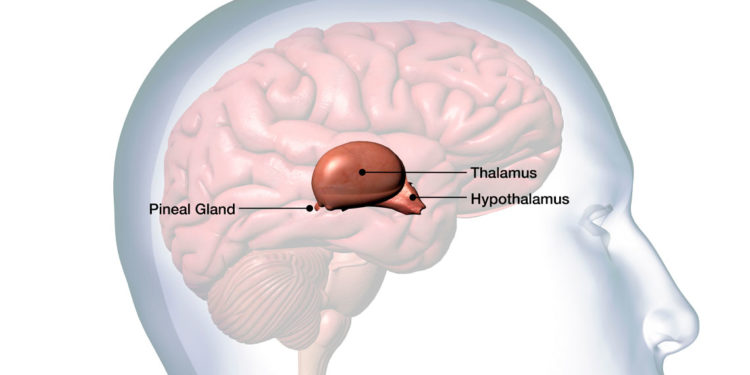

A new statistical review reveals that people diagnosed with psychiatric conditions tend to have a physically smaller pineal gland compared to those without such conditions. The comprehensive research, published in Acta Psychiatrica Scandinavica, also indicates that this structural difference does not appear to directly dictate how well a person sleeps.
The pineal gland is a tiny, pea-shaped structure tucked deep inside the brain. Its primary function is the synthesis and release of melatonin. This hormone helps govern the body’s internal biological clock, often referred to as the circadian rhythm. The circadian rhythm dictates a host of physiological changes over a daily cycle, influencing body temperature, metabolism, and immune function.
When the sun sets and the environment grows dark, the pineal gland increases melatonin production, signaling to the body that it is time to rest. Disruptions to this nightly cycle are incredibly common among individuals diagnosed with severe mental health conditions. Specifically, people with major depressive disorder, bipolar disorder, and schizophrenia routinely experience extreme insomnia and altered sleep patterns.
The pineal gland consists almost entirely of pinealocytes, which are the specialized cells responsible for producing melatonin. Because of this direct physical makeup, researchers suspect that the overall size of the gland might dictate a person’s total capacity for creating the sleep-promoting hormone. In theory, a physically smaller gland houses fewer hormone-producing cells.
Previous attempts to measure the pineal gland in psychiatric patients have yielded contradictory results. Some brain imaging studies reported smaller volumes in patients with depression or schizophrenia, while other studies found no differences in anatomical size at all.
Sophie Bolwig and Kristian H. R. Jensen, researchers at the Neurobiology Research Unit at Rigshospitalet in Copenhagen, Denmark, wanted to resolve these conflicting reports. They designed a meta-analysis, which is a research method that pools data from many individual studies into one mathematical model. This approach helps researchers spot broader patterns that might be hidden within the noise of isolated datasets.
The researchers systematically scoured academic databases to locate studies that used magnetic resonance imaging, commonly known as MRI, to measure the size of the gland. They split the gathered research into two distinct analyses based on the specific biological questions they wanted to answer.
The first analysis focused on anatomical differences by comparing the brain scans of people with formally diagnosed psychiatric disorders to the scans of healthy individuals. This group of studies included a combined total of over 1700 participants. The second analysis looked for links between pineal gland size and specific sleep measurements, utilizing data from over 700 participants.
In the anatomical comparison, Bolwig and Jensen found that people with psychiatric conditions had a reduced pineal gland volume overall. To understand if this reduction was caused by the gland shrinking or simply by the presence of cysts, the team looked closely at the functional tissue. Pineal cysts are small pockets of fluid within the gland that are generally considered harmless structural anomalies.
The researchers calculated the specific prevalence of these cysts and found no difference in frequency between the psychiatric patients and the healthy participants. When examining only the non-cystic tissue, they found this functional mass was also reduced. This means the actual hormone-producing structure was physically smaller in the patient group.
The degree of this anatomical reduction varied widely depending on the specific psychiatric diagnosis. People with mood disorders, such as major depressive disorder and bipolar disorder, exhibited a modest reduction in pineal gland volume. In contrast, patients on the schizophrenia spectrum showed a reduction that was approximately twice as large.
To see if these physically smaller glands actually translated into sleep disruptions, the researchers turned to the second pool of data. These studies measured sleep variables using self-reported questionnaires, wearable motion trackers, and overnight monitoring in specialized sleep laboratories.
The pooled data showed that the relationship between a larger pineal gland and better sleep was weak and not statistically significant. The high variability in how different studies measured sleep quality makes it difficult to draw absolute conclusions. Still, the current data suggests that the anatomical size of the gland does not directly dictate a person’s daily sleep quality.
The researchers noted that these findings highlight the multifaceted nature of human sleep. A person’s ability to fall and stay asleep relies on psychological stressors, environmental factors, and an array of neurological systems beyond just melatonin production. Even if a physically smaller pineal gland produces slightly less melatonin, other networks in the brain might compensate to maintain basic sleep patterns.
The study also provides hints about the biological origins of certain mental health conditions. A few of the analyzed studies included individuals who were classified as being at a high clinical risk for developing psychosis but had not yet developed a full disorder. These high-risk individuals already displayed reduced pineal gland volumes.
Because the structural difference appears before the onset of severe psychiatric symptoms, the researchers propose that a smaller pineal gland might be an inherited neurodevelopmental trait. This idea is supported by recent genetic research showing that the genes which influence pineal gland volume overlap heavily with known genetic risk factors for schizophrenia. It appears to be a built-in vulnerability rather than a byproduct of long-term illness or psychiatric medication use.
Alternative biological mechanisms might also explain the variation in volume. Medical professionals increasingly recognize that neuroinflammatory processes play a role in both mood disorders and schizophrenia. Chronic inflammation could potentially affect the pineal gland through oxidative stress, though scientists have yet to confirm if this physiological process actively shrinks the tissue over time.
While the exact mechanisms remain unknown, the researchers acknowledged several limitations in the available evidence. For instance, the imaging studies included in the review were entirely cross-sectional. This type of research captures a single snapshot in time, making it impossible to determine the long-term progression of the anatomical changes in the brain.
Additionally, many of the original studies relied on older magnetic resonance imaging scanners with lower spatial resolution. Medical professionals then had to manually trace the outline of the pineal gland on these older scans to calculate the volume. This manual process introduces the possibility of human error and measurement inconsistencies across different research centers.
Moving forward, scientists need longitudinal studies that track brain anatomy, sleep patterns, and hormone levels in exactly the same individuals over many years. By observing people from childhood or adolescence through adulthood, scientists could determine exactly when the pineal gland stops growing in those who later develop psychiatric conditions. Unraveling this developmental timeline could eventually help doctors identify biological risk factors long before a clinical crisis occurs.
The study, “Pineal Gland Volume, Sleep Quality, and Psychiatric Disorders: A Systematic Review and Meta-Analysis,” was authored by Sophie Bolwig and Kristian H. R. Jensen.