Subscribe
The latest psychology and neuroscience discoveries.
My Account
  • Mental Health
  • Social Psychology
  • Cognitive Science
  • Neuroscience
  • About
No Result
View All Result
PsyPost
PsyPost
No Result
View All Result
Home Exclusive Cognitive Science

Personal judgments are swayed by group opinion, but only for 3 days

by Association for Psychological Science
May 23, 2014
in Cognitive Science
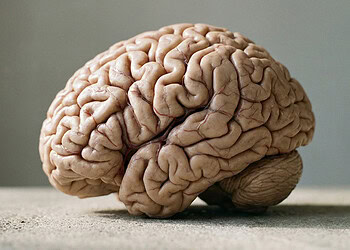
Photo credit: Creative Ignition (Creative Commons)

Photo credit: Creative Ignition (Creative Commons)

Share on TwitterShare on Facebook

We all want to feel like we’re free-thinking individuals, but there’s nothing like the power of social pressure to sway an opinion. New research suggests that people do change their own personal judgments so that they fall in line with the group norm, but the change only seems to last about 3 days. The research is published in Psychological Science, a journal of the Association for Psychological Science.

“Our findings suggest that exposure to others’ opinions does indeed change our own private opinions — but it doesn’t change them forever,” says psychological scientist and study author Rongjun Yu of South China Normal University. “Just like working memory can hold about 7 items and a drug can be effective for certain amount of time, social influence seems to have a limited time window for effectiveness.”

The fact that personal judgments are swayed by the opinions’ of others is a well-established phenomenon in psychology research.

But it’s unclear whether oft-observed social conformity reflects public compliance, motivated by a desire to fit in with the group and avoid social rejection, or private acceptance, which leads to a genuine change in personal opinion that persists even when social influence is removed.

Yu and colleagues Yi Huang and Keith Kendrick decided to investigate this question in the lab. They recruited Chinese college students to participate in a study exploring how “people perceive facial attractiveness.” The students looked at 280 digital photographs of young adult Chinese women and were asked to rate the attractiveness of each face on an 8-point scale.

After rating a face, they saw the purported average of 200 other students’ ratings for that face. Importantly, the group average matched the participant’s rating only 25% of the time. The rest of the time, the group average fell 1, 2, or 3 points above or below the participant’s rating.

The students were brought back to the lab to rate the faces again after either 1 day, 3 days, 7 days, or 3 months has passed.

The data showed that the group norm seemed to sway participant’s own judgments when they re-rated the photos 1 and 3 days after the initial session.

Google News Preferences Add PsyPost to your preferred sources

There was, however, no evidence for a social-conformity effect when the intervening period was longer (either 7 days or 3 months after the first session).

According to the researchers, the fact that participants’ opinions were swayed for up to 3 days suggests more than a superficial lab-based effect — rather, group norms seem to have had a genuine, albeit brief, impact on participants’ privately held opinions.

These studies are notable, says Yu, because they were able to control for methodological issues that often arise in studies that use a test-retest format, such as the natural human tendencies to regress to the mean and to behave consistently over time.

The one question that Yu and colleagues still don’t know the answer to is why the effect lasts for 3 days. They plan on investigating whether there might be a neurological reason for the duration of the effect, and whether the effect can be manipulated to last for shorter or longer durations.

This study was supported by the National Natural Scientific Foundation of China (Grant 31371128 to R. Yu) and by the Scientific Research Foundation of Graduate School of South China Normal University (Grant 2013kyjj060 to Y. Huang).


Previous Post

Love problems? There’s a pill for that, but Plato offers a wiser cure

Next Post

Scientists find an unlikely stress responder may protect against Alzheimer’s

RELATED

How common is anal sex? Scientific facts about prevalence, pain, pleasure, and more
Cognitive Science

New psychology research reveals that wisdom acts as a moral compass for creative thinking

March 6, 2026
Hemp-derived cannabigerol shows promise in reducing anxiety — and maybe even improving memory
Alcohol

Using cannabis to cut back on alcohol? Your working memory might dictate if it works

March 5, 2026
Chocolate lovers’ brains: How familiarity influences reward processing
Cognitive Science

A single dose of cocoa flavanols improves cognitive performance during aerobic exercise

March 4, 2026
Heart and brain illustration with electrocardiogram waves, representing cardiovascular health and neurological connection, suitable for psychology and medical research articles.
Cognitive Science

Fascinating new research reveals your heart rate drops when your brain misperceives the world

March 4, 2026
Colorful digital illustration of a human brain with neon wireframe lines, representing neuroscience, psychology, and brain research. Ideal for psychology news, brain health, and cognitive sciences articles.
Cognitive Science

New research on acquired aphantasia pinpoints specific brain network responsible for visual imagination

March 3, 2026
Traumatic brain injury may steer Alzheimer’s pathology down a different path
Cognitive Science

Growing up with solid cooking fuels linked to long-term brain health risks

March 1, 2026
The disturbing impact of exposure to 8 minutes of TikTok videos revealed in new study
Cognitive Science

Problematic TikTok use correlates with social anxiety and daily cognitive errors

March 1, 2026
Why most people fail to spot AI-generated faces, while super-recognizers have a subtle advantage
Artificial Intelligence

Why most people fail to spot AI-generated faces, while super-recognizers have a subtle advantage

February 28, 2026

STAY CONNECTED

LATEST

How the wording of a trigger warning changes our psychological response

Dating and breakups take a heavy emotional toll on adolescent mental health

Abortion stigma persists at moderate levels in high-income countries

Brain scans reveal two distinct physical subtypes of ADHD

Employees who feel attractive are more likely to share ideas at work

New psychology research reveals that wisdom acts as a moral compass for creative thinking

Long-term ADHD medication use does not appear to permanently alter the developing brain

Using cannabis to cut back on alcohol? Your working memory might dictate if it works

PsyPost is a psychology and neuroscience news website dedicated to reporting the latest research on human behavior, cognition, and society. (READ MORE...)

  • Mental Health
  • Neuroimaging
  • Personality Psychology
  • Social Psychology
  • Artificial Intelligence
  • Cognitive Science
  • Psychopharmacology
  • Contact us
  • Disclaimer
  • Privacy policy
  • Terms and conditions
  • Do not sell my personal information

(c) PsyPost Media Inc

Welcome Back!

Login to your account below

Forgotten Password?

Retrieve your password

Please enter your username or email address to reset your password.

Log In

Add New Playlist

Subscribe
  • My Account
  • Cognitive Science Research
  • Mental Health Research
  • Social Psychology Research
  • Drug Research
  • Relationship Research
  • About PsyPost
  • Contact
  • Privacy Policy

(c) PsyPost Media Inc