Subscribe
The latest psychology and neuroscience discoveries.
My Account
  • Mental Health
  • Social Psychology
  • Cognitive Science
  • Neuroscience
  • About
No Result
View All Result
PsyPost
PsyPost
No Result
View All Result
Home Exclusive Cognitive Science

Procrastination and impulsivity: Exploring the genetics of ‘I’ll do it tomorrow’

by Association for Psychological Science
April 7, 2014
in Cognitive Science
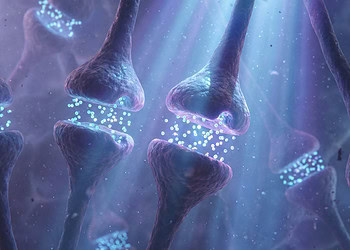
Photo credit: NIMH

Photo credit: NIMH

Share on TwitterShare on Facebook

Procrastination and impulsivity are genetically linked, suggesting that the two traits stem from similar evolutionary origins, according to research published in Psychological Science, a journal of the Association for Psychological Science. The research indicates that the traits are related to our ability to successfully pursue and juggle goals.

“Everyone procrastinates at least sometimes, but we wanted to explore why some people procrastinate more than others and why procrastinators seem more likely to make rash actions and act without thinking,” explains psychological scientist and study author Daniel Gustavson of the University of Colorado Boulder. “Answering why that’s the case would give us some interesting insights into what procrastination is, why it occurs, and how to minimize it.”

From an evolutionary standpoint, impulsivity makes sense: Our ancestors should have been inclined to seek immediate rewards when the next day was uncertain.

Procrastination, on the other hand, may have emerged more recently in human history. In the modern world, we have many distinct goals far in the future that we need to prepare for – when we’re impulsive and easily distracted from those long-term goals, we often procrastinate.

Thinking about the two traits in that context, it seems logical that people who are perpetual procrastinators would also be highly impulsive. Many studies have observed this positive relationship, but it is unclear what cognitive, biological, and environmental influences are responsible for it.

The most effective way to understand why these traits are correlated is to study human twins. Identical twins — who share 100% of their genes — tend to show greater similarities in behavior than fraternal twins, who only share 50% of their genes (just like any other siblings). Researchers take advantage of this genetic discrepancy to figure out the relative importance of genetic and environmental influences on particular behaviors, like procrastination and impulsivity.

Gustavson and colleagues had 181 identical-twin pairs and 166 fraternal-twin pairs complete several surveys intended to probe their tendencies toward impulsivity and procrastination, as well as their ability to set and maintain goals.

They found that procrastination is indeed heritable, just like impulsivity. Not only that, there seems to be a complete genetic overlap between procrastination and impulsivity — that is, there are no genetic influences that are unique to either trait alone.

Google News Preferences Add PsyPost to your preferred sources

That finding suggests that, genetically speaking, procrastination is an evolutionary byproduct of impulsivity — one that likely manifests itself more in the modern world than in the world of our ancestors.

In addition, the link between procrastination and impulsivity also overlapped genetically with the ability to manage goals, lending support to the idea that delaying, making rash decisions, and failing to achieve goals all stem from a shared genetic foundation.

Gustavson and colleagues are now investigating how procrastination and impulsivity are related to higher-level cognitive abilities, such as executive functions, and whether these same genetic influences are related to other aspects of self-regulation in our day-to-day lives.

“Learning more about the underpinnings of procrastination may help develop interventions to prevent it, and help us overcome our ingrained tendencies to get distracted and lose track of work,” Gustavson concludes.

Co-authors on this research include Akira Miyake, John Hewitt, and Naomi Friedman of the University of Colorado Boulder.

This research was supported by National Institutes of Health Grants MH063207, HD010333, and DA011015.

Previous Post

Bullying happens to popular teens too

Next Post

Neuroscientists switch off anxiety with light

RELATED

ChatGPT acts as a “cognitive crutch” that weakens memory, new research suggests
Artificial Intelligence

ChatGPT acts as a “cognitive crutch” that weakens memory, new research suggests

March 30, 2026
Verbal IQ predicts political participation and liberal attitudes twice as strongly as performance IQ
Cognitive Science

Trying harder on an intelligence test does not actually improve your score

March 27, 2026
Brain rot and the crisis of deep thought in the age of social media
Cognitive Science

Massive analysis of longitudinal data links social media to poorer youth mental health

March 27, 2026
High meat consumption may protect against cognitive decline in people with a specific Alzheimer’s gene
Cognitive Science

Asking complex questions improves creative project scores but hurts multiple-choice exam grades

March 26, 2026
Chronic medical conditions predict childhood depression more strongly than social or family hardships
Cognitive Science

What brain waves reveal about people who can solve a Rubik’s Cube in seconds

March 24, 2026
Shifting genetic tides: How early language skills forecast ADHD and literacy outcomes
Cognitive Science

The biological roots behind the chills you get from music and art

March 22, 2026
Machiavellianism most pronounced in students of politics and law, least pronounced in students of social work, nursing and education
Cognitive Science

Intelligence predicts progressive views, but only after college

March 21, 2026
Genetic factors likely confound the link between c-sections and offspring mental health
Cognitive Science

Neuroscientists just upended our understanding of Pavlovian learning

March 21, 2026

STAY CONNECTED

RSS Psychology of Selling

  • Emotional intelligence linked to better sales performance
  • When a goal-driven boss ignores relationships, manipulative employees may fight back
  • When salespeople fail to hit their targets, inner drive matters more than bonus checks
  • The “dark” personality traits that predict sales success — and when they backfire
  • What communication skills do B2B salespeople actually need in a digital-first era?

LATEST

How generative artificial intelligence is upending theories of political persuasion

Scientists use brain measurements to identify a video that significantly lowers racial bias

Brief mindfulness practice accelerates visual processing speeds in adults

Belief in the harmfulness of speech is linked to both progressive ideology and symptoms of depression

Better parent-child communication is linked to stronger soft skills and emotional stability in teens

Men who favor the tradwife lifestyle often view the women in it with derision

A diet based on ultra-processed foods impairs metabolic and reproductive health, study finds

Psychologists identify nine core habits associated with healthy non-monogamous partnerships

PsyPost is a psychology and neuroscience news website dedicated to reporting the latest research on human behavior, cognition, and society. (READ MORE...)

  • Mental Health
  • Neuroimaging
  • Personality Psychology
  • Social Psychology
  • Artificial Intelligence
  • Cognitive Science
  • Psychopharmacology
  • Contact us
  • Disclaimer
  • Privacy policy
  • Terms and conditions
  • Do not sell my personal information

(c) PsyPost Media Inc

Welcome Back!

Login to your account below

Forgotten Password?

Retrieve your password

Please enter your username or email address to reset your password.

Log In

Add New Playlist

Subscribe
  • My Account
  • Cognitive Science Research
  • Mental Health Research
  • Social Psychology Research
  • Drug Research
  • Relationship Research
  • About PsyPost
  • Contact
  • Privacy Policy

(c) PsyPost Media Inc