Subscribe
The latest psychology and neuroscience discoveries.
My Account
  • Mental Health
  • Social Psychology
  • Cognitive Science
  • Neuroscience
  • About
No Result
View All Result
PsyPost
PsyPost
No Result
View All Result
Home Exclusive Psychopharmacology

Psychedelics seem to alter social cognition by modifying facial emotion recognition

by Eric W. Dolan
June 6, 2019
in Psychopharmacology
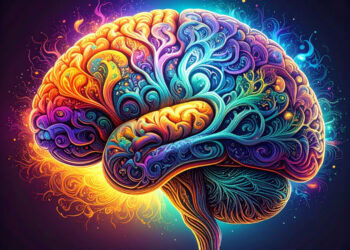
(Photo credit: Sebastian Kaulitzki)

(Photo credit: Sebastian Kaulitzki)

Share on TwitterShare on Facebook

Psychedelic drugs like LSD reduce the recognition of negative facial emotions by altering activity the amygdala, a brain region known to be important for responses to threatening situations, according to a systematic review published in Therapeutic Advances in Psychopharmacology.

“We have been investigating the effects of ayahuasca on humans in the last 15 years. It seems that its effects — and the effects of other serotonergic hallucinogens such as LSD and psilocybin — involve modifications of emotional processing, which could contribute to its therapeutic effects on depression and anxiety,” said study author Rafael Guimarães dos Santos, a postdoctoral fellow at the University of Sao Paulo.

The researchers examined two previous studies on LSD and five previous studies on psilocybin. All seven experimental studies evaluated the recognition of facial expressions.

“Our most consistent finding was that these drugs reduced the recognition of negative emotions and modulated amygdala activity to these stimuli. This effect was correlated with antidepressive effects in depressed patients, but since this was observed only in a single study with an open-label design, it is difficult to conclude if this result has any clinical relevance,” the researchers explained in their review.

Previous research has also indicated that individuals suffering from anxiety disorders and depression tend to have an bias in favor of the recognition of negative facial emotions. Reducing the recognition of negative facial emotions could in theory help treat those conditions.

“Altering emotional processing by modifying facial emotion recognition could be one of the mechanisms involved in the therapeutic potentials of ayahuasca and other serotonergic hallucinogens.” Santos told PsyPost.

“Indeed, the studies reviewed showed that a single dose or a few doses of LSD or psilocybin was associated with a modified pattern of recognition of negative emotions that could be interpreted as beneficial, since several of these studies showed that these modifications were correlated with increases in positive mood and/or anxiolytic and antidepressant effects,” the researchers wrote.

Santos noted, however, that his team of researchers were only able to find a relatively small number of studies on the topic — and those studies had small sample sizes.

Google News Preferences Add PsyPost to your preferred sources

The article, “Serotonergic hallucinogens and recognition of facial emotion expressions: a systematic review of the literature“, was authored by Juliana M. Rocha, Flávia L. Osório, José Alexandre S. Crippa, José Carlos Bouso, Giordano N. Rossi, Jaime E. C. Hallak, and Rafael G. dos Santos.

Previous Post

Only some forms of social support alleviate the negative consequences of social exclusion

Next Post

Female sexual dysfunction less prevalent among adult entertainers

RELATED

Single dose of 5-MeO-DMT alters gene expression in brain and reduces anxiety-like behavior in stressed mice
MDMA

First direct comparison of MDMA and MDA reveals distinct psychedelic differences

March 27, 2026
The science of magic mushrooms: Fascinating findings from 7 new studies of psilocybin
Psilocybin

A new study measures the temporal distortions caused by psychedelics

March 26, 2026
Antidepressant effects of psychedelics may be overstated in some clinical trials
Psychedelic Drugs

Occasional use of classic psychedelics linked to enhanced cognitive flexibility in young adults

March 23, 2026
New psychology research sheds light on the mystery of deja vu
Psilocybin

Study links psilocybin receptor activation to sustained structural brain changes

March 22, 2026
People with cannabis disorder do not seem to pay increased attention to pictures of cannabis
Cannabis

People with cannabis disorder do not seem to pay increased attention to pictures of cannabis

March 22, 2026
Your music playlist might reveal subtle clues about your intelligence
Neuroimaging

Psilocybin unlocks a specific biological signature in the brain linked to profound mystical states

March 19, 2026
Does cannabidiol reduce worry severity or anxiety symptoms? New placebo-controlled study says no
Autism

New trial suggests CBD oil could lower anxiety in autistic children and reduce parenting stress

March 18, 2026
Harvard scientist reveals a surprising split in psychological well-being between the sexes
Cannabis

A massive review reveals cannabis falls short in treating psychiatric disorders

March 17, 2026

STAY CONNECTED

RSS Psychology of Selling

  • What communication skills do B2B salespeople actually need in a digital-first era?
  • A founder’s smile may be worth millions in startup funding, research suggests
  • What actually makes millennials buy products on sale?
  • The surprising coping strategy that may help salespeople avoid burnout
  • When saying sorry with a small discount actually makes things worse

LATEST

Audio tapes reveal mass rule-breaking in Milgram’s obedience experiments

People with social anxiety experience more meaningful interactions in small groups

New study explores the real-time link between narcissism and perfectionism

How beliefs about demons shape the experience of mental illness

First direct comparison of MDMA and MDA reveals distinct psychedelic differences

Psychology researchers identify a key emotional pattern among procrastinators

Trying harder on an intelligence test does not actually improve your score

Massive analysis of longitudinal data links social media to poorer youth mental health

PsyPost is a psychology and neuroscience news website dedicated to reporting the latest research on human behavior, cognition, and society. (READ MORE...)

  • Mental Health
  • Neuroimaging
  • Personality Psychology
  • Social Psychology
  • Artificial Intelligence
  • Cognitive Science
  • Psychopharmacology
  • Contact us
  • Disclaimer
  • Privacy policy
  • Terms and conditions
  • Do not sell my personal information

(c) PsyPost Media Inc

Welcome Back!

Login to your account below

Forgotten Password?

Retrieve your password

Please enter your username or email address to reset your password.

Log In

Add New Playlist

Subscribe
  • My Account
  • Cognitive Science Research
  • Mental Health Research
  • Social Psychology Research
  • Drug Research
  • Relationship Research
  • About PsyPost
  • Contact
  • Privacy Policy

(c) PsyPost Media Inc