Subscribe
The latest psychology and neuroscience discoveries.
My Account
  • Mental Health
  • Social Psychology
  • Cognitive Science
  • Neuroscience
  • About
No Result
View All Result
PsyPost
PsyPost
No Result
View All Result
Home Exclusive Social Psychology Political Psychology

Republicans embrace conservative label more enthusiastically than Democrats embrace liberal label

by University at Buffalo
October 12, 2016
in Political Psychology
Photo credit: Gage Skidmore

Photo credit: Gage Skidmore

Share on TwitterShare on Facebook

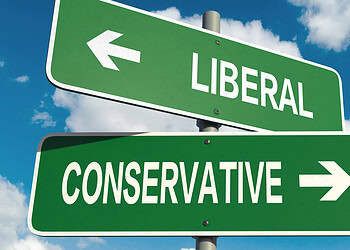
Republicans embrace the conservative label more enthusiastically than Democrats are willing to self-identify as liberals, according to a new study by Jacob Neiheisel, an assistant professor in the University at Buffalo’s Department of Political Science.

But if liberal is a dirty word, eschewed by Democrats and sometimes assigned to them by Republicans, how liberal branding plays out at the polls has remained a bit of mystery. Until now.

Neiheisel’s research, published in the journal Political Research Quarterly, suggests that political symbolism does have an impact on the electorate.

“How we describe the candidates matters in the sense that we have an idea that name-calling has some effect on the campaign,” he said. “These aren’t game-changers, but symbolism has an effect at the margins.”

The results also show much stronger influence on down-ballot races. Higher-level offices present many points for discussion, including foreign policy, the economy, health care and the environment. The effects are realized more for those races where little is known about the candidates, according to Neiheisel.

Symbolic politics is the idea that much of what the electorate thinks about politically is manifest in symbols, anything from the meaning of the American flag to an ideological label like “good liberal.”

It can be anything that imparts meaning outside of the item or act itself. It can even extend to food, said Neiheisel.

In 1976, television cameras captured President Gerald Ford infamously eating a wrapped tamale, a Southwestern food staple, during a visit to San Antonio, Texas. Onlookers were aghast when Ford bit into the corn husk wrapper.

Google News Preferences Add PsyPost to your preferred sources

“That incident became a symbol for how out of touch Ford was with that segment of the population,” he said.

Neiheisel says there’s plenty of speculation on the effect of being called the “L-word” and how that might hurt a particular candidate, but no one to his knowledge has empirically investigated that claim, particularly in the observational approach he used for his study.

He analyzed campaign ads from 2004 and survey data from the same election year.

“I wanted to look at advertising data on the instances of anti-liberal rhetoric and people’s attitudes toward the parties and the candidates,” he said.

The effect of name-calling is not a campaign determinant, but Neiheisel says there’s still evidence that it has a role.

“It’s one piece of information people have when thinking about the candidates,” he says. “In areas where there is little involvement with the campaign, we start to see an effect.”

In a way, this new research affirms what President Ford learned 40 years ago: Always shuck the tamale.

Previous Post

Do women who endorse benevolent sexism have fewer orgasms?

Next Post

Framing spatial tasks as social eliminates gender differences

RELATED

Scientists reveal the impact of conspiracy theories on personal relationships and dating success
Conspiracy Theories

The exact political location where conspiracy theories thrive

April 3, 2026
This psychological factor might help unite America or “destroy us from within”
Political Psychology

The psychological divide between Democrats and Republicans during democratic backsliding

April 2, 2026
Study links phubbing sensitivity to attachment patterns in romantic couples
Artificial Intelligence

How generative artificial intelligence is upending theories of political persuasion

April 1, 2026
Belief in the harmfulness of speech is linked to both progressive ideology and symptoms of depression
Political Psychology

Belief in the harmfulness of speech is linked to both progressive ideology and symptoms of depression

April 1, 2026
Shifting genetic tides: How early language skills forecast ADHD and literacy outcomes
Authoritarianism

How a twin study untangled the surprising roots of authoritarian political beliefs

March 31, 2026
High meat consumption may protect against cognitive decline in people with a specific Alzheimer’s gene
Political Psychology

Metacognitive training reduces hostility between left-wing and right-wing voters

March 28, 2026
New Harry Potter study links Gryffindor and Slytherin personalities to heightened entrepreneurship
Moral Psychology

New psychology research pinpoints a key factor separating liberal and conservative morality

March 25, 2026
Brain MRI scans showing different views and slices for neurological and psychological research, highlighting brain structure and function analysis.
Neuroimaging

Brain scans reveal Democrats and Republicans use different neural pathways to buy groceries

March 23, 2026

STAY CONNECTED

RSS Psychology of Selling

  • The salesperson who competes against themselves may outperform the one trying to beat everyone else
  • When sales managers serve first, salespeople stay longer and sell more confidently
  • Emotional intelligence linked to better sales performance
  • When a goal-driven boss ignores relationships, manipulative employees may fight back
  • When salespeople fail to hit their targets, inner drive matters more than bonus checks

LATEST

Family dynamics predict whether parents and children agree on choosing a romantic partner

Job seekers mask their emotions and act more analytical when evaluated by artificial intelligence

Your body exhibits subtle physiological changes when you engage in self-deception

The exact political location where conspiracy theories thrive

When made to feel sad, men with psychopathic traits shift their visual focus to anger

Different types of childhood maltreatment appear to uniquely shape human brain development

Brain scans shed light on how short videos impair memory and alter neural pathways

Cannabis intoxication broadly impairs multiple memory types, new study shows

PsyPost is a psychology and neuroscience news website dedicated to reporting the latest research on human behavior, cognition, and society. (READ MORE...)

  • Mental Health
  • Neuroimaging
  • Personality Psychology
  • Social Psychology
  • Artificial Intelligence
  • Cognitive Science
  • Psychopharmacology
  • Contact us
  • Disclaimer
  • Privacy policy
  • Terms and conditions
  • Do not sell my personal information

(c) PsyPost Media Inc

Welcome Back!

Login to your account below

Forgotten Password?

Retrieve your password

Please enter your username or email address to reset your password.

Log In

Add New Playlist

Subscribe
  • My Account
  • Cognitive Science Research
  • Mental Health Research
  • Social Psychology Research
  • Drug Research
  • Relationship Research
  • About PsyPost
  • Contact
  • Privacy Policy

(c) PsyPost Media Inc