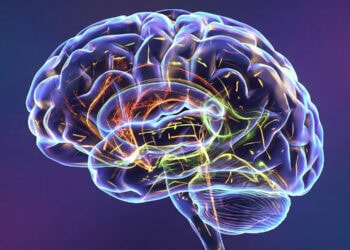
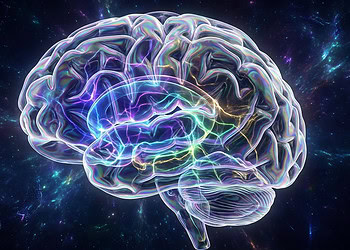
Researchers at the Johns Hopkins Bloomberg School of Public Health say they have developed tiny “mini-brains” made up of many of the neurons and cells of the human brain — and even some of its functionality — and which can be replicated on a large scale.
The researchers say that the creation of these “mini-brains,” which will be discussed at the American Association for the Advancement of Science conference in Washington, DC on Feb. 12 at a press briefing and in a session on Feb. 13, could dramatically change how new drugs are tested for effectiveness and safety, taking the place of the hundreds of thousands of animals used for neurological scientific research in the United States. Performing research using these three-dimensional “mini-brains” — balls of brain cells that grow and form brain-like structures on their own over the course of eight weeks — should be superior to studying mice and rats because they are derived from human cells instead of rodents, they say.
“Ninety-five percent of drugs that look promising when tested in animal models fail once they are tested in humans at great expense of time and money,” says study leader Thomas Hartung, MD, PhD, the Doerenkamp-Zbinden Professor and Chair for Evidence-based Toxicology at the Bloomberg School. “While rodent models have been useful, we are not 150-pound rats. And even though we are not balls of cells either, you can often get much better information from these balls of cells than from rodents.
“We believe that the future of brain research will include less reliance on animals, more reliance on human, cell-based models.”
Hartung and his colleagues created the brains using what are known as induced pluripotent stem cells (iPSCs). These are adult cells that have been genetically reprogrammed to an embryonic stem cell-like state and then are stimulated to grow into brain cells. Cells from the skin of several healthy adults were used to create the mini-brains, but Hartung says that cells from people with certain genetic traits or certain diseases can be used to create brains to study various types of pharmaceuticals. He says the brains can be used to study Alzheimer’s disease, Parkinson’s disease, multiple sclerosis and even autism. Projects to study viral infections, trauma and stroke have been started.
Hartung’s mini-brains are very small — at 350 micrometers in diameter, or about the size of the eye of a housefly, they are just visible to the human eye — and hundreds to thousands of exact copies can be produced in each batch. One hundred of them can grow easily in the same petri dish in the lab. After cultivating the mini-brains for about two months, the brains developed four types of neurons and two types of support cells: astrocytes and oligodendrocytes, the latter of which go on to create myelin, which insulates the neuron’s axons and allows them to communicate faster.
The researchers could watch the myelin developing and could see it begin to sheath the axons. The brains even showed spontaneous electrophysiological activity, which could be recorded with electrodes, similar to an electroencephalogram, also known as EEG. To test them, the researchers placed a mini-brain on an array of electrodes and listened to the spontaneous electrical communication of the neurons as test drugs were added.
“We don’t have the first brain model nor are we claiming to have the best one,” says Hartung, who also directs the School’s Center for Alternatives to Animal Testing.
“But this is the most standardized one. And when testing drugs, it is imperative that the cells being studied are as similar as possible to ensure the most comparable and accurate results.”
Hartung is applying for a patent for the mini-brains and is also developing a commercial entity called ORGANOME to produce them. He hopes production can begin in 2016. He says they are easily reproducible and hopes to see them used by scientists in as many labs as possible. “Only when we can have brain models like this in any lab at any time will we be able to replace animal testing on a large scale,” he says.