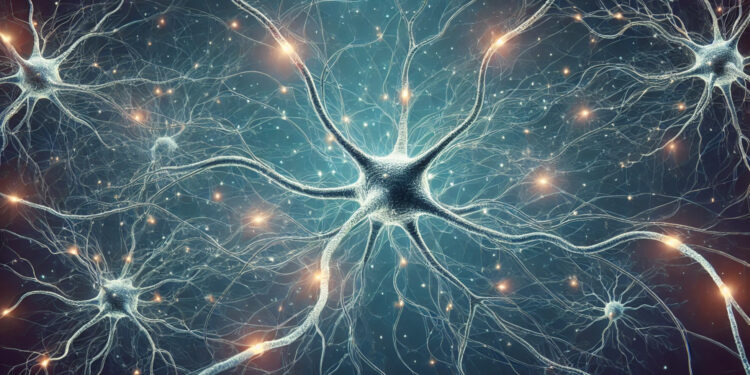

In a recent study published in The Journal of Neuroscience, researchers at the University of Alabama at Birmingham uncovered a potential breakthrough in the treatment of Parkinson’s disease. By focusing on a common side effect of Parkinson’s treatments called dyskinesia, a condition characterized by uncontrollable movements, the team identified a protein as a critical factor in the brain’s “bad motor memory.” By blocking this protein, they were able to halt dyskinesia in animal models, offering hope for longer-lasting and more effective Parkinson’s treatments.
Parkinson’s disease is a progressive neurodegenerative disorder primarily affecting motor functions. The loss of dopamine-producing neurons in the brain leads to symptoms like tremors, stiffness, and difficulty with balance and movement. One of the most effective treatments for managing these symptoms is the drug levodopa, which helps replenish dopamine levels.
However, long-term use of levodopa can cause a serious side effect: dyskinesia, a condition where patients develop uncontrollable movements that worsen over time. For many patients, the emergence of dyskinesia limits the usefulness of levodopa, forcing them to reduce their dose or discontinue the treatment altogether, despite its benefits.
Instead of looking for entirely new treatments, the research team wanted to address the problem of dyskinesia by preventing it from occurring in the first place. They hypothesized that dyskinesia could be treated like a “bad motor memory” – a maladaptive response to levodopa that the brain essentially “remembers” and repeats. By understanding and targeting the mechanisms behind this bad memory, they believed it might be possible to erase or prevent the development of dyskinesia.
“Parkinson’s disease is caused by the death of the neurons that make dopamine and are vitally important for coordinated movements. Currently, the best treatment for Parkinson’s disease is to replace the loss of dopamine directly by providing a drug that is a precursor to dopamine, L-DOPA. While L-DOPA treatment is very helpful for improving Parkinson’s disease symptoms in the short-term, long-term L-DOPA treatment leads to the development of uncontrollable movements and postures, known as L-DOPA-induced dyskinesia,” explained study author Karen L. Eskow Jaunarajs, an assistant professor of neurology at the University of Alabama at Birmingham.
“Unfortunately, even if L-DOPA treatment is stopped for extended periods of time, in so-called ‘drug holidays,’ these uncontrollable movements quickly come back once the patient restarts treatment. It almost seemed like the brain was forming a motor memory each time a patient received L-DOPA treatment, and this memory was then recalled upon every subsequent L-DOPA exposure. Due to these overlaps between motor and behavioral memory, we wondered if we approach dyskinesia like a bad memory, could we find ways to cause the brain to forget its previous treatment history and provide a way to prolong the usefulness of L-DOPA for Parkinson disease treatment?”
To investigate this theory, the researchers used a well-established mouse model of Parkinson’s disease. They induced the disease in the mice by injecting a chemical called 6-hydroxydopamine, which causes the degeneration of dopamine neurons in the brain, mimicking the loss of dopamine seen in Parkinson’s patients. The mice were then treated with levodopa over varying time periods to induce dyskinesia, mimicking what happens in humans after prolonged treatment with the drug.
The researchers closely monitored the development of dyskinesia in the mice by observing their movements and measuring the severity of abnormal involuntary movements (AIMs) after each dose of levodopa. To better understand what was happening at the cellular level, they performed a type of genetic analysis known as single-nuclei RNA sequencing.
This technique allowed them to isolate and analyze the activity of individual cells in the brain’s striatum, a region heavily involved in motor control and affected in Parkinson’s disease. Specifically, they looked at the activity of dopamine-sensitive neurons, focusing on those expressing dopamine D1 and D2 receptors, which play different roles in movement regulation.
One of the key findings was the discovery that after repeated exposure to levodopa, a particular type of neuron—those expressing the D1 receptor—underwent significant changes. These neurons showed signs of increased sensitivity and were more likely to be involved in dyskinesia.
The researchers also identified a gene, Inhba, which became highly active in these D1 neurons after prolonged levodopa treatment. This gene produces the protein Activin A, which plays a role in brain plasticity, the process by which the brain forms and strengthens connections between neurons. The team hypothesized that Activin A was contributing to the formation of the brain’s “bad motor memory,” driving the dyskinesia.
“We used single cell RNA sequencing to identify all of the gene expression changes that were happening in over 100,000 individual cells during dyskinesia development,” Jaunarajs explained. “By establishing a comprehensive profile of the changes in gene expression across all of the different types of cells in the striatum, we found that many of the most significant differences were in a certain type of neuron, called D1-MSNs.”
“We found that some of these D1-MSNs were expressing genes indicating that they were being activated by L-DOPA and genes that were necessary for creating new connections with other cells. This was very similar to what happens when you learn something new and recall that memory. Furthermore, we noticed that initially lots of cells were activated by L-DOPA treatment; however, after repeated exposures, the number of these activated D1-MSNs actually went down. Although this seems a little backwards, this is a lot like what happens when you learn something new: initially many cells are required to initially form a memory, however, as you get better at recalling the memory, your brain gets more efficient and fewer cells are necessary to quickly retrieve it.”
The researchers tested their hypothesis by using a chemical inhibitor to block Activin A signaling in the brain. Mice treated with this inhibitor showed a significant reduction in dyskinesia, despite continued levodopa treatment. The inhibition of Activin A effectively “erased” the bad motor memory, allowing the mice to maintain the benefits of levodopa without developing severe dyskinesia.
“By blocking the function of Activin A, we were able to block the development of L-DOPA-induced dyskinesia in our mouse model,” Jaunarajs said. “These data really highlighted a previous unappreciated pathway that could potentially be targeted to prolong L-DOPA’s usefulness for Parkinson disease patients.”
While the results of the study are promising, there are several limitations to consider. First, the research was conducted in mice, which, while a useful model for studying Parkinson’s disease, do not perfectly replicate the human condition. There are significant differences in brain structure and function between species, and what works in mice may not always translate to human patients.
Another limitation is that the study focused on a relatively short time frame of levodopa treatment. Parkinson’s disease is a chronic condition, and patients often take levodopa for many years. It remains to be seen whether blocking Activin A would continue to be effective over the long term, or whether other compensatory mechanisms might emerge, causing dyskinesia to return.
Future research will need to address these questions, both by testing the approach in humans and by examining the long-term effects of Activin A inhibition. Additionally, the researchers noted that their study uncovered hundreds of other genes and proteins that might play a role in the development of dyskinesia. These findings offer many potential avenues for future research, as other pathways might be targeted for therapeutic development.
“Our future goals are to help understand what is actually driving these differences in gene expression,” Jaunarajs said. “In addition to providing the instructions for how to make a protein, the genome also has a lot of regulation on when to make those proteins. We are hoping to identify the regulatory regions that become active following L-DOPA treatment, and how these regions contribute to the development of the memory to treatment.”
“By building on our RNA map, we want to create a corresponding atlas of the DNA regulatory regions active in individual cells across the striatum. We hope this will allow us to understand what molecules are turning these DNA regulatory regions on, with the hope that we can block these molecules and erase the motor memories that are formed following L-DOPA treatment.”
“We are very thankful to the Parkinson Association of Alabama, the American Parkinson Disease Association, and the Department of Defense for funding these projects and for valuing the work of early-career scientists,” Jaunarajs added.
The study, “Differential Activation States of Direct Pathway Striatal Output Neurons during l-DOPA-Induced Dyskinesia Development,” was authored by David A. Figge, Henrique de Oliveira Amaral, Jack Crim, Rita M. Cowell, David G. Standaert, and Karen L. Eskow Jaunarajs.