Subscribe
The latest psychology and neuroscience discoveries.
My Account
  • Mental Health
  • Social Psychology
  • Cognitive Science
  • Neuroscience
  • About
No Result
View All Result
PsyPost
PsyPost
No Result
View All Result
Home Exclusive Mental Health

Shedding new light on the formation of emotional fear memories

by RIKEN
December 8, 2014
in Mental Health
Photo credit: Tom Lin (Creative Commons)

Photo credit: Tom Lin (Creative Commons)

Share on TwitterShare on Facebook

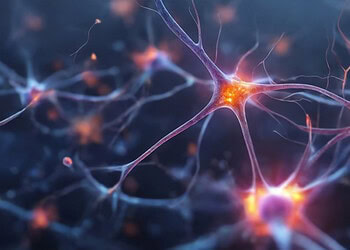
Everyday events are easy to forget, but unpleasant ones can remain engraved in the brain. A new study published in the Proceedings of the National Academy of Sciences identifies a neural mechanism through which unpleasant experiences are translated into signals that trigger fear memories by changing neural connections in a part of the brain called the amygdala.

The findings show that a long-standing theory on how the brain forms memories, called Hebbian plasticity, is partially correct, but not as simple as was originally proposed.

The effort led by Joshua Johansen from the RIKEN Brain Science Institute in Japan and New York University scientists Lorenzo Diaz-Mataix and Joseph LeDoux, tested an influential theory proposed in 1949 by the Canadian psychologist Donald Hebb that neurons that are connected and fire electrical impulses at the same time increase the strength of their connections to form a memory. Previous work in reduced brain preparations had demonstrated that this process, called Hebbian plasticity, can increase the connection strength between neurons, but it remained untested during memory formation in behaving animals. To directly test this question, the team examined whether coincident electrical excitation of neurons which are known to store fear memories is necessary and sufficient to trigger changes in neural connections and memory formation.

The researchers used a technique called optogenetics to silence electrical activity in a brain area called the amygdala where fear memories are stored, as animals learned to associate an auditory tone and mild electrical shock. In accord with Hebbian theory, silencing electrical activity reduced memory formation and the prevented strengthening of the connections between auditory neurons and amygdala cells.

However, when they eliminated the shock and replaced it with optical excitation of amygdala neurons, no learning occurred. Surprisingly, learning was restored when cell surface receptors for a neuromodulator called noradrenaline, which is important for attention, were activated at the same time. The results demonstrated that Hebbian mechanisms are important but not sufficient for memory formation, but require concurrent activation of noradrenaline.

According to Johansen, “This work represents one of the first tests of an influential hypothesis for memory formation in the working brain. The findings from this work support the general premise of the hypothesis, but suggest that other factors such as noradrenaline are also crucial.” The study provides a new perspective on how aversive experiences, such as being attacked by a dog, for example, are translated by the brain into emotional fear memories and may represent a general process to control memory formation in other brain areas. In a broader context, the ability to precisely control of fear memory may help to treat them when they are medically deleterious in conditions such as fearful anxiety or post-traumatic stress disorder.


Google News Preferences Add PsyPost to your preferred sources
Previous Post

Blocking receptor in brain’s immune cells counters Alzheimer’s in mice

Next Post

Love is sweet: Taste can influence our romantic perceptions, study finds

RELATED

Casual sex is linked to lower self-esteem and weaker moral orientations in women but not men
Cognitive Science

Fake medicine yields surprisingly real results for older adults’ memory and stress

April 9, 2026
Social media may be trapping us in a cycle of loneliness, new study suggests
Body Image and Body Dysmorphia

Young men steadily catch up to young women in online appearance anxiety

April 8, 2026
Personalient individuals are happier due to smoother social relations
Depression

New research links meaning in life to lower depression rates

April 8, 2026
A common calorie-free sweetener alters brain activity and appetite control, new research suggests
Anxiety

High sugar intake is linked to increased odds of depression and anxiety in new study

April 8, 2026
Your brain might understand music theory better than you think, regardless of formal training
Early Life Adversity and Childhood Maltreatment

An unpredictable childhood predicts greater psychological distress during the Israel-Hamas war

April 8, 2026
Alcohol use disorder: Novel procedure identifies individual differences in coping strategies
Mental Health

Maternal exposure to short-chain PFAS causes persistent memory problems in adult rats

April 7, 2026
Obesity before pregnancy linked to autism-like behavior in male offspring, study finds
Addiction

Early life stress fundamentally alters alcohol processing in the brain

April 7, 2026
Trump links Tylenol and autism. What does current research actually say?
Autism

Autism associated with age of maternal grandparents in new study

April 7, 2026

STAY CONNECTED

RSS Psychology of Selling

  • Smaller influencers drive engagement while bigger ones drive purchases, meta-analysis finds
  • Political conservatives are more drawn to baby-faced product designs, and purity values explain why
  • Free gifts with no strings attached can boost customer spending by over 30%, study finds
  • New research reveals the “Goldilocks” age for social media influencers
  • What today’s shoppers really want from salespeople, and what drives them away

LATEST

Fake medicine yields surprisingly real results for older adults’ memory and stress

People view coercive control in relationships as less harmful when the victim is a man

Casual sex is linked to lower self-esteem and weaker moral orientations in women but not men

Young men steadily catch up to young women in online appearance anxiety

Teenage brains process mechanical and academic skills differently across the sexes

New study reveals six stages of spiritual growth experienced during a pilgrimage

New research links meaning in life to lower depression rates

High sugar intake is linked to increased odds of depression and anxiety in new study

PsyPost is a psychology and neuroscience news website dedicated to reporting the latest research on human behavior, cognition, and society. (READ MORE...)

  • Mental Health
  • Neuroimaging
  • Personality Psychology
  • Social Psychology
  • Artificial Intelligence
  • Cognitive Science
  • Psychopharmacology
  • Contact us
  • Disclaimer
  • Privacy policy
  • Terms and conditions
  • Do not sell my personal information

(c) PsyPost Media Inc

Welcome Back!

Login to your account below

Forgotten Password?

Retrieve your password

Please enter your username or email address to reset your password.

Log In

Add New Playlist

Subscribe
  • My Account
  • Cognitive Science Research
  • Mental Health Research
  • Social Psychology Research
  • Drug Research
  • Relationship Research
  • About PsyPost
  • Contact
  • Privacy Policy

(c) PsyPost Media Inc