Subscribe
The latest psychology and neuroscience discoveries.
My Account
  • Mental Health
  • Social Psychology
  • Cognitive Science
  • Psychopharmacology
  • Neuroscience
  • About
No Result
View All Result
PsyPost
PsyPost
No Result
View All Result
Home Exclusive Social Psychology

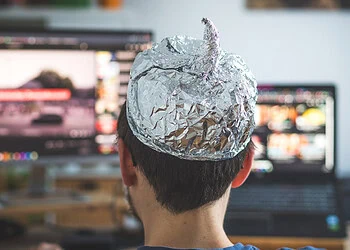
Study: Conspiracy theories could be the result of how humans handle probabilities

by Eric W. Dolan
May 17, 2018
in Social Psychology
(Photo credit: Maridav)

(Photo credit: Maridav)

Share on TwitterShare on Facebook
Don't miss out! Follow PsyPost on Bluesky!

New research helps explain why conspiracy theories are relatively common. The study, published in the journal Applied Cognitive Psychology, suggests conspiratorial thinking is the consequence of a general cognitive bias associated with low probabilities.

“There is plenty of evidence that belief in one conspiracy theory or the other is commonplace. We simply wondered: Why?” said study author Marko Kovic of the Zurich Institute of Public Affairs Research.

“Since conspiratorial beliefs have real-world impact, often not in a good way, we think that understanding why people believe in conspiracy theories matters. At least if we care about doing something about conspiratorial beliefs.”

“On a personal level: I used to be a bit of a conspiracy theorist myself, so understanding why I believed what I used to believe is also a motivating factor for me,” added Kovic, who is also the co-founder and former president of the group Swiss Skeptics.

In five experiments, with a total of 2,254 participants, the researchers found that people tended to endorse conspiratorial explanations for events when those events had a low probability of occurring.

For example, in two of their experiments, the researchers had participants read a fictional news excerpt about a famous journalist who abruptly died from a heart attack. In one version of the article, a doctor is quoted as saying the journalist had a 95% chance of having a heart attack. In other versions, the doctor is quoted saying the journalist had a 75%, 50%, 25% or 1% chance of having a heart attack.

Participants were more likely to believe the journalist was actually murdered when the article stated the probability of him having a heart attack was lower. This conspiratorial explanation was endorsed even more when the article noted the journalist had recently exposed government corruption.

“It’s not ‘us’ (reasonable people) vs. ‘them’ (irrational conspiracy nuts) — conspiratorial reasoning is a coping mechanism that we all use,” Kovic told PsyPost.

The study has some limitations.

“Generally, one should never put too much faith into one single study, so we need more research in this area,” Kovic explained. “For example, in the discussion of our results, we speculate that a better understanding of probabilistic reasoning might act as a kind of debiasing mechanism that would reduce the susceptibility to conspiratorial thinking. That is entirely speculative at the moment, and we would love to see research done on this question.”

“If conspiratorial thinking is indeed a heuristic that we are all prone to, then we should rethink how we go about ‘debunking’ conspiracy theories,” Kovic said. “As has been shown in existing research, merely confronting people with facts does not necessarily work. ‘Debunking’ conspiracy theories might be more effective if we adapt to conspiracy believers’ – and thus also to our own – cognitive style.”

The study, “Probability and conspiratorial thinking“, was authored by Marko Kovic and Tobias Füchslin.
TweetSendScanShareSendPin1ShareShareShare

RELATED

Individuals with dark traits have a heightened connection to certain types of fictional characters
Dark Triad

Individuals with dark traits have a heightened connection to certain types of fictional characters

December 21, 2024

People with antagonistic personality traits, like psychopathy and sadism, are more likely to admire and feel similar to morally ambiguous fictional characters, such as antiheroes and villains.

Read moreDetails
New study shows how social media may be able to influence women’s body image for the better
Social Media

Digital maturity is associated with greater social connectedness among teens

December 20, 2024

Digitally mature teens report feeling more socially connected, which is associated with engaging with real-life friends online and prioritizing compassionate goals.

Read moreDetails
Sexual satisfaction’s link to marital happiness grows stronger with age
Relationships and Sexual Health

Sexual satisfaction’s link to marital happiness grows stronger with age

December 20, 2024

Sexual satisfaction becomes increasingly important to marital happiness as individuals age, with age being a stronger factor than marital duration. Gender differences and religiosity also influence this relationship.

Read moreDetails
Psychology study uncovers a surprising fact about “mansplaining”
Sexism

Psychology study uncovers a surprising fact about “mansplaining”

December 20, 2024

Recent research found that unresponsive advice—unsolicited, generic, and prescriptive—makes women feel less respected, powerful, and listened to. These effects occurred regardless of the advisor’s gender, though advice from men heightened women’s awareness of gender stereotypes.

Read moreDetails
Americans misperceive the true nature of political debates, contributing to a sense of hopelessness
Political Psychology

New research reveals the double-edged effects of essentialist beliefs on political bias

December 19, 2024

New research has found that believing political ideologies are unchangeable reduces partisan prejudice, while seeing political groups as fundamentally different increases it.

Read moreDetails
Women exhibit less manipulative personality traits in more gender-equal countries
Machiavellianism

Women exhibit less manipulative personality traits in more gender-equal countries

December 19, 2024

Men consistently score higher on Machiavellianism than women, but this gap widens in more gender-equal countries because women’s scores decrease, while men’s scores remain stable regardless of societal gender equality levels.

Read moreDetails
Listening to Joe Rogan predicts belief in extraterrestrial UFOs, study finds
Conspiracy Theories

Listening to Joe Rogan predicts belief in extraterrestrial UFOs, study finds

December 19, 2024

Consuming paranormal documentaries, reality TV, Fox News, YouTube, and the Joe Rogan Experience podcast is linked to stronger belief in UFOs, while general media consumption and traditional news showed no such connection.

Read moreDetails
What makes a company Christmas party good? Research identifies key ingredients for success
Business

What makes a company Christmas party good? Research identifies key ingredients for success

December 18, 2024

What makes a company Christmas party a hit or a disaster? Research has revealed the factors that boost employee happiness—and the ones that can ruin the festive mood.

Read moreDetails

SUBSCRIBE

Go Ad-Free! Click here to subscribe to PsyPost and support independent science journalism!

STAY CONNECTED

RECENT

Individuals with core knowledge confusions are more likely to believe in the paranormal

Scientists reveal dopamine and serotonin’s opposing roles in fascinating neuroscience breakthrough

Fast food consumption is associated with depression

Caffeine can disrupt your sleep — even when consumed 12 hours before bed

Digital maturity is associated with greater social connectedness among teens

Childhood sibling bonds predict better cognitive health in old age, study finds

Sexual satisfaction’s link to marital happiness grows stronger with age

Feeling connected to nature may ease mental health struggles after losing a loved one


  • Contact us
  • Privacy policy
  • Terms and Conditions
[Do not sell my information]

Welcome Back!

Login to your account below

Forgotten Password?

Retrieve your password

Please enter your username or email address to reset your password.

Log In

Add New Playlist

Subscribe
  • My Account
  • Cognitive Science Research
  • Mental Health Research
  • Social Psychology Research
  • Drug Research
  • Relationship Research
  • About PsyPost
  • Contact
  • Privacy Policy