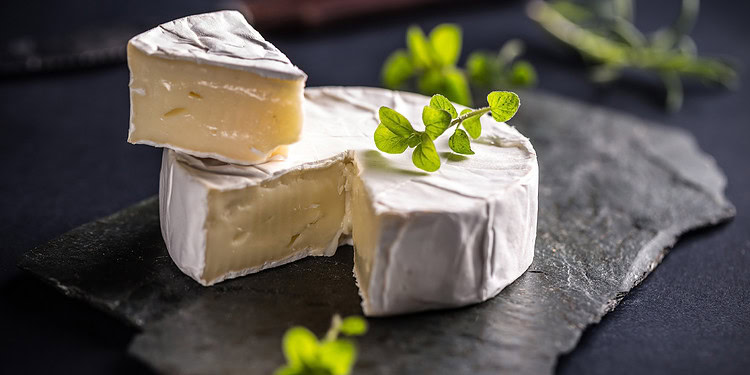

A recent study published in Neuroscience Research sheds light on the potential cognitive benefits of Camembert cheese. The research reveals that fatty acid amides—compounds generated during the cheese’s fermentation process—enhanced memory and learning in mice fed a high-fat diet. These findings suggest that Camembert cheese may offer unique dietary advantages for cognitive health.
Camembert stands out among cheeses due to its fermentation with white mold (Penicillium camemberti), which gives it a distinct biochemical profile. This fermentation process produces fatty acid amides like myristamide, which are rarely found in non-fermented or differently fermented cheeses. These compounds are increasingly recognized for their potential to influence brain health by boosting neurotrophic factors, proteins that support brain cell growth, repair, and memory formation.
Previous studies had already hinted at Camembert cheese’s benefits in humans, showing that its consumption increased neurotrophic factor levels in older adults. These proteins are essential for maintaining cognitive function, particularly as the brain ages. While these findings were promising, the precise mechanisms and specific compounds driving the effects were not fully understood. The new study aimed to close that knowledge gap by focusing on fatty acid amides and their ability to enhance learning and memory.
To explore the cognitive benefits of Camembert cheese and its fatty acid amides, the researchers conducted experiments on male mice. These mice were divided into groups and fed either a high-fat diet alone or supplemented with Camembert cheese or specific fatty acid amides extracted from the cheese. The study’s high-fat diet was designed to impair cognitive function, mimicking conditions linked to dietary risks for neurodegeneration in humans.
The researchers administered daily oral doses of Camembert cheese, myristamide (a fatty acid amide), or other related compounds to the mice over seven days. The cheese was homogenized to ensure consistency, and the fatty acid amides were carefully measured and administered in specific doses. To assess cognitive performance, the mice underwent two behavioral tests: the Object Recognition Test (ORT) and the Object Location Test (OLT). These tests are widely used to evaluate memory and learning in animals.
In the ORT, the mice were placed in an open field containing two objects. During the test phase, one of the familiar objects was replaced with a novel one. Researchers measured the time the mice spent exploring the new object, with greater exploration indicating better recognition memory. Similarly, in the OLT, the position of one object was changed, and the time spent investigating the novel location was recorded to assess spatial memory.
The results showed that both Camembert cheese and myristamide improved cognitive function in the mice. In the ORT, mice supplemented with Camembert cheese spent more time exploring the novel object, indicating enhanced recognition memory. This effect was dose-dependent, with higher doses yielding better results. Similarly, mice treated with myristamide performed better on both the ORT and OLT, suggesting that this compound improved both recognition and spatial memory.
Importantly, the study found that myristamide’s effects were unique to its amidated form. Myristic acid, a precursor to myristamide, did not improve cognitive function, highlighting the importance of the amidation process that occurs during cheese fermentation. This suggests that the fermentation process itself may enhance the cheese’s physiological activity.
In addition to behavioral tests, the researchers examined changes in brain chemistry. They analyzed the expression of neurotrophic factors—proteins that support brain cell growth and repair—in the hippocampus, a region critical for memory and learning. These molecular analyses aimed to uncover the biological mechanisms underlying any observed cognitive improvements.
On a molecular level, myristamide increased the expression of brain-derived neurotrophic factor (BDNF) in the hippocampus. BDNF is essential for neuroprotection, synaptic growth, and memory formation. These findings indicate that myristamide’s cognitive benefits may be mediated through its ability to promote neurogenesis and enhance synaptic plasticity. Interestingly, the effects of Camembert cheese on cognitive function were consistent with those of myristamide, suggesting that this compound may be a key active ingredient in the cheese.
While the findings are promising, the study has several limitations. First, it was conducted on mice, so its relevance to humans remains uncertain. Although previous studies have linked Camembert cheese to cognitive benefits in older adults, further research is needed to confirm whether the same fatty acid amides yield similar effects in humans. Second, the study only examined short-term cognitive changes, leaving questions about the long-term impact of these compounds unanswered.
“Recently, there has been an increased interest in the relationship between food intake and cognitive function,” the researchers concluded. “The present study showed that the improved cognitive function can be attributed not only to the components of natural foods but also to those of fermented foods. In particular, we found that the fermentation of milk by white mold produces molecules with enhanced physiological activity. Further investigations, including longer-term studies and broader data analyses, will be needed.”
The study, “Fatty acid amides present in Camembert cheese improved cognitive decline after oral administration in mice,” was authored by Kohei Kawano, Maiko Shobako, Taichi Furukawa, Tatsuhiro Toyooka, and Kousaku Ohinata.