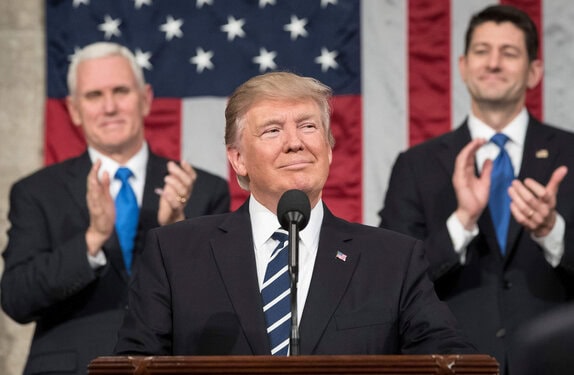

Children in the United States no longer appear to have an idealized view of the president, according to new research published in Public Opinion Quarterly. The findings suggest that children’s attitudes have drastically changed in the last 60 years.
“This research is part of a larger project exploring children’s political socialization, specifically knowledge of and interest in politics as well as perceptions of government and political leaders,” said study author Zoe M. Oxley, a professor of political science at Union College.
“Scholars have long known that socialization with regard to politics begins early in life, yet empirical studies of children have been exceedingly rare in recent decades. For instance, since the late 1950s, the only examination of children’s perceptions of the president that we know of was conducted in 2000. We wondered what contemporary children know and think about politics.”
For their study, the researchers surveyed 503 American students in grades 1 through 6 in the fall of 2017 and winter of 2018. “Above all else, our work was intended as a study of the presidency and the president, not a study of Donald Trump,” Oxley explained.
“We embarked on this research project in the spring of 2016, before we knew who would be president. To be able to replicate past work, our interview and survey questions borrowed ones used in past decades and were not written specifically with Donald Trump (or Hillary Clinton or anyone else) in mind. It just so happens that Donald Trump was president by the time we collected data in 2017.”
Similar to previous research, the researchers found that most students viewed the presidency as an important position. Nearly three-fourths of American children who were asked to identify the “four most important people” out of a list of ten options included the president.
Unlike the past research, however, about 10% of the children provided negative answers when asked “what kinds of things do you think the president does?” In 1958, when Dwight D. Eisenhower was in office, “essentially none” of the students viewed the president negatively, the researchers said. But in the current study, negative statements outnumbered positive statements by five to one.
“Examples of negative comments from children in our sample include that the president lies, insults people, and wants to start a war,” the researchers said.
Similarly, the percentage of students who believed the president was doing a “very good” job fell from 71 during Eisenhower’s presidency to 17 percent during Trump’s, while the percentage who believed the president was doing a “bad” job increased from 1 to 27.
The children were also asked to evaluate the work ethic, honesty, and knowledge of the president. Oxley and her colleagues found that children in their study evaluated the president more negatively than did children in 1958 on every characteristic.
For example, 67% of children said the president “works much harder” than others in 1958, compared to 39% of children in 2017-2018. Only 3% of children said the president was “not a good person” in 1958, but 51% of children said that Trump was “not a good person.”
“Today’s children view the institution of the presidency favorably and consider the president to be an important adult role, as have children since at least the 1950s. On the other hand, children’s assessments of the president’s job performance and his personal characteristics are far less rosy than they used to be. Such negative perceptions were evident among children in 2000 but have worsened somewhat in the years since,” Oxley told PsyPost.
“Because of the sporadic timing of studies asking children their views about the president, one large and important question remains unanswered: Do children negatively assess the performance and personal characteristics of all recent presidents while they are in office? Our results speak to Donald Trump whereas earlier work pertains to Bill Clinton, but what of other presidents?”
“Future, frequent research surveying children’s attitudes toward the president will be necessary before we could be certain whether children’s attitudes have turned negative toward all presidents or only certain presidents,” Oxley said.
The study, “Children’s Views of the American Presidency“, was authored by Zoe M. Oxley, Mirya R. Holman, Jill S. Greenlee, Angela L. Bos, and J. Celeste Lay.