Subscribe
The latest psychology and neuroscience discoveries.
My Account
  • Mental Health
  • Social Psychology
  • Cognitive Science
  • Neuroscience
  • About
No Result
View All Result
PsyPost
PsyPost
No Result
View All Result
Home Exclusive Cognitive Science

Study suggests conspiracy theory beliefs are not used to compensate for perceived lack of control

by Christian Rigg
March 1, 2021
in Cognitive Science, Conspiracy Theories
Share on TwitterShare on Facebook

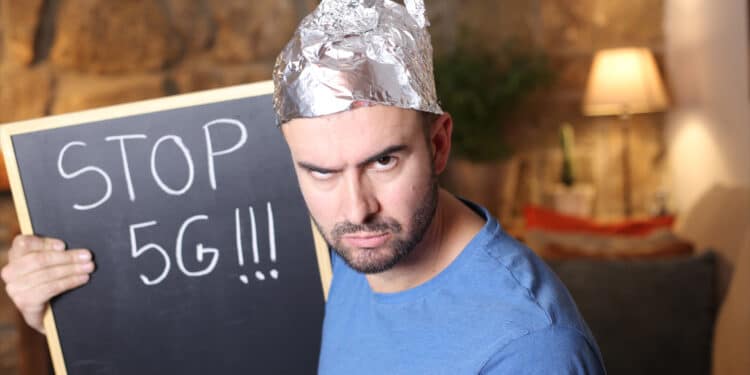
Conspiracy theories are recognized in most scientific domains as particularly dangerous. Climate change deniers, anti-vaxxers and, most recently, COVID-19 “shamdemic” conspiracy theorists all slow progress and, in some and extreme cases, put lives at risk, even beyond those who subscribe to such beliefs.

There is a longstanding popular belief, even among scientists and psychologists, that conspiracy theories stem from a perceived lack of control. Empirical evidence for this claim, however, is scattered and somewhat contradictory.

Remedying this situation was the goal of one researcher from New Zealand, whose metastudy of the subject included 23 papers covering 45 studies, with an average population of 375 participants (54% female).

The author first notes that theoretical support for the use of conspiracy theories as a control mechanism is suspect. They provide “too much order and structure”, whereas humans more likely strive to seek an optimal—and not maximum—sense of control. Additionally, conspirators are by nature malevolent, making them culturally inaccessible, while belief in conspiracy theories is likewise socially acceptable. However, scientific theory and fact being often incongruous, the question bears empirical examination.

There are numerous ways to test for lack of control. In most (78%) of the studies, this feeling was elicited with a recall task (participants are asked to recall and describe events where they felt out of control). Furthermore, studies may have focused on general belief in conspiracy theories (30%) or belief in a specific conspiracy theories (70%) or both (9%)

In addition to type of experimental manipulation (e.g., recall) and dependent measure operationalization (e.g., general), the author examined publication year, sample, presence of manipulation check, comparison group, publication status, and effect sizes.

The author found little support for the claim that conspiracy theories are held as a compensatory mechanism when perceived control is threatened. A statistically insignificant effect size was found, and none of the potential moderators extracted from the studies were found to influence outcome. Support for specific conspiracy theories was found to be slightly higher than general belief in conspiracy theories, suggesting “a limited role for lack of control.”

However, as the author notes, this is hardly the final word on the relation between perceived lack of control and belief in conspiracy theories. A variety of operational, experimental and external factors differentiate and influenced the studies in question. Control is a complex sentiment with multiple dimensions and interpretations, and the direction and nature of its relationship with conspiracy theories may be different than hypothesized by many researchers.

Google News Preferences Add PsyPost to your preferred sources

Understanding why and when people believe in conspiracy theories is essential to combating them and mitigating their potentially deleterious effects on society. It is likely that control is one among many factors, but as evidenced by the present metastudy, further research is needed to fully comprehend this phenomenon.

The study, “Does Perceived Lack of Control Lead to Conspiracy Theory Beliefs? Findings from an online MTurk sample”, appeared in PLoS ONE in August, 2020.

Previous Post

Mindfulness training and relaxation training offer similar benefits for relationship well-being

Next Post

Psychological entitlement linked to defiance of COVID-19 rules via perceptions of unfairness, study finds

RELATED

Researchers identify two psychological traits that predict conspiracy theory belief
Cognitive Science

The hidden brain benefit of getting in shape that scientists just discovered

March 11, 2026
Scientists use “dream engineering” to boost creative problem-solving during REM sleep
Cognitive Science

Genetic factors drive the link between cognitive ability and socioeconomic status

March 10, 2026
Scientists use “dream engineering” to boost creative problem-solving during REM sleep
Cognitive Science

Everyday mental quirks like déjà vu might be natural byproducts of a resting mind

March 10, 2026
Scientists use “dream engineering” to boost creative problem-solving during REM sleep
Cognitive Science

Scientists use “dream engineering” to boost creative problem-solving during REM sleep

March 10, 2026
Researchers identify two psychological traits that predict conspiracy theory belief
Artificial Intelligence

Brain-controlled assistive robots work best when they share the workload with users

March 8, 2026
How common is anal sex? Scientific facts about prevalence, pain, pleasure, and more
Cognitive Science

New psychology research reveals that wisdom acts as a moral compass for creative thinking

March 6, 2026
Hemp-derived cannabigerol shows promise in reducing anxiety — and maybe even improving memory
Alcohol

Using cannabis to cut back on alcohol? Your working memory might dictate if it works

March 5, 2026
Republicans’ pro-democracy speeches after January 6 had no impact on Trump supporters, study suggests
Conspiracy Theories

Trump voters who believed conspiracy theories were the most likely to justify the Jan. 6 riots

March 5, 2026

STAY CONNECTED

LATEST

Women who are open to “sugar arrangements” tend to show deeper psychological vulnerabilities

Ashwagandha shows promise as a treatment for depression in new rat study

Early exposure to a high-fat diet alters how the adult brain reacts to junk food

How sexual orientation stereotypes keep men out of early childhood education

Your personality and upbringing predict if you will lean toward science or faith

Veterans are no more likely than the general public to support political violence

People with social anxiety are less likely to experience a post-sex emotional glow

The extreme male brain theory of autism applies more strongly to females

PsyPost is a psychology and neuroscience news website dedicated to reporting the latest research on human behavior, cognition, and society. (READ MORE...)

  • Mental Health
  • Neuroimaging
  • Personality Psychology
  • Social Psychology
  • Artificial Intelligence
  • Cognitive Science
  • Psychopharmacology
  • Contact us
  • Disclaimer
  • Privacy policy
  • Terms and conditions
  • Do not sell my personal information

(c) PsyPost Media Inc

Welcome Back!

Login to your account below

Forgotten Password?

Retrieve your password

Please enter your username or email address to reset your password.

Log In

Add New Playlist

Subscribe
  • My Account
  • Cognitive Science Research
  • Mental Health Research
  • Social Psychology Research
  • Drug Research
  • Relationship Research
  • About PsyPost
  • Contact
  • Privacy Policy

(c) PsyPost Media Inc