Subscribe
The latest psychology and neuroscience discoveries.
My Account
  • Mental Health
  • Social Psychology
  • Cognitive Science
  • Neuroscience
  • About
No Result
View All Result
PsyPost
PsyPost
No Result
View All Result
Home Exclusive Social Psychology Political Psychology

Study suggests that the modern anti-vaccine movement is shaped by Christian nationalist ideology

by Beth Ellwood
March 8, 2021
in Political Psychology
Protesters at a "Reopen Ohio" rally against coronavirus measures. (Photo credit: Becker1999)

Protesters at a "Reopen Ohio" rally against coronavirus measures. (Photo credit: Becker1999)

Share on TwitterShare on Facebook

New findings suggest that the contemporary anti-vaccine movement — also known as the anti-vaxx movement — is characterized by religious exclusivism. The study found that Christian nationalism was the second best predictor of anti-vaccine attitudes among Americans. The findings were published in Socius: Sociological Research for a Dynamic World.

In the United States, one of the most steady predictors of vaccine attitudes is race, with the Black population being far more skeptical toward vaccines compared to the white population. But study authors Andrew L. Whitehead and Samuel L. Perry say that the influence of race may be trailing off when it comes to the modern-day anti-vaccine movement. Conservatism, libertarianism, and anti-science attitudes characterize the movement, and the researchers propose that at the heart of these beliefs is one prevailing ideology — Christian nationalism.

Whitehead and Perry say that the endorsement of Christian nationalist ideology is not exclusive to those who practice religion and is being adopted by people who oppose both scientists’ and the mainstream media’s representations of health and disease. The current coronavirus pandemic is marked by a virus that depends on the high uptake of vaccinations to achieve herd immunity. Within this context, the researchers note that exploring the predictors of anti-vaccine ideology is crucial.

The researchers analyzed survey data from 1,219 respondents of the 2019 wave of the Chapman University Survey of American Fears (CSAF). The CSAF is a national survey that addresses a range of fears and concerns among the American public and measures seven different beliefs about vaccinations. The vaccine-related items included, “Kids today are given too many vaccines” and “The benefits of vaccines are greater than the risks”. The survey also included measures of Christian nationalism.

An analysis of the data revealed that Christian nationalism, conservatism, being older, and being Black or Hispanic (compared to white) were each associated with anti-vaccine attitudes. In contrast, greater income, higher education, and identifying as a Democrat (versus a Republican) were associated with greater support for vaccines.

Among all predictors of vaccine distrust, the strongest was race, with Black Americans showing a greater opposition to vaccines compared to white Americans. The researchers say this is unsurprising, given the history of medical abuse endured by the Black community and persisting today. While this finding was expected, the authors note that it is nevertheless important as it highlights the continuing influence of race when it comes to attitudes toward vaccines.


The second strongest predictor was Christian nationalism — even after controlling for a host of sociodemographic, religious, and political characteristics. Whitehead and Perry say this falls in line with previous findings showing that Christian nationalists are more likely to reject science, feeling that it threatens traditionalism and moral order. They are also more likely to hold libertarian populist attitudes that involve a distrust of the mainstream media’s coverage of infectious diseases. Finally, Christian nationalism has been affiliated with Donald Trump, who not only fiercely defends the influence of Christianity but has shared anti-vaxx rhetoric to millions on Twitter.

Google News Preferences Add PsyPost to your preferred sources

Given that the study’s data was collected before the coronavirus pandemic, it did not include a measure of support for a COVID-19 vaccine. Still, the authors caution their findings point to the potential difficulty in achieving widespread vaccination. A previous 2020 study led by Perry found evidence that Christian nationalism was linked to a reluctance to follow COVID-19 public health measures, and the authors speculate this trend likely extends to anti-vaccine attitudes.

“As we demonstrate, Americans who embrace Christian nationalism are much more likely to question the efficacy and safety of vaccines, to believe that doctors and drug companies are dishonest about vaccine risks, and to believe that it should be up to individuals to choose whether to vaccinate or not,” Whitehead and Perry report. “The implications of these findings are clear: even with the existence of a COVID-19 vaccine in the future, a substantial subset of Americans will likely view it with suspicion and resist receiving it.”

The study, “How Culture Wars Delay Herd Immunity: Christian Nationalism and Anti-vaccine Attitudes”, was authored by Andrew L. Whitehead and Samuel L. Perry.


Previous Post

College men are more willing to help women with erect nipples, according to new research

Next Post

Previous antidepressant use may blunt the effectiveness of MDMA-assisted psychotherapy for PTSD

RELATED

Scientists reveal the impact of conspiracy theories on personal relationships and dating success
Conspiracy Theories

The exact political location where conspiracy theories thrive

April 3, 2026
This psychological factor might help unite America or “destroy us from within”
Political Psychology

The psychological divide between Democrats and Republicans during democratic backsliding

April 2, 2026
Study links phubbing sensitivity to attachment patterns in romantic couples
Artificial Intelligence

How generative artificial intelligence is upending theories of political persuasion

April 1, 2026
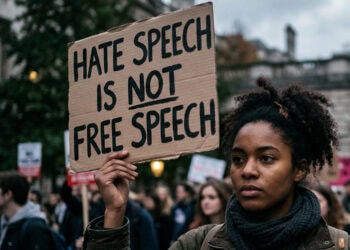
Belief in the harmfulness of speech is linked to both progressive ideology and symptoms of depression
Political Psychology

Belief in the harmfulness of speech is linked to both progressive ideology and symptoms of depression

April 1, 2026
Shifting genetic tides: How early language skills forecast ADHD and literacy outcomes
Authoritarianism

How a twin study untangled the surprising roots of authoritarian political beliefs

March 31, 2026
High meat consumption may protect against cognitive decline in people with a specific Alzheimer’s gene
Political Psychology

Metacognitive training reduces hostility between left-wing and right-wing voters

March 28, 2026
New Harry Potter study links Gryffindor and Slytherin personalities to heightened entrepreneurship
Moral Psychology

New psychology research pinpoints a key factor separating liberal and conservative morality

March 25, 2026
Brain MRI scans showing different views and slices for neurological and psychological research, highlighting brain structure and function analysis.
Neuroimaging

Brain scans reveal Democrats and Republicans use different neural pathways to buy groceries

March 23, 2026

STAY CONNECTED

RSS Psychology of Selling

  • The salesperson who competes against themselves may outperform the one trying to beat everyone else
  • When sales managers serve first, salespeople stay longer and sell more confidently
  • Emotional intelligence linked to better sales performance
  • When a goal-driven boss ignores relationships, manipulative employees may fight back
  • When salespeople fail to hit their targets, inner drive matters more than bonus checks

LATEST

Family dynamics predict whether parents and children agree on choosing a romantic partner

Job seekers mask their emotions and act more analytical when evaluated by artificial intelligence

Your body exhibits subtle physiological changes when you engage in self-deception

The exact political location where conspiracy theories thrive

When made to feel sad, men with psychopathic traits shift their visual focus to anger

Different types of childhood maltreatment appear to uniquely shape human brain development

Brain scans shed light on how short videos impair memory and alter neural pathways

Cannabis intoxication broadly impairs multiple memory types, new study shows

PsyPost is a psychology and neuroscience news website dedicated to reporting the latest research on human behavior, cognition, and society. (READ MORE...)

  • Mental Health
  • Neuroimaging
  • Personality Psychology
  • Social Psychology
  • Artificial Intelligence
  • Cognitive Science
  • Psychopharmacology
  • Contact us
  • Disclaimer
  • Privacy policy
  • Terms and conditions
  • Do not sell my personal information

(c) PsyPost Media Inc

Welcome Back!

Login to your account below

Forgotten Password?

Retrieve your password

Please enter your username or email address to reset your password.

Log In

Add New Playlist

Subscribe
  • My Account
  • Cognitive Science Research
  • Mental Health Research
  • Social Psychology Research
  • Drug Research
  • Relationship Research
  • About PsyPost
  • Contact
  • Privacy Policy

(c) PsyPost Media Inc