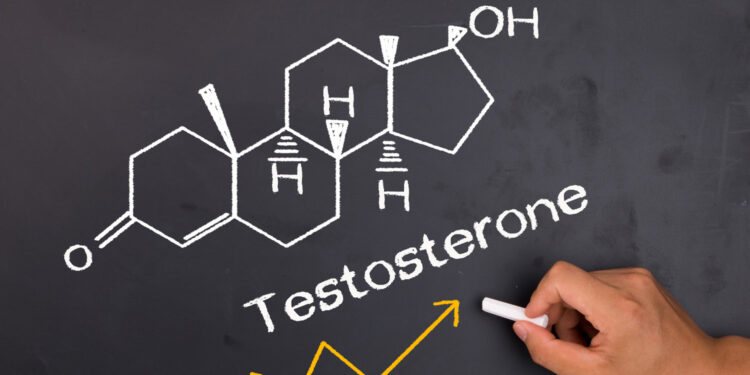

New research suggests that a man’s hormone levels may alter how he responds to social injustice directed at women. The study indicates that testosterone influences whether men punish those who treat women unfairly, though the effect depends on the woman’s physical appearance. These findings appeared in the journal Psychoneuroendocrinology.
Social scientists and biologists have frequently debated why humans punish rule-breakers even when the violation does not harm them personally. This behavior is known as altruistic punishment or third-party punishment. It involves a bystander incurring a personal cost to penalize someone who has acted unfairly toward a stranger.
Evolutionary psychologists propose that this behavior may serve as a social signal. By punishing a bad actor, a man might advertise desirable traits to potential mates. These traits include a sense of fairness, the possession of resources, or the status required to enforce norms.
Previous observations show that men often act more generously or altruistically when they are in the presence of attractive women. This phenomenon supports the idea that mating motives drive prosocial behavior. However, the specific biological mechanisms behind this remain less clear.
Testosterone is a primary sex hormone in men that links closely to mating efforts and status-seeking behavior. It coordinates physiological responses that prepare individuals for competition and reproduction. Researchers have not fully established how this hormone interacts with the visual cues of a potential partner to shape justice-related decisions.
A team of researchers led by Qinyi Wang and Chengyang Han at Hangzhou Normal University sought to bridge this gap. They designed an experiment to isolate the effects of testosterone from natural personality differences. Their goal was to see if boosting testosterone levels would make men more likely to punish unfairness.
The study included 85 healthy, heterosexual male university students. The researchers employed a double-blind, placebo-controlled crossover design. This means each participant visited the laboratory on two separate occasions.
During one visit, the participant received a dose of testosterone gel applied to his shoulders and arms. During the other visit, he received a placebo gel that contained no active hormones. Neither the participants nor the research assistants knew which gel was administered at any given time.
The researchers waited three hours after applying the gel to ensure the hormone reached peak levels in the blood. Following this waiting period, the participants engaged in a modified version of the “Third-Party Punishment” game. This is a standard task used in experimental economics to measure social preferences.
In this game, the participant acted as a bystander. He observed a “dictator” who was another male. The dictator had a sum of 10 coins and had to decide how to split them with a female “recipient.”
The participant saw a blurred photo of the male dictator to prevent any bias based on his appearance. However, the participant saw a clear photograph of the female recipient. The researchers manipulated these photos to represent varying levels of physical attractiveness.
Some trials featured highly attractive female faces, which were computer-generated composites designed to maximize aesthetic appeal. Other trials featured faces rated as less attractive. The dictator’s offers to the woman ranged from very unfair (keeping 9 coins and giving 1) to perfectly fair (an equal 5-5 split).
The participant then faced a choice. He could spend his own endowment of coins to punish the dictator for the offer made. For every coin the participant spent, the dictator would lose two coins.
The researchers measured two distinct aspects of punishment. First, they looked at the frequency of punishment, or how often the participant chose to act. Second, they measured the intensity, or how many coins the participant was willing to sacrifice to inflict the penalty.
Under the placebo condition, which served as a baseline, the results aligned with previous psychological theories. Men were more likely to punish the dictator when the female recipient was highly attractive. They also punished with greater intensity in these cases.
This baseline finding reinforces the “costly signaling” hypothesis. It suggests that men naturally use altruistic acts to display their quality to attractive potential mates. The mere presence of a desirable woman triggered a stronger defense of fairness.
The administration of testosterone altered these dynamics in specific ways. First, the hormone affected the men’s general perception of the women. Under the influence of testosterone, participants gave higher attractiveness ratings to the women and reported a stronger willingness to date them.
This effect occurred regardless of whether the women were in the high or low attractiveness groups. It suggests that testosterone heightens mating motivation generally. It makes men more receptive to potential romantic interest across the board.
The hormone’s effect on punishment behavior was more nuanced. When the female recipient was highly attractive, testosterone did not produce a statistically significant change in punishment frequency compared to the placebo. The researchers suspect a “ceiling effect” explains this result.
In the high attractiveness condition, men were already punishing at very high rates even on the placebo. There was little room for the hormone to increase the behavior further. The visual cue of beauty was strong enough on its own to maximize the response.
However, a distinct pattern emerged when the recipient was less attractive. In these cases, the visual cue of beauty was absent or weak. Here, the testosterone had a measurable impact on behavior.
When the dictator made very unfair offers to less attractive women, men on testosterone punished significantly more often than they did on the placebo. The hormone appeared to lower the threshold for reacting to injustice in the absence of a strong visual mating cue.
This suggests that testosterone helps sustain high levels of status-seeking or norm-enforcing behavior even when the immediate target is not the most preferred mate. The researchers interpret this as the hormone promoting strategic social signaling.
Interestingly, the study found that testosterone did not increase the intensity of the punishment. While men punished more frequently, they did not spend more coins per punishment. They seemed to balance the need to signal dominance with the need to preserve their own resources.
This finding points to a trade-off. Altruistic punishment is a signal, but it is also costly. The hormone motivates the action but does not necessarily induce reckless spending. The participants maintained a strategy that optimized their social standing without depleting their assets.
The study did uncover a counterintuitive result regarding fair offers. When the dictator made fair splits with less attractive women, men in the placebo group punished slightly more often than men in the testosterone group. The reasons for this specific reversal are not entirely clear and require further study.
The authors outlined several limitations that contextualize their findings. Most notably, they did not collect blood or saliva samples to verify hormone levels. While the gel administration protocol is standard, biochemical verification would have confirmed the physiological response in each participant.
The sample consisted entirely of young Chinese students. This demographic is specific, and cultural factors regarding dating and fairness could influence the results. It is unknown if older men or men from different cultural backgrounds would exhibit identical patterns.
Additionally, the experiment only involved male participants. This was due to the medical restrictions on administering testosterone. Consequently, the study cannot determine if women would show similar hormonal responses to unfairness.
The study also relied solely on facial attractiveness. Real-world interactions involve voice, body language, and personality, which were absent here. Future research could incorporate these broader cues to create a more realistic social environment.
Despite these limitations, the work sheds light on the biological underpinnings of social behavior. It highlights that the drive to uphold justice is not purely cognitive or moral. It is also deeply rooted in biological systems that regulate mating and competition.
The study, “The effects of exogenous testosterone and facial attractiveness on men’s altruistic punishment behavior,” was authored by Qinyi Wang, Yin Wu, Xingbang Ren, Shuai Wang, Dongchen Xu, Haoran Wang, Yuanyuan Jiang, Frank Krueger, Xue Lei, and Chengyang Han.