![[Adobe Stock]](https://sp-ao.shortpixel.ai/client/to_webp,q_glossy,ret_img,w_750,h_375/https://www.psypost.org/wp-content/uploads/2023/10/colorful-brain-750x375.jpg)
In a new study published in Science Advances, scientists have revealed that certain areas of the human brain, particularly those involved in complex cognitive functions like memory and reasoning, require significantly more energy than others. This discovery sheds light on how the evolution of human cognition might be closely linked to the development of these energy-intensive brain networks, challenging the long-held belief that our cognitive abilities are solely due to larger brain sizes.
The human brain, a mere 2% of our body weight, astonishingly consumes about 20% of our energy. This disproportionate energy use has long fascinated scientists, prompting the question: what makes our brain so energetically demanding? Common theories attributed this to the sheer size of the human brain.
However, this explanation was insufficient as other mammals have larger brains or more neurons. Thus, researchers embarked on this study to delve deeper into the brain’s energy distribution, particularly focusing on the role of neuromodulators – chemicals like dopamine and serotonin that regulate neuron activity.
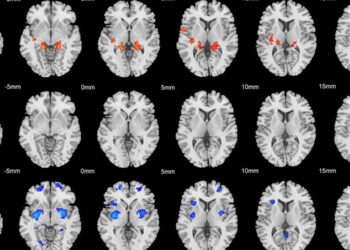
The study involved 30 healthy, right-handed participants without a history of psychiatric conditions. The researchers employed two advanced neuroimaging techniques: positron emission tomography (PET) and functional magnetic resonance imaging (fMRI). PET scans are adept at measuring metabolic processes in the body, like glucose metabolism, which is a key indicator of energy use. fMRI, on the other hand, excels at detecting blood flow changes related to neural activity, thereby mapping functional connections in the brain.
Participants underwent scans in a state of rest, with their eyes open or closed. These scans provided a wealth of data about the brain’s metabolic rate of glucose – essentially how much energy the brain uses – and the level of functional connectivity – how different brain regions communicate.
One key discovery was a linear relationship between the brain’s glucose metabolism and its functional connectivity. This meant that areas of the brain with more connections or activity also used more energy. Significantly, the frontoparietal networks, which are pivotal in high-level cognitive tasks like problem-solving and decision-making, were found to use up to 67% more energy than areas involved in basic sensory or motor functions.
This energy distribution was consistently observed across all participants, irrespective of gender and age. It also highlighted that regions regulated more by neuromodulators, such as dopamine and serotonin, required more energy. This finding is crucial because it suggests that the human brain’s development, particularly its cognitive capabilities, may be as much about these energy-intensive regions as it is about overall size.
Furthermore, the study found a connection between the brain’s energy use and its evolutionary growth. Regions that have expanded the most in human evolution showed higher energy demands. On a microscale, areas with high energy costs also exhibited a higher density of cells in their lower layers.
Additionally, through gene expression analysis, researchers linked regions with high energetic costs to genes involved in signal transduction, particularly those involved in neuromodulation. This genetic association underscores the molecular basis behind the brain’s energy distribution.
Lastly, by analyzing cognitive function, the study revealed that regions with high neuromodulator activity are more involved in complex cognitive processes like memory and reading, rather than simple sensory-motor functions. This suggests that the brain’s energy usage is intricately tied to our higher cognitive abilities.
“Our findings suggest that the evolution of human cognition may have emerged not only from an overall larger brain, but particularly by the development of slow-acting neuromodulator circuits,” the researchers wrote. “It seems that the benefits of increased cortical energy metabolism, together with an increased supply of energy substrates, have outweighed its risks. Yet, our knowledge of how the interaction of slow-acting neuromodulators with fast information processing contributes to human cognition is still limited.”
The study, “An energy costly architecture of neuromodulators for human brain evolution and cognition“, was authored by Gabriel Castrillon, Samira Epp, Antonia Bose, Laura Fraticelli, André Hechler, Roman Belenya, Andreas Ranft, Igor Yakushev, Lukas Utz, Lalith Sundar, Josef P. Rauschecker, Christine Preibisch, Katarzyna Kurcyus, and Valentin Riedl.