A neuroimaging study conducted in South Korea showed that women suffering from major depressive disorder have lower concentrations of taurine in the hippocampus region of the brain compared to healthy individuals. Taurine is an amino acid that plays a critical role in the development of neurons and the formation of connections between neurons (synaptic connections). The study was published in Biological Psychiatry.
Major depressive disorder, commonly known as depression, is a mental health condition marked by enduring feelings of sadness, hopelessness, and a diminished interest or pleasure in activities. Those affected by depression often experience a variety of symptoms that impact multiple facets of their daily lives, including sleep patterns, appetite, energy levels, and concentration abilities.
According to the World Health Organization, more than 264 million people worldwide are affected by major depressive disorder. Close to 800,000 people commit suicide every year as a consequence. Studies in the United States have indicated that women are twice as likely to be affected by it than men.
In recent decades, neuroimaging studies have sought to identify markers of major depressive disorder. These studies found that in individuals with the disorder, the limbic regions of the brain are typically more active, while the frontal regions show reduced activity during emotional and cognitive tasks. Additionally, variations in the levels of gamma-aminobutyric acid (GABA) in the brains of depressed individuals have been observed.
A team of researchers from South Korea hypothesized that concentrations of taurine in the hippocampus region of the brain might also be associated with depression. Previous studies indicated that taurine has an antidepressant effect on animals. Injections of taurine were shown to reverse depression-like behaviors in rats. It is possible that concentrations of this amino acid might also be different in humans with and without depression. These researchers organized a neuroimaging study.
“While conducting various studies using fMRI, I started thinking about its contribution to mental illness. Then, I read an article about the seriousness of depression. I realized that most patients do not seek appropriate medical help early on, resulting in serious consequences later on,” said study author Chaejoon Cheong, Principal Research Fellow at the Korea Basic Science Institute.
“Considering the social atmosphere of people reluctant to seek psychiatric treatment, especially in South Korea, this is an understandable phenomenon, and in order to solve this problem, I thought it would be great if early depression could be diagnosed through a test such as a health checkup before visiting a psychiatric clinic. So, I began researching objective criteria for the early diagnosis of depression using MRI.”
The study involved young women aged between 18 and 29 years from South Korea. Of these, 41 were diagnosed with major depressive disorder, while 43 served as healthy controls. The participants were assessed and diagnosed using the structured clinical interview for DSM-5 by a licensed clinical psychologist. Additionally, they completed the Hamilton Depression Rating Scale.
The participants underwent magnetic resonance imaging using a 7T whole-body MR scanner. During this procedure, the researchers measured taurine concentrations in three different brain areas: the hippocampus, anterior cingulate cortex, and occipital cortex. They anticipated differences in taurine levels in the hippocampus, while the other two areas served as comparative benchmarks.
The results confirmed that taurine concentrations were indeed lower in the hippocampus of participants with major depressive disorder compared to those in the healthy group. However, there were no significant differences in taurine levels in the other two brain regions between the two groups.
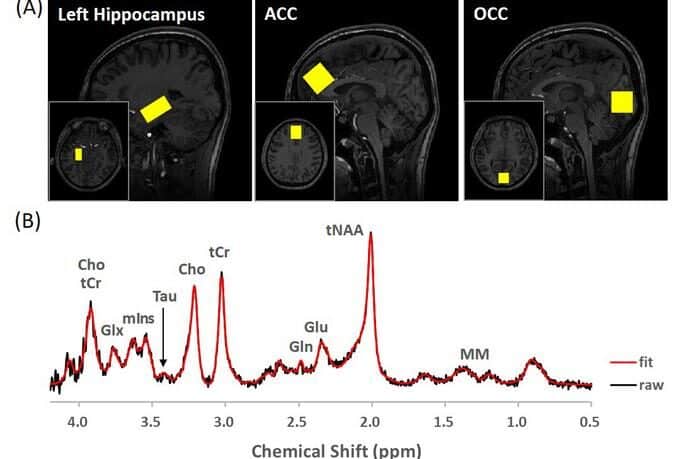
“In summary, we found that hippocampal taurine concentrations were lower in young women with MDD [major depressive disorder] compared to the healthy control group using a non-invasive in vivo magnetic resonance imaging measurement. This study demonstrates that a lower level of taurine concentration in the hippocampus may provide a novel characteristic of MDD,” the study authors concluded.
“I don’t think the general public will immediately benefit from my research results,” Cheong told PsyPost. But he added that “if an objective method for diagnosing depression, including my research, is established in the future, it will be possible to diagnose depression through a simple test without the burden of psychiatric visits.”
The study highlights a new potential indicator of major depressive disorder. However, study participants were exclusively young women from two regions of South Korea. Studies on other age groups, larger samples, men and individuals from other cultures might not yield the same results.
“Studies on men and older people are to be conducted,” Cheong said. “Additionally, an objective diagnosis method for depression should be established through other metabolites and research modalities.”
The paper, “Association between taurine level in the hippocampus and major depressive disorder in young women: a proton magnetic resonance spectroscopy study at 7 Tesla”, was authored by Youngkyu Song, Jee-Hyun Cho, Hyungjun Kim, Young-Ji Eum, E-Nae Cheong, Sunyoung Choi, Jeong-Heon Park, Sungho Tak, Bumwoo Park, Jin-Hun Sohn, Gyunggoo Cho, and Chaejoon Cheong.