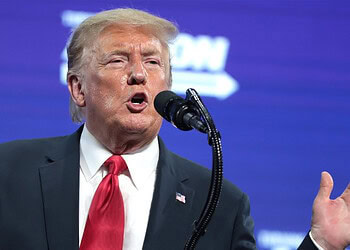
A new study suggests that Donald Trump’s presidential campaign and subsequent victory in 2016 had a polarizing effect on the racial attitudes of white Americans, particularly in their views towards Black people. Those who viewed Trump favorably before the election were found to rate Black people as less “evolved” in the post-election survey. Conversely, those who had unfavorable views of Trump rated Black people as more evolved after the election.
Political campaigns, especially presidential ones, are often thought to shape public opinion. However, the extent to which they influence deeply ingrained attitudes, such as views on race, is a complex area of study. Trump’s 2016 presidential campaign was particularly noteworthy for its divisive and often racially charged rhetoric. This provided a unique opportunity for researchers to investigate whether and how such a campaign could impact the racial attitudes of white Americans.
To explore the potential influence of Trump’s presidential campaign, a team of researchers conducted a two-wave panel study involving 600 non-Hispanic white adult citizens of the United States. The study was facilitated by the survey firm YouGov in 2016. The participants, 54% of whom were female, had a mean age of 48 years and predominantly had some college education without obtaining a Bachelor’s degree.
The study was conducted in two phases: the first wave of surveys was carried out between October 10 and October 12, 2016, and the second wave occurred between November 14 and November 15, 2016. These dates were strategically chosen to capture the participants’ attitudes before and after the presidential election.
To measure the dehumanizing attitudes, participants were asked to rate, on a scale from 0 to 100, how evolved they believed Black people to be, using the “ascent of man” scale – a visual depiction showing the evolution of humans from ape-like figures to modern humans. Additionally, participants’ feelings of warmth towards Trump and Hillary Clinton were gauged using a feeling thermometer. Control variables such as party identification, education, age, and gender were also included in the survey to ensure a comprehensive analysis.
Initially, the researchers found no significant overall change in the dehumanizing attitudes towards Black people before and after the election. The mean rating barely fluctuated, from 82.6 before the election to 82.3 after.
But a deeper dive into the data showed a clear polarizing effect based on the participants’ attitudes towards Trump. Those who viewed Trump favorably before the election were found to rate Black people as less evolved post-election. In contrast, those with unfavorable views towards Trump rated Black people as more evolved post-election.
Specifically, at the high end of the Trump support scale, where respondents showed the warmest feelings towards Trump, there was a decrease of about 2 points in the evolutionary ratings of Black people on average from before to after the election. On the other hand, those who viewed Trump unfavorably (at the extreme low end of the Trump thermometer) showed an increase of about 4 points in the evolutionary ratings of Black people in the same period.
“To be clear, these effects are not enormous,” the researchers wrote, adding that the “observed changes are nonetheless meaningful. When it comes to evolutionary ratings of racial groups, even a difference that appears quantitatively small can reflect a qualitatively meaningful distinction.”
Interestingly, this change was not mirrored in the ratings of white people, nor was it influenced by general political partisanship – it was specifically tied to views about Trump.
These findings suggest a polarization of racial attitudes as a result of Trump’s election, with supporters tending towards more dehumanizing views of Black people and opponents showing a move in the opposite direction. The study provides evidence that political leaders, through their rhetoric and behavior, can significantly influence public attitudes on sensitive issues like race.
The researchers concluded that their study provides evidence “that Trump’s election had a polarizing effect on the expression of dehumanizing racial attitudes. We find that Trump supporters became, on average, more willing to report dehumanizing attitudes about Black people. At the same time, we also find that this trend was countered by the fact that Trump’s opponents became less likely to endorse dehumanizing portrayals of Black people.”
While the study provides valuable insights, it’s crucial to recognize its limitations and the need for further research. One of the primary limitations is the study’s reliance on self-reported measures. People’s responses in surveys can sometimes be influenced by what they think is socially acceptable, rather than their true beliefs.
Additionally, the study focused specifically on dehumanizing attitudes towards Black people. Future research could broaden this scope to include other racial or ethnic groups that were the subject of Trump’s campaign rhetoric, such as Muslims and Latino immigrants.
The study, “Trickle-down racism: Trump’s effect on whites’ racist dehumanizing attitudes“, was authored by Ashley Jardina and Spencer Piston.