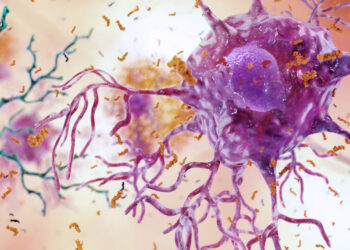
In a groundbreaking discovery published in the journal Neuron, scientists have challenged a long-held belief about the origins of Parkinson’s disease, shedding new light on this debilitating neurological condition. Their research suggests that the malfunctioning of synapses, the tiny gaps that allow neurons to communicate with each other, might be a trigger for Parkinson’s disease. This revelation opens up promising new avenues for potential therapies that could significantly impact the lives of those affected by the disease.
Parkinson’s disease, a widespread neurodegenerative disorder, affects between 1% to 2% of the global population. It is characterized by a range of motor symptoms, including resting tremors, rigidity, and slowness of movement. These symptoms arise from the gradual loss of dopaminergic neurons in a specific area of the brain known as the substantia nigra pars compacta (SNc).
Parkinson’s disease has long been a complex puzzle for researchers to solve. Its precise cause remains unclear, although genetic factors, environmental influences, and aging all appear to play a role. Dopaminergic neurons, which produce dopamine, a crucial neurotransmitter, are known to be central to the disease.
Traditionally, it was widely accepted that the death of dopaminergic neurons was the initial event in Parkinson’s disease development. However, this new study challenges that belief, suggesting that the dysfunction in these neurons’ synapses could precede their degeneration.
What sparked interest in this particular avenue of research was a remarkable case involving two sisters, both genetically predisposed to Parkinson’s disease due to a mutation in the PINK1 gene. One sister was diagnosed at the age of 16, while the other received her diagnosis at the age of 48.
“We encountered two sisters with Parkinson’s that had disease onset 30 years apart and we tried to explain this discrepancy by studying their genes,” explained Dimitri Krainc, the chair of neurology at Northwestern University Feinberg School of Medicine and the director of the Simpson Querrey Center for Neurogenetics, who led the study.
They discovered that the sister diagnosed at 16 not only had the PINK1 mutation but also had a partial loss of the parkin gene. This revelation led the scientists to question whether parkin had a previously unknown role in the disease.
“There must be a complete loss of parkin to cause Parkinson’s disease. So, why did the sister with only a partial loss of parkin get the disease more than 30 years earlier?” Krainc said.
PINK1 and parkin are both involved in the process of “recycling” mitochondria that are old or overworked. Dysfunctional mitochondria, if left unchecked, can cause cellular dysfunction. This process of recycling old mitochondria is called mitophagy. People with mutations in both copies of either the PINK1 or parkin gene can develop Parkinson’s disease due to ineffective mitophagy.
To conduct the study, the researchers used patient-derived midbrain neurons, which is crucial because mouse and human dopamine neurons have different physiological characteristics, making findings in mouse models not directly applicable to humans.
Through their research, the scientists discovered that parkin has another crucial role that was previously unknown. In addition to its recycling function, parkin operates in a different pathway within the synaptic terminal. This pathway, unrelated to mitophagy, involves the regulation of dopamine release.
The key takeaway for the average person is that Parkinson’s disease does not necessarily begin with the death of neurons. Instead, it starts with the malfunctioning of synapses – the communication hubs where neurons exchange vital information. In Krainc’s words, the findings indicate “that Parkinson’s starts with dysfunction of the synapse much before neurons start degenerating.”
This discovery is significant because it implies targeting the dysfunctional synapses could represent a novel therapeutic strategy for Parkinson’s disease. By intervening before neuron degeneration occurs, we may have a better chance of effectively managing or even preventing the debilitating effects of Parkinson’s.
While the research offers newfound hope, Krainc emphasized that there are caveats and questions that still need to be addressed. He cautioned, “We need to find a way to target such synaptic dysfunction therapeutically as early as possible.” In other words, the road to a practical therapy based on this discovery is still a work in progress, and further studies are needed to pinpoint effective strategies.
Nevertheless, the implications of this research are profound. It underscores the importance of understanding the genetic basis of Parkinson’s in individual patients. Krainc advised, “It is important to examine the genes of each patient with Parkinson’s because knowing the genetic basis of the disease helps with therapeutic strategies.”
The study, “Parkinson’s disease-linked parkin mutation disrupts recycling of synaptic vesicles in human dopaminergic neurons“, was authored by Pingping Song, Wesley Peng, Veronique Sauve, Rayan Fakih, Zhong Xie, Daniel Ysselstein, Talia Krainc, Yvette C. Wong, Niccolò E. Mencacci, Jeffrey N. Savas, D. James Surmeier, Kalle Gehring, and Dimitri Krainc.