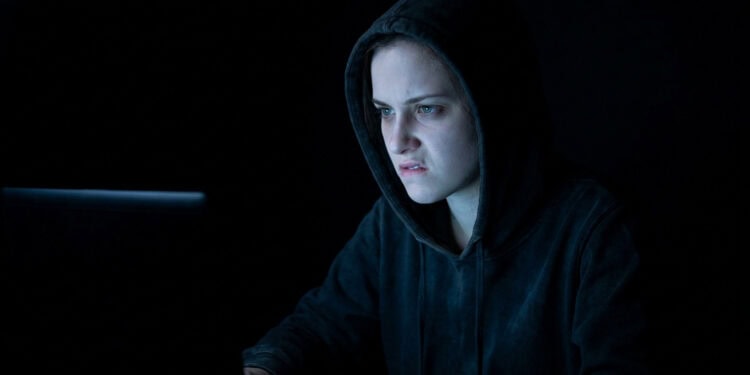

In recent years, the term “incel”—short for involuntary celibate—has become a fixture in public discourse, almost exclusively associated with men. The male incel subculture is frequently linked to online misogyny, violent rhetoric, and real-world acts of aggression. However, a parallel but distinct phenomenon has emerged that remains largely obscured from the mainstream view: the “femcel.”
Female involuntary celibates, or femcels, are women who feel they are unable to form romantic or sexual relationships despite wishing to do so. Unlike their male counterparts, whose grievances often turn outward toward women and society, femcels tend to direct their frustrations inward.
New academic research is beginning to explore this understudied population, revealing a complex subculture defined by loneliness, specific standards of beauty, and a digital evolution from support groups to ironic aesthetic movements.
The Origins and Ideology of the Femcel
The concept of involuntary celibacy was actually coined by a woman in the 1990s as an inclusive term for lonely people of all genders. Over time, the male faction radicalized into the modern incel movement, effectively pushing women out of the definition. In response, women formed their own spaces. According to research published in Archives of Sexual Behavior, femcels congregate in online communities to discuss their exclusion from the romantic marketplace.
Hannah Rae Evans and Adam Lankford, scientists at the University of Alabama, analyzed thousands of posts from femcel discussion forums. They found that these women express three distinct types of sexual frustration: unfulfilled desires to have sex, a lack of available partners, and unsatisfying sexual activities. This suggests that for femcels, the issue is not merely a lack of sexual access, but a deep dissatisfaction with the quality and availability of intimate connection.
“When I first heard the term ‘femcel,’ I was immediately interested and wanted to know more about their communities. When I began exploring their online subculture, I saw so many different directions that our research could take because this is such an understudied population,” Evans told PsyPost.
A central pillar of femcel ideology is the “Pink Pill.” This is a gender-flipped version of the “Red Pill” philosophy found in male-dominated online spaces. While the Red Pill claims to reveal the truth about female nature, the Pink Pill focuses on the harsh realities of female existence within a patriarchal society. Specifically, it emphasizes “lookism,” or the belief that society values women almost entirely based on their physical beauty.
Scholars Debora Maria Pizzimenti and Assunta Penna explored this dynamic in their ethnographic study of the Reddit community r/Vindicta. They published their findings in the Italian Sociological Review. Their work describes how femcels view beauty not as subjective, but as an objective, measurable form of power.
In these communities, members often categorize women into a hierarchy. “Stacys” are highly attractive women who hold high sexual market value and receive good treatment from society. “Beckys” are average women. Femcels place themselves at the bottom, believing their physical features prevent them from accessing the privileges afforded to attractive women.
This belief system is rigid. Users often discourage “coping” mechanisms, such as the idea that personality matters more than looks. Instead, they focus on “looksmaxxing,” or the pursuit of surgical and cosmetic enhancements to improve their social standing.
The Psychology of Isolation and Inhibition
While the online rhetoric can be harsh, the underlying psychological profile of a femcel appears to be one of profound isolation. Lola Cassidy, a researcher at the National College of Ireland, conducted a quantitative study comparing women who identify as femcels to a control group of women who do not. Her findings provide statistical evidence regarding the mental health struggles within this community.
Cassidy found that femcels reported significantly higher levels of loneliness compared to non-femcel women. The study utilized the UCLA Three-Item Loneliness Scale, and results indicated that many femcels selected the highest possible scores for feelings of isolation. This supports the qualitative observations that these online spaces serve as a refuge for women who feel entirely disconnected from social life.
In addition to loneliness, the study revealed that femcels exhibit higher levels of social inhibition. Social inhibition involves the avoidance of social situations and the suppression of emotional expression due to a fear of rejection or judgment. Cassidy suggests that this inhibition may predict a stronger preference for online social interactions. For femcels, the internet acts as a necessary buffer, allowing them to communicate without the immediate fear of face-to-face rejection.
The research also highlighted a link between femcel identity and “problematic internet use.” This term refers to compulsive online activity that interferes with daily life. Femcels in the study scored higher on measures of problematic internet use than the control group. They were more likely to use social media for emotional regulation. This implies that for these women, online forums are not just a pastime but a primary coping mechanism for managing negative emotions.
Femcels Versus Incels: A Distinct Difference
A common misconception is that femcels are simply the female equivalent of incels. While they share the core experience of involuntary celibacy and use similar terminology, their reactions to this state differ significantly. Male incels frequently externalize their anger. They often blame women for their celibacy, viewing access to women’s bodies as a right that has been denied to them. This worldview has been linked to real-world violence and mass shootings.
Femcels, in contrast, tend to internalize their frustration. Evans and Lankford noted in their study that femcel discussions contained significantly less support for aggression and violence than what has been reported regarding male incels. While extreme views exist, the researchers are not aware of any mass violence committed by individuals identifying with the femcel community.
Ruby Ling, in a thesis for the University of Alberta, conducted a comparative analysis of incel and femcel subreddits. She found that while both groups use derogatory language to describe the opposite sex, the nature of their grievances is different. Incels often dehumanize women, reducing them to their biological functions. Femcels, conversely, often express a desire for companionship and emotional intimacy rather than just sexual access.
Ling also noted that femcels tend to view their condition as fluid. While incels often believe their genetic fate is sealed at birth, femcels discuss how life events—such as aging, motherhood, or weight gain—can push a woman into “femceldom.” This suggests a view of celibacy that is tied to a woman’s fluctuating social capital rather than an innate biological defect.
Furthermore, Ling’s research highlights the hostility femcels face from male incels. Male incel communities frequently deny the existence of female involuntary celibacy, arguing that women can always find a sexual partner if they lower their standards. This rejection forces femcels to create their own separated spaces, where they often discuss the “misogyny-laden obstacles” they face in dating.
Radical Feminism and the Femcel
The relationship between femcels and feminism is complicated. On the surface, femcel rhetoric often aligns with radical feminist theory. Both groups acknowledge the existence of a patriarchy that oppresses women. Both groups often criticize liberal feminism, particularly regarding the sexual revolution and hookup culture, which femcels argue benefits men while leaving women unfulfilled and used.
Ling’s analysis found that femcel forums often function as women-only spaces where members discuss male violence and the objectification of women. Themes of men feeling entitled to women’s bodies are common in both radical feminist and femcel discourse. However, femcels rarely identify as feminists. They often feel that mainstream feminism ignores the specific struggles of “ugly” or socially awkward women.
Pizzimenti and Penna’s research on the r/Vindicta community supports this. They observed that while the community is a “Pink Pill” space that focuses on female strategies for survival, it is often antifeminist in tone. The focus is individualistic rather than collective. The goal is not to dismantle the patriarchy but to navigate it successfully by maximizing one’s aesthetic value. This reflects a pragmatic, survivalist approach rather than a political movement.
The Rise of “Femcelcore” and Heteronihilism
In recent years, the femcel identity has migrated from obscure forums to mainstream platforms like TikTok, undergoing a significant transformation. Researchers Jacob Johanssen and Jilly Boyce Kay describe this shift in the European Journal of Cultural Studies. They distinguish between the “traditional” femcel—who is genuinely isolated and excluded—and the “aesthetic” femcel, or “femcelcore.”
Femcelcore is characterized by a specific digital aesthetic. It often involves imagery of messy bedrooms, references to “sad girl” culture (such as the novels of Ottessa Moshfegh or the music of Lana Del Rey), and an ironic embrace of “toxic femininity.” This new iteration is less about the inability to find a partner and more about a performance of alienation.
Johanssen and Kay argue that this trend represents a form of “heteronihilism.” This concept describes a deep disappointment with heterosexual culture. It is a mood of fatalistic apathy. Women engaging in femcelcore may not be strictly celibate, but they express a sense of giving up on the promise of romantic fulfillment. They view heterosexuality as inevitably disappointing but inescapable.
This aligns with findings from Ada Jussila of the University of Turku, who analyzed the subreddit r/femcelgrippysockjail. Her work, published in WiderScreen, details how this community uses irony and memes to process mental health struggles and gendered expectations.
Jussila notes that the community is divided. Traditional femcels, who define their status by physical unattractiveness and rejection, sometimes clash with second-wave femcels who view the identity as a mental state or aesthetic. The latter group often engages in “ironic misandry”—exaggerated hatred of men used for comedic effect. This allows them to vent frustration while maintaining a safe distance from their true emotions.
Community Dynamics and Gatekeeping
The tension between these different definitions of “femcel” leads to intense gatekeeping within the community. Pizzimenti and Penna observed that forums like r/Vindicta have strict rules to maintain their focus. They explicitly state that the space is for “unattractive women” and forbid “coping” posts that try to deny the importance of beauty.
Jussila also observed this dynamic. In the communities she studied, users frequently debated who qualifies as a “real” femcel. Traditional members often try to exclude those they perceive as “average” women who are merely going through a rough patch in dating. This “othering” process helps the core group maintain a sense of identity, but it also creates a hostile environment for newcomers.
Despite this, these communities offer a rare source of support. For women who feel completely invisible to society, finding a group that acknowledges their reality is powerful. Ling’s research notes that these forums provide validation for experiences that are otherwise dismissed. Women share advice, support each other through trauma, and offer a space to vent without judgment.
Mental Health and Well-being
The mental health implications of the femcel identity are significant. Cassidy’s study found that femcels reported significantly lower mental well-being compared to the control group. This lower well-being was statistically predicted by their high levels of loneliness and social inhibition.
However, the relationship between internet use and well-being is complex. While femcels exhibit problematic internet use, Cassidy found that this usage did not directly correlate with their loneliness in the same way it did for the control group. This suggests that for femcels, online communities might not be the cause of their loneliness, but rather a symptom or a refuge.
Jussila’s work supports this, noting that the “femcelcore” aesthetic often glamourizes mental illness or dissociation. This can be a double-edged sword. It provides a language for expressing pain, but it may also trap users in a cycle of negativity. Johanssen and Kay warn that the “heteronihilist” mood of these spaces is anti-political. It encourages resignation rather than action, potentially deepening the user’s sense of hopelessness.
Conclusion
The femcel phenomenon is a multifaceted reflection of modern pressures regarding beauty, relationships, and digital connection. It is not simply a female version of the incel movement, though it shares roots in the experience of involuntary celibacy. Research indicates that femcels are driven by internalized distress, loneliness, and a belief that they have failed to meet societal standards of womanhood.
From the rigid beauty hierarchies of r/Vindicta to the ironic despair of TikTok’s femcelcore, these women are navigating a world where they feel they do not belong. While they generally avoid the violent radicalization seen in male incel communities, their struggles with mental health and social isolation are profound.
Scientists Evans and Lankford emphasize that further study of this population is necessary. Understanding femcels can help researchers identify the factors contributing to radicalization and develop support strategies for those suffering from severe social isolation. As the definition of the term continues to evolve, it remains a powerful lens through which to view the changing dynamics of gender and connection in the digital age.