PsyPost
  • Mental Health
  • Social Psychology
  • Cognitive Science
  • Neuroscience
  • About
No Result
View All Result
Join
My Account
PsyPost
No Result
View All Result
Home Exclusive Social Psychology

People perceive mask-wearers to be more trustworthy and socially desirable — yet more likely to be ill

by Beth Ellwood
August 4, 2020
Reading Time: 3 mins read
Share on TwitterShare on Facebook

A recent study suggests that individual differences can predict how people perceive mask-wearers during the COVID-19 pandemic. The findings were published in Personality and Individual Differences.

Study authors Antonio Olivera-La Rosa and his team explain how the behavior immune system theory (coined by Schaller and Duncan in 2007) posits that humans avoid others who have physical and behavioral features that signal the presence of disease. The researchers were motivated to explore this theory in the context of the COVID-19 pandemic. Specifically, they wondered whether individual differences in social anxiety, disgust sensitivity, and social trust might predict how people perceive strangers wearing surgical masks.

“We chose to explore participants’ judgments of mask-wearers for two reasons. First, we considered that assessing people’s social perceptions of strangers wearing surgical masks was highly relevant in the context of the COVID-19 global pandemic. Second, past research on face perception suggested that wearing a mask might influence social judgments, by impairing the processing of facial information that is crucial for social trust,” the researchers say.

A study was conducted among 1,054 men and women from several Spanish-speaking countries (87% of the sample were from Columbia). All participants completed an assessment of disgust sensitivity by rating their level of disgust with situations like “accidentally touching a person’s bloody cut.” They also completed measures of social anxiety and social trust.

Next, the participants were either shown a series of strangers’ faces with neutral expressions (control group) or the same faces but with surgical masks photoshopped onto them (experimental group). All participants rated their perception of the trustworthiness and health of each target. They also rated the closest level of interaction they would be comfortable engaging in with this person (e.g. interaction as a friend, co-worker, neighbor, etc.).

As expected, participants with higher disgust scores preferred more social distance and were less likely to trust the target faces in both the masked and unmasked conditions. Similarly, those with social anxiety were less likely to trust targets and more likely to perceive them as ill. Those who scored high in social trust, on the other hand, showed more trustworthiness towards target faces and a lower likelihood of perceiving them as ill.

Interestingly, masked targets were rated as more likely to be ill, yet were rated as more trustworthy and more socially desirable. The authors attempt to reason why subjects were more willing to be close to masked targets when they simultaneously perceived them as more likely to be sick.

“Possibly, judgments of illness function in a more associative manner (surgical mask => COVID-19) than judgments of social desirability and trustworthiness, which may function in a more propositional manner (people wearing a surgical mask are more responsible because they take the new social norms more seriously),” the authors say. They later add, “it might be that people explicitly say that mask-wearers are more trustworthy and socially desirable, but implicitly still mistrust them and feel an impulse to avoid them . . . ”

Google News Preferences Add PsyPost to your preferred sources

The authors acknowledge that their findings may not generalize beyond this cultural context.

The study, “Keep your (social) distance: Pathogen concerns and social perception in the time of COVID-19”, was authored by Antonio Olivera-La Rosa, Erick G. Chuquichambi, and Gordon P.D. Ingram.

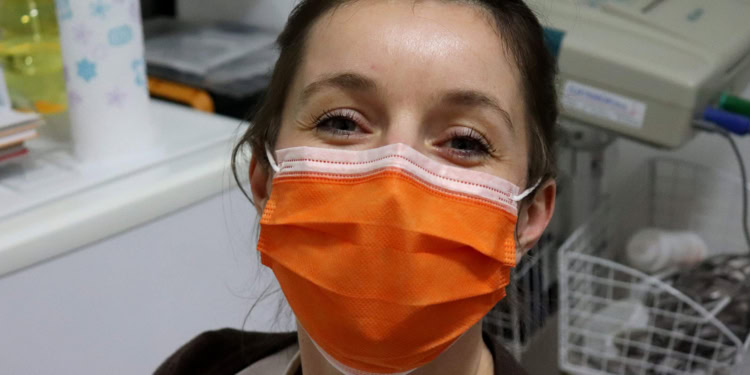
(Image by Vesna Harni from Pixabay)

RELATED

Voters use left and right political labels as mental shortcuts, not strict policy matches
Political Psychology

Study finds many college students abandon their free speech ideals under ideological pressure

May 26, 2026
Voters use left and right political labels as mental shortcuts, not strict policy matches
Political Psychology

Voters use left and right political labels as mental shortcuts, not strict policy matches

May 26, 2026
Childhood ADHD traits linked to midlife distress, with societal exclusion playing a major role
Mental Health

Women who self-harm show altered brain responses to negative social media comments

May 25, 2026
New study reveals varied links between dark personality traits and mental health
Dark Triad

Dark personality traits linked to a higher tolerance for morally questionable behaviors

May 24, 2026
What 50 years of data say about the happiness of single parents
Political Psychology

Declining trust in doctors is widening the health gap between conservative and liberal Americans

May 24, 2026
People cannot tell AI-generated from human-written poetry and they like AI poetry more
Artificial Intelligence

A new study mapped 350,000 relationship stories and found a communication style AI struggles to copy

May 24, 2026
Brain development patterns predict if childhood ADHD symptoms will fade or persist
Business

As robots threaten our jobs and identity, people seek comfort in unequal social structures

May 23, 2026
Brain development patterns predict if childhood ADHD symptoms will fade or persist
Moral Psychology

Being asked to help dampens the joy of doing good, according to children in multiple countries

May 23, 2026

Follow PsyPost

The latest research, however you prefer to read it.

Daily newsletter

One email a day. The newest research, nothing else.

Google News

Get PsyPost stories in your Google News feed.

Add PsyPost to Google News
RSS feed

Use your favorite reader. We also syndicate to Apple News.

Copy RSS URL
Social media
Support independent science journalism

Ad-free reading, full archives, and weekly deep dives for members.

Become a member

Trending

  • General intelligence and a strong work ethic are the best predictors of college grades
  • New research shows fashion’s “plus-size” models are still smaller than the average American woman
  • What 50 years of data say about the happiness of single parents
  • Being asked to help dampens the joy of doing good, according to children in multiple countries
  • Brain development patterns predict if childhood ADHD symptoms will fade or persist

Science of Money

  • New study finds private financial firms disproportionately promote upper-class white men
  • Why people at the bottom of the ladder speed up their speech to match the boss
  • What makes a public service job attractive? A new study sorts out which perks matter most
  • What a CEO’s tweets reveal about their paycheck
  • When optimism mutes the message: How investor mood shapes crypto’s response to economic news

PsyPost is a psychology and neuroscience news website dedicated to reporting the latest research on human behavior, cognition, and society. (READ MORE...)

  • Mental Health
  • Neuroimaging
  • Personality Psychology
  • Social Psychology
  • Artificial Intelligence
  • Cognitive Science
  • Psychopharmacology
  • Contact us
  • Disclaimer
  • Privacy policy
  • Terms and conditions
  • Do not sell my personal information

(c) PsyPost Media Inc

Welcome Back!

Login to your account below

Forgotten Password?

Retrieve your password

Please enter your username or email address to reset your password.

Log In

Add New Playlist

Subscribe
  • My Account
  • Cognitive Science Research
  • Mental Health Research
  • Social Psychology Research
  • Drug Research
  • Relationship Research
  • About PsyPost
  • Contact
  • Privacy Policy

(c) PsyPost Media Inc