Subscribe
The latest psychology and neuroscience discoveries.
My Account
  • Mental Health
  • Social Psychology
  • Cognitive Science
  • Neuroscience
  • About
No Result
View All Result
PsyPost
PsyPost
No Result
View All Result
Home Exclusive Social Psychology

People perceive mask-wearers to be more trustworthy and socially desirable — yet more likely to be ill

by Beth Ellwood
August 4, 2020
in Social Psychology
Share on TwitterShare on Facebook

A recent study suggests that individual differences can predict how people perceive mask-wearers during the COVID-19 pandemic. The findings were published in Personality and Individual Differences.

Study authors Antonio Olivera-La Rosa and his team explain how the behavior immune system theory (coined by Schaller and Duncan in 2007) posits that humans avoid others who have physical and behavioral features that signal the presence of disease. The researchers were motivated to explore this theory in the context of the COVID-19 pandemic. Specifically, they wondered whether individual differences in social anxiety, disgust sensitivity, and social trust might predict how people perceive strangers wearing surgical masks.

“We chose to explore participants’ judgments of mask-wearers for two reasons. First, we considered that assessing people’s social perceptions of strangers wearing surgical masks was highly relevant in the context of the COVID-19 global pandemic. Second, past research on face perception suggested that wearing a mask might influence social judgments, by impairing the processing of facial information that is crucial for social trust,” the researchers say.

A study was conducted among 1,054 men and women from several Spanish-speaking countries (87% of the sample were from Columbia). All participants completed an assessment of disgust sensitivity by rating their level of disgust with situations like “accidentally touching a person’s bloody cut.” They also completed measures of social anxiety and social trust.

Next, the participants were either shown a series of strangers’ faces with neutral expressions (control group) or the same faces but with surgical masks photoshopped onto them (experimental group). All participants rated their perception of the trustworthiness and health of each target. They also rated the closest level of interaction they would be comfortable engaging in with this person (e.g. interaction as a friend, co-worker, neighbor, etc.).

As expected, participants with higher disgust scores preferred more social distance and were less likely to trust the target faces in both the masked and unmasked conditions. Similarly, those with social anxiety were less likely to trust targets and more likely to perceive them as ill. Those who scored high in social trust, on the other hand, showed more trustworthiness towards target faces and a lower likelihood of perceiving them as ill.

Interestingly, masked targets were rated as more likely to be ill, yet were rated as more trustworthy and more socially desirable. The authors attempt to reason why subjects were more willing to be close to masked targets when they simultaneously perceived them as more likely to be sick.

“Possibly, judgments of illness function in a more associative manner (surgical mask => COVID-19) than judgments of social desirability and trustworthiness, which may function in a more propositional manner (people wearing a surgical mask are more responsible because they take the new social norms more seriously),” the authors say. They later add, “it might be that people explicitly say that mask-wearers are more trustworthy and socially desirable, but implicitly still mistrust them and feel an impulse to avoid them . . . ”

Google News Preferences Add PsyPost to your preferred sources

The authors acknowledge that their findings may not generalize beyond this cultural context.

The study, “Keep your (social) distance: Pathogen concerns and social perception in the time of COVID-19”, was authored by Antonio Olivera-La Rosa, Erick G. Chuquichambi, and Gordon P.D. Ingram.

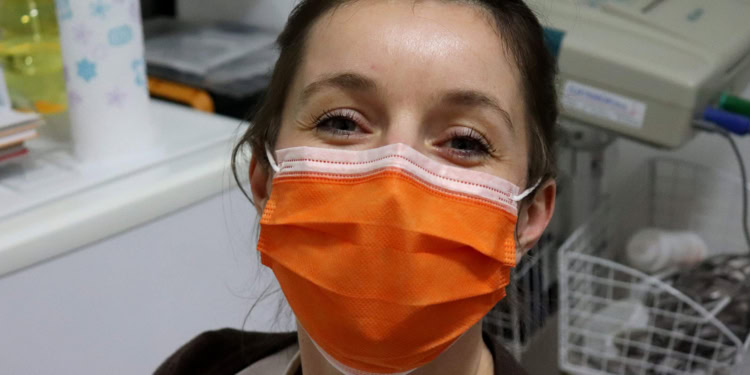
(Image by Vesna Harni from Pixabay)

Previous Post

Neuroimaging study suggests a single dose of ayahuasca produces lasting changes in two important brain networks

Next Post

Supporters of religious violence are more likely to claim they’re familiar with religious concepts that don’t exist

RELATED

Study sheds light on the truth behind the “deceptive stability” of abortion attitudes
Social Psychology

Abortion stigma persists at moderate levels in high-income countries

March 6, 2026
Employees who feel attractive are more likely to share ideas at work
Attractiveness

Employees who feel attractive are more likely to share ideas at work

March 6, 2026
Pro-environmental behavior is exaggerated on self-report questionnaires, particularly among those with stronger environmentalist identity
Climate

Conservatives underestimate the environmental impact of sustainable behaviors compared to liberals

March 5, 2026
Common left-right political scale masks anti-establishment views at the center
Political Psychology

American issue polarization surged after 2008 as the left moved further left

March 5, 2026
Evolutionary psychology reveals patterns in mass murder motivations across life stages
Authoritarianism

Psychological network analysis reveals how inner self-compassion connects to outward social attitudes

March 5, 2026
Republicans’ pro-democracy speeches after January 6 had no impact on Trump supporters, study suggests
Conspiracy Theories

Trump voters who believed conspiracy theories were the most likely to justify the Jan. 6 riots

March 5, 2026
Scientists discover psychedelic drug 5-MeO-DMT induces a state of “paradoxical wake”
Business

Black employees struggle to thrive under managers perceived as Trump supporters

March 4, 2026
Self-interest, not spontaneous generosity, drives equality among Hadza hunter-gatherers
Dating

Asexual women tend to prioritize different traits in a partner compared to heterosexual women

March 3, 2026

STAY CONNECTED

LATEST

Scientists identify brain regions associated with auditory hallucinations in borderline personality disorder

People with the least political knowledge tend to be the most overconfident in their grasp of facts

How the wording of a trigger warning changes our psychological response

Dating and breakups take a heavy emotional toll on adolescent mental health

Abortion stigma persists at moderate levels in high-income countries

Brain scans reveal two distinct physical subtypes of ADHD

Employees who feel attractive are more likely to share ideas at work

New psychology research reveals that wisdom acts as a moral compass for creative thinking

PsyPost is a psychology and neuroscience news website dedicated to reporting the latest research on human behavior, cognition, and society. (READ MORE...)

  • Mental Health
  • Neuroimaging
  • Personality Psychology
  • Social Psychology
  • Artificial Intelligence
  • Cognitive Science
  • Psychopharmacology
  • Contact us
  • Disclaimer
  • Privacy policy
  • Terms and conditions
  • Do not sell my personal information

(c) PsyPost Media Inc

Welcome Back!

Login to your account below

Forgotten Password?

Retrieve your password

Please enter your username or email address to reset your password.

Log In

Add New Playlist

Subscribe
  • My Account
  • Cognitive Science Research
  • Mental Health Research
  • Social Psychology Research
  • Drug Research
  • Relationship Research
  • About PsyPost
  • Contact
  • Privacy Policy

(c) PsyPost Media Inc